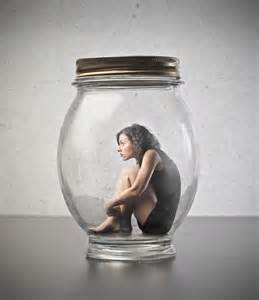
Innocence and Authenticity

I am five.  Chronologically, I am five.  Inside, I feel as old as I’ll ever be.

I am free of the burdens and distractions that surround me, and often, alone.

I have a sense of something I can’t quite articulate – purpose, mingled with wisdom; trust, and a connection larger than me.

I do not question whether I am wearing the right clothes for my figure, or if my hair suits my face.  I do not worry about where the money for the next bill is going to come from.  I seldom wonder if what I say might offend or is relevant at all.

At five, I live honestly; authentically.  I am all that I’ll ever be:  undefined, yet confident.  I am alive for a reason.  I feel it.

All I have to do is be patient and wait for life to unfold.

My true self.

Half a life time later, I still remember her:  that girl with such a full future ahead of her.   Such an innocent.

Like a treasure, she is buried within me, holding space.  I look for her in the mirror, but her light no longer shines in my eyes.  I search for her in the clutter that has become my mind, yet her clarity eludes me.  In the eyes of others, I am mother, friend, teacher, lover, and adviser, but not innocence; never my true self.

So, I seek to ignite that sense of self, through the inspiration that is my granddaughter.  Her smiles, her tears, her constant curiosity and unabashed response to life is a reminder:  somewhere in all of us there is a simplicity of being that defies any other reality.  Our true self.


Humility vs Ego

“How did you do on that calculus exam?”  A tall brunette pulled a chair up to the table, directly across from me.   The cafeteria was bustling with the usual suspects.

I shrugged. “Okay.”  I tried to keep my voice nonchalant.

“Man, that was brutal.  Who needs calculus anyways?” The blonde who joined us was slender, and preppy.  I noted that several boys watched as she approached and then mumbled approvingly amongst themselves.

“I need to study more,” another classmate complained, as she dumped a pile of texts on the table.  “I just don’t seem to be able to grasp the concepts.”

“Yeah, well someone in our class does.  I heard one person scored 100%.”  Our lunch group was growing in numbers.

“No way!  That’s not possible.”  A loud rumble of surprise and disapproval erupted around the table.

I kept quiet.

Then Izzy arrived.  Izzy was one of my closest friends, and also my seat mate in math class.  She knew the truth.

“Congratulations!” she oozed, before I could stop her.  “Another 100%!”

“What?”  The brunette across the table from me blurted.  “You’re the one who got perfect?!  How’s that possible?”

All eyes were on me.

“No offense, or anything, but you’re not all that bright.”  She had always proclaimed to be the smart one, and I can see that this revelation was making her truly uncomfortable.

“Izzy’s joking,”  the blonde proclaimed.  “If you didn’t ace it, then there’s no way she did.”

“Well, she did!” Izzy responded.  “She’s smarter than you think.”

“I don’t get it.”  the brunette questioned.  “If you’re so smart, why do you act so dumb?”

She had a point.  I’d learned to hide my intelligence after years of bullying and beatings.  But why act so dumb?

It was a question I would ponder for years to come.  Not bragging about my accomplishments felt right, but my motivation for doing so was not so admirable.

How do we balance our very human need for acknowledgment with a desire to be humble?


Three Sides To A Story

My first impression of Sherry was “Stepford Wife”.  A tall, thin, blonde, Sherry appeared to be the perfect wife and mother.  The stones in her garden coordinated with the ruffled awning above her front door, and accented her meticulously manicured lawn and flower bed.  Inside was no different:  her floors shone spotlessly, despite the presence of three children; and a smell of fresh baking wafted through the air.  Even though my visit was impromptu, Sherry was dressed stylishly in a crisp white blouse, and form-fitting skirt, complete with heels, and suitable accessories.  I was immediately intimidated.

My next visit to her home, this time invited, revealed much the same.

Sherry’s husband, Rob, was equally as impressive.  Also tall and thin, Rob was a quiet intellectual, who stayed fit by running marathons, and coaching his boys’ soccer teams.  He seemed to take his wife’s efficiencies into stride, and like her, was unruffled by his rambunctious young family.

Sherry and Rob soon became part of a social circle:  a group of ten couples that met once a month for dinners, cards, and sometimes, social outings.  They fit right in.  Once a year, we would all gather with our children for a large barbeque and fireworks.   Life was good.

Then, one day, I got a phone call from a mutual friend.  “Sherry is in a bad way,”  she said.  “Can you help?”

I knew something was wrong the minute I stepped in the door by the state of disarray in the house.  Sherry’s six-year-old daughter let me in.  She appeared frightened and withdrawn.

“Where’s your Mom, Sweetheart?”

She led me through the house to the kitchen, where Sherry sat crumpled in a chair, head down on the table, hair matted, and smudges of makeup streaking her face.

“Sherry?”

“He left me.”  She didn’t even look up.  Her voice, flat and lifeless, spoke volumes.

I spotted her two boys in the adjacent room, watching television.  I could see them glancing our way anxiously.  Please help!  their eyes pleaded.

I reached for the kettle.  “Have you eaten yet today?”  Telltale signs of kids preparing their own food and abandoning the dishes suggested she hadn’t.

Sherry was slow to respond.  “What?……um….I’m not hungry.”

I made her tea and toast and put it before her, and encouraged the children to go out and play.  Relieved, they complied.    “Tell me what’s going on.”

“He left me for another woman.”

I was stunned.  “Honey, try to eat something, and let me help you.”

She sat up, staring at the offering before her with complete disinterest.  She pushed the plate away, and cradling the cup, took one tiny sip, then pushed that away too.  Her normally thin frame appeared gaunt.

“Back up,”  I suggested.  “Tell me what happened.”

Rob had had an affair three years earlier with a woman from work.  When Sherry found out about it, Rob ended the affair and he and Sherry entered marriage counselling.  She had tried really hard to be the perfect wife and mother, so that he would love her again, and thought everything was going well, but out of the blue, he left.  He was now living with his mistress.

Sherry’s heartbreak was so intense, it threatened her life. Within weeks she was hospitalized because of severe malnutrition.

It was hard not to sympathize with her situation and write Rob off as a total jerk, but as always, there is another side to every story.

“I reached the end of my rope,”  Rob explained.  I love my wife, and I adore my children, but living in a constant state of perfection is exhausting.  Sherry has to be the best at everything, have the best house, wear the best clothes, everything is about impressing others.  There is nothing genuine about her, about us.  She is incapable of authenticity.  I tried to stay for the children’s sake, but I just couldn’t do it anymore.  I am dying inside.”

“So you left for another woman.”  I couldn’t keep the edge out of my voice.  I am, after all, a woman.

“If you met her, you would understand.  She’s so real! “

I wanted to understand.  I wanted to know what would drive one person to put his/ her family through so much pain.

“When two people divorce,”  a colleague told me, “there are always three truths:  his, hers, and a truth that lies beyond their stories.”

I tried to stay impartial, but supportive, and as I did, I began to realize the wisdom in my colleague’s words.  Once released from the hospital, Sherry became a woman obsessed.  She stalked her husband and his new lover, both at their home, and their places of work.  She was determined to get Rob back, and refused to see the folly of her actions.

On his part, Rob became more and more enraged, and retaliated with acts of violence against Sherry.

The scene was escalating out of control, until Rob’s therapist broke the pledge of confidentiality and advised Sherry her life was in danger if she didn’t back off.

Sherry did eventually let go of Rob, but only to rush head long into a tempestuous affair, with no regard for her children.  Rob withdrew from his former life, avoiding his friends, and maintaining minimal contact with his children.

Who was right, and who was wrong in this tale?  Like many conflicts, there are too many grey areas to tell for certain. Both his and her story made compelling arguments, but the real truth laid somewhere beyond all our comprehension.

One thing was certain, though:  the real victims here were the children.


Setbacks

Today is where your book begins; the rest is still unwritten.  These song lyrics have run through my mind all night, keeping me from sleeping.  A perfect lead in to today’s topic.

I am old enough to know that setbacks are not the end of life; they are usually just a transition point.  If you have been reading along, you know that it is the stuff of my writing.

When I experienced what we used to call a mental breakdown, at the age of thirty-one, I recognized that it was a wake up call to make some changes in my life.  Obviously, the way I had been living was not working for me, so I needed to learn a new way.

Losing my mind was like falling into a black hole.  I felt as if I was at the bottom of a deep abyss, with no visible means of escape.  Four things saved me:  my faith, my children, my writing, and my friends.

I knew that if I was to survive the experience, I would have to build my own stairway out.  I began with my beliefs.

Step one.  I believed that God never gave us anything we couldn’t handle, so therefore, I had it within me to heal.

Step two.  I believed that what happened, happened for a reason, so that there was a purpose for my suffering.

Step three.  I believed that God gives us what we need, so that help would be there for me.

Don’t get me wrong, losing one’s mind is a horrible thing.  In the beginning, I shook uncontrollably for most of the days, lying in a fetal position on my bed. But I knew if I was ever to get better, I had learn to “walk” again.

I set baby step goals for myself.  As my children were still considerably young, I made them a priority.  The first goal was to spend fifteen minutes a day of quality time with my children, without the trembling and tears.  I found I was able to control the anxiety for short periods of time, when I focused on them, instead of me.

The second goal was to get out of the house everyday, even if I was only able to walk to the end of the street (driving was out of the question). This was difficult, but I knew it was important not to give into the fear and become housebound.

In between times, I wrote and wrote, processing every thought, fear, and emotion, until I reached some aha moments.  I used my dreams as a guide.

When I grew a little bit stronger, I called upon trusted friends, who put together a healing circle that met once a week in support of my healing.

I learned many things from that time of darkness.  Mostly, I learned that if something is not life or death, then it is not worth worrying about.  I let go of my need for perfection.  I learned that nothing is as precious as the relationships that sustain us.  And I realized the depth of my own inner strength.

None of us would ever choose setbacks, but in retrospect, would we ever grow without them?

Fear or Legacy?


I fear illness.  I grew up in a household where dis-ease was the norm.  My mother had her first dance with death as a child, then suffered a broken back in her late thirties, followed by three bouts of cancer.  In her elder years, she lives with constant pain and many health issues.  My oldest sister had congenital heart problems all her life, and at the end, leukemia.  The next sister has schizophrenia and now Parkinson’s.  Diabetes, heart problems, and cancer run rampant in my mother’s family.  Ten of my generation have died.   My father and his siblings all died from respiratory conditions.

In other words, genetically, the promise of a long, healthy lifespan is not very bright.  When disease first knocked on my door, I made drastic changes to my diet, but I wonder if it is enough.

Fear, I know, can be a self-fulfilling habit.  But how do I let it go?

Years ago, I heard about a prayer for overcoming obstacles in life.  It goes like this:

I cast this burden of  ___________ upon the Christ within, that I may be free to ___________________ .

In my case:  I cast this burden of fear upon the Christ within, that I may be free to enjoy my gift of health.

What fear gets in your way?

(Image: inspirenow.com.au)


The Valley

(This fable follows “The Kingdom” )

After years of being “locked” away in the tower, the Princess came out.  She joined her father, the King, in his celebration of the new advisers in the Kingdom.  She felt inspired by the changes her father was making, and decided it was time she made some too.

So, she moved out of the castle and into the valley.

Because she was royalty, the Princess sent a messenger and servant to prepare the way.  She wanted to live among the common folk, and did not want any special privileges.  She would be sending along her own furnishings, but needed somewhere to live.

The people of the valley were simple folk, who valued their peaceful existence.  Wary of the Princess, but willing to be accommodating, they found her a suitable cottage, surrounded by beautiful and well-tended gardens.  On the day of her arrival, the villagers lined the streets with banners of welcome, and threw petals of roses to honour her.

The Princess was delighted, but reminded the citizens that she had come to live among them, and she expected to be treated as an equal.

It was a difficult transition for all to make.  The villagers tried to pretend she was an ordinary young woman, but the Princess maintained many of her former habits.  She refused to carry her purchases home from the market, and always expected everyone else to step aside when she was walking down the street.  She never learned the art of making an appointment, assuming everyone would be available for her at her whim.  And when the village got together for potlucks, she would command the menu.  The problem escalated when the Princess began to commandeer all the best workers to tend her gardens and do her household chores.  Work around the valley was being neglected in order to keep the Princess happy.

“This has to stop!” proclaimed the people during a meeting of the Valley’s folks.  The Princess was not in attendance.

“We cannot deny the Princess,”  the elders said.  “Her father, do not forget, is our King.”

“But she is destroying the peace!  People can’t get good service,  and businesses have lost their most productive workers, and they’re not even getting paid.  Everyone is upset!  We just want our peace back.”

“Here!  Here!”

“The Princess did say she wanted to be one of us.  Maybe we should invite her to hear our complaints.”

The room went quiet.  Everyone was afraid of upsetting the Princess, and ultimately, her father.

“Well, then.  We shall just have to continue to make her happy, and fulfill her every wish.”

The room erupted in moans and yelling.

“Wait,” came a voice from the back.  “I think I have a solution.”

It was the young woman, Sheboygan, now adviser to the King.  “I will invite the Princess to come live with me.”  Despite her new status, Sheboygan had maintained her home on the edge of the village.

The Princess accepted the invitation wholeheartedly.  Truth was she had not found happiness amongst the common people, and she was becoming disillusioned.

“Leave your belongings,”  Sheboygan advised.  “You will not be needing them where we are going.”

On foot, the two women walked through the village to the foothills of the valley, where they found themselves besides a beautiful lake.  “We will rest here for the night,”  Sheboygan told the Princess.

“What?  Outside?  Without a bed?”

Sheboygan nodded and busied herself with collecting kindling to start a fire.  “Make yourself useful.”

The Princess trailed after her, her gown getting caught on the underbrush, and smudges of dirt appearing on her skirts.  Not used to physical labour, she felt herself becoming winded, as she blew at a piece of hair that had fallen from her normally well-coiffed hair.   Incensed, the Princess was about to complain, when Sheboygan ordered her to build the fire, while she went in search of food.  “Or would you rather I start the fire, and you prepare dinner?” Sheboygan added, which shut the Princess up immediately.

Left alone to her own devices, the Princess was at a complete loss.  Although many fires had been built for her, she never gave any thought to how it was done.  Trying to recall what she had seen she piled the sticks and brush together, but could not imagine how to ignite them.  She looked around for someone to command, and when it hit her she was totally alone, she sunk down into the dirt and cried.  “Look at how useless I am!’

“Looking for something?”  came a deep voice from behind her.

Not turning around, the Princess continued with her rant.  “Yes!  I need to start this fire, but I don’t know how.  Will you do it for me good citizen?”

“I might, but what will you give me in return?”

“Anything,”  the Princess wailed.  Who could be so insolent?  “Just light the fire!”

But her visitor wasn’t so easily persuaded.

“Will you promise to thank me kindly?”

“Yes, yes!”  said the Princess, now fully exasperated.

“Will you promise to be my friend?’

Friend?  The Princess had never had a friend, and the stranger’s offer struck a lonely chord in her.  “I’d love to be your friend,”  she said more softly.

“If you want to be my friend, then you must accept me just as I am, and not try to change me to fit your needs.”

“I will, I will.”

“Look at me then,” commanded the voice.

The Princess turned, and immediately forgot her despair, for in its place she felt a sudden rush of terror.  There before her, in all its frightening glory, stood the dragon.

“Oh my!”

“Oh, yes,”  said the dragon, for he was really a peace-loving dragon and had a good sense of humour.

“But you’re……..”

“A dragon.  And you’re a Princess.  A good match don’t you think.”

“But, but, don’t you…….”

“Eat Princesses?  Maybe once upon a time, but nowadays I’m strictly vegetarian.  About that deal?” He glanced at the pile of wood.

“Oh, yes.”  The Princess stopped to consider her situation.  “Friends, huh?

“Buddies for life!”  The dragon raised his eyebrows in a comical way, and held out one of his talons.  “Shake?”

“I already am.”  The Princess made a joke despite herself, and they both laughed.  She looked at her poor attempt at a fire.  “Can you really ignite that?”

“In the wink of an eye,” said the dragon, and he did.

That night, the Princess, the dragon, and the woman of the lake sat around the campfire, eating nuts and berries and telling stories about their lives before they met one another.  The Princess forgot all about her discomfort, and discovered what she had been missing all along:  camaraderie.

The three slept beneath the stars and when the morning came, the Princess awoke with a new sense of self, and a pain in her back.  “Can’t say that was the best night’s sleep,”  she said, “but the fresh air and excellent company has done me a world of good.”

“Good,”  Sheboygan said, ” Because you’ll be staying awhile.”

“I will?”  The Princess was dubious.  One night of inconvenience she could tolerate, but she was missing her bed.

“You have much to learn about being a commoner.”

“What do you mean?  I live amongst them.”

“You live amongst them, but you continue to be a Princess.  When was the last time you did anything for yourself?”

“Well…..”  try as she might, the Princess couldn’t think of one thing.

“Exactly.  You expect everyone to cater to you the same way they did in the castle.  Servants in the castle wait on you because they are paid to do so;  the people in the village are not.”

The Princess thought this over.  Sheboygan was right.  She had never thought about it this way.  “You mean all those people who do work for me…….”

“Are not getting paid.  Their families are suffering, and so are their employers who need them.”

“Oh my.  How ungrateful they must think I am.”

“And there’s more.”

Sheboygan continued to tell the Princess about the townspeople’s concerns.

“I have led such a sheltered life,”  the Princess realized.  “I have only had to think of myself, and now I see that everything I do affects all the others.  How can I ever redeem myself?”

“Oh, you will.”  Sheboygan reassured her.  “But first you must learn how to be useful.  That is why you will live with the dragon and I until you have earned the right to be one of the common people.”

“Do you really think I can?”  The Princess knew she’d had years of being pampered.  She wasn’t sure she could adapt to anything else.

* * * * *

Days turned into months and the people of the Valley resumed their lives and forgot about the Princess.  Businesses began to prosper, and people went about their lives, harmony restored.

Then one day, a lone figure entered the town.  She was tall and thin, with the complexion of one who spent her days outdoors.  Her long, dark hair flowed down her back, and her eyes shone with a kindness that drew others in.  She stopped to greet the little children that ran to her, and smiled at the adults along the way.  When an old woman stumbled on her path, the young woman took her arm to steady her.  She unburdened a mother whose arms were full, and followed her home.  She seemed to have time for everyone and a willingness to help out.

People were soon talking amongst themselves, wondering where this woman had come from and who she was.  They followed her through the town to the local market, where she stopped at the grocer’s.

“I have no money,”  the young woman explained to the man in charge.  “But I would be grateful if you would let me work in exchange for food.”

The old man nodded, and handed her a broom. The young woman worked until the last customer was gone and all the shops were closed for the night.   Then she bundled up her earnings, and made her way silently through the streets to the little cottage with the well-tended gardens.

The Princess was finally home, and ready to take her place as part of the Valley.

(Image from Pinterest)

How Tables Turn

“All I want is to have my family around me.”

I was giving my father a therapeutic touch treatment to help ease his pain.  His suffering was relentless in his last years.

“I guess they’re all too busy for their old Dad.”

“You didn’t exactly teach us how to be around you, Dad.”  I didn’t want to be unkind, but he needed to hear the truth.  When I was too young to understand about his ‘needs’, I thought we were an inconvenience to him.  Mom would whisk us off to bed before he got home from work, so we’d be out of the way.  Later, when his secret was out, we would have to call ahead to make sure it was okay to come home.  When I moved out and became a parent, Dad would visit for ten or fifteen minutes before he had to leave.

“I suppose that’s true.”  Were those tears in his eyes?  “I lived a very selfish existence.”

“Yes, you did. You just have to be patient with us, and give us time to see that you have changed.”

He caught my hand in mid-motion and gave it a squeeze.  “I always loved you, though.”

“I know that now, Dad.  But there were many times when I didn’t.  I could never compete with sports.”  Sports were Dad’s excuse for everything:  I can’t come see your play, because the game’s on; or:  I’d love to spend time with my grandchildren, but this is the deciding match.  Trouble is, there was always some sporting event on.

“Silly, isn’t it?”

“You missed out on a lot.”

“I know.  I know.”

My father had changed.  We never could have had this conversation years ago.  He was too intimidating, and never open to criticism.  Something in him had softened.  Mom said he cried regularly over all the things he had done to us throughout the years.  Still, I wasn’t totally convinced.

“It’s ironic how the tables have turned.  It was always Mom who suffered with so much pain, and now it’s you.”

Isn’t that the truth, Dad’s face said.  “I wasn’t very sympathetic either,”  he confessed.  “Serves me right, I guess.”

I didn’t say anything.  Dad had never understood Mom’s suffering; he couldn’t tolerate weakness.  Now he depended on oxygen to breathe, and didn’t go out much because his immune system was so compromised.  His life was reduced to pain medication and ointments.  Mom seldom left his side.

“I messed up, didn’t I Squeegie?”  It was his nickname for me when I was little.

“You certainly had your trials, Dad.  No one can imagine what it was like to be you.  I guess you did the best you knew how.”

He squeezed my hand again.  “You’re a good kid.”

“I wish I could take your pain away, Dad,” I responded.

In the back of my mind, I was remembering something my father had always preached:

You get out of life what you put into it. 

Rage and Restraint

Thor and I have dined in a high-end restaurant, and he has gone to pay the bill.  I have chosen my food carefully to watch my intake, but still do not feel satisfied.  I look around and spot a dessert counter, with many cakes, pies, and sweet buns.  My husband is taking a while, and I am getting anxious.  On an impulse, I lunge for the cinnamon buns at the front of the counter, reaching across the cakes and pies, with no regard for social propriety.  I scoff the bun quickly, before anyone, especially my husband, can see me.  I needn’t worry.  He is nowhere in sight.  The room we were dining in is in the basement of the building, with a walkout patio.  Thor headed upstairs to the cashier’s desk.  Embarrassed by my actions, I decide to follow him, but I cannot see him.  I catch sight of him leaving by the front door.  Has he forgotten me?  I run to catch up with him and encounter two teenage boys, one of whom threatens to grab my breasts.  Angry with Thor for leaving without me, I am enraged by this young boy’s brazen behaviour.  “Do it and I’ll beat your head in,”  I warn him.  He makes the grab, and I retaliate by grasping one ear and twisting it, while simultaneously poking him in the eye with other.  I knee him in the groin, and as he goes down, I slam his head against the wall.  “That will teach you!”  I conclude.  I have caught my husband’s attention now, and we walk off together.

Restraint is obviously a theme in this dream: the ability to control my eating, and the need to control my anger.

Thor and I are in week four of Weight Watchers.  He has very successfully been following the plan and losing weight.  I am not faring as well.  It is frustrating, to say the least.

Dining out is the base of our problems.  I am vegetarian and Thor is meatatarian, and rather than cook two meals, it is just easier for us to dine out.  With only 26 points allowance in my day, that is a difficult task.  Last night, I had a veggie stir fry with the sauce on the side (8 points).  Thor, on the other hand, had a seafood linguine with garlic bread. (He has 45 points in the day.)  I went to bed hungry, while he had a midnight snack.  As I often do when watching my food intake, I got cranky.

I am proud of my husband, don’t get me wrong.  The changes he is making to his diet and daily routine are commendable.  I do, however; feel a bit like the woman in my dream:  left behind.

The two teenage boys in the dream are an interesting addition to this dilemma.  When I was a teenager, with new, but fully developed breasts, a boy did grab my breast as he passed me on the sidewalk one day.  I was so surprised that by the time I responded, he had fled.  Thus began a series of sexual harassments that continued well into my twenties.  In retrospect, it wasn’t until I had my third baby, and the weight stayed on that the unwanted advances stopped coming.  This is an aha moment.

Could the anger that I feel when dieting be related to inappropriate attention?  I clearly remember thinking, just yesterday, that the nice thing about being older is that you can be unattractive and get away with it.

I never felt attractive.  One of four girls, I thought of myself as the dumpy one.  I had reached full height in  elementary school, and filled out way ahead of my older sisters, earning the nicknames ‘Moose’ and ‘Linebacker’.  Whenever my sisters and I went anywhere together, everyone assumed I was the oldest, even though there were several years between us.  While they received endless attention for their beauty, I was the goofy looking one.  When I did bring boys home, I lost them once they caught sight of my siblings.

Despite my lack of self-esteem, or maybe because of it, I was always finding myself inappropriately propositioned.  Fathers of children I babysat, employers, boys I went to school with, and later colleagues, as well as friends of my then husband.  And, there was the rape.  I was targeted out of a whole gathering of schoolgirls.  I never understood it, but the more it happened, the angrier I became.  Occasionally, I did retaliate physically, but mostly I internalized it. “Boys will be boys,” my mother would say.  “It’s up to the woman to deter it.”  Like my mother, I learned to be a victim.

Why would I want to lose weight only to make myself vulnerable again, must be the question running through my subconscious.  No wonder I am cranky.  Being overweight is not desirable, but neither is being desirable, literally!   Maybe, I need to have a little talk with myself, and remind my inner young woman that I am a lot older now, and have learned to ward off unwanted advances, and protect myself.

Who knew losing weight was this complicated.

A little restraint please!


Accepting Success

My husband always tells me that I am failing my way through life with an A+.

It started when I returned to university to upgrade my degree.  I would sweat over every assignment, proclaiming uncertainty about the expectations and certainty that my efforts would fall short.  I would get the paper back with a mark in the nineties.

Despite my high marks, the insecurity persisted.  When I graduated from the Faculty of Education, I didn’t even notice that it was with distinction until my stepdaughter asked me what that meant.  Surprised, I responded:  “It probably means that I was the oldest.”

The assumption behind all this angst is that I am not capable, and that every task is designed to trip me up.  Of course, this is nonsense, and when I spell it out like that, my rational mind can see that it is.  Yet, somewhere inside me is an insecurity that my success is phony; that I am a fraud.

I am working on moving towards an easier approach to life.  I am trying to be consciously aware of how I complicate things with insecurity, and replace those thoughts with simplicity. I’m trying to take a step back before responding.  Reassessing a situation usually does reveal a simpler solution.


On Suffering

“All I need is to win the lottery,” Mae often proclaims.

“That’s not true,” I tell her.

“But if I had enough money, my problems would all be solved.”

“No.  If you had lots of money, you would still be schizophrenic.”

She takes this in and nods solemnly.  Then she laughs.  “You’re so funny.”

“I am studying the dictionary, though.  If I can get smarter then I’ll be better, don’t you think so?”  (Mae finished nursing school with 96%).

“Schizophrenia has nothing to do with intelligence, it’s a chemical imbalance.  You are smart already.”

The conversation is redundant.  We will revisit it many times.

Mae, like many people, just wants an end to her suffering.

As a student of alternative health care techniques, and a caregiver, I too have looked for answers to the riddle of why suffering exists in the world.  I have witnessed parents watching their infant die, and young children sitting at their dying mother’s bedside.  I have met those whose disease has debilitated them to a point of total dependency; and others whose lives have changed in an instant due to an accident or violence.  And I have met many, like Mae, who are born into suffering, with no hope for a cure.  Void of answers, I am only left with more questions.

What I have come away with, though, is a sense of awe for the spirit that drives each and everyone of these people.  In the midst of so much tragedy, I have encountered strength, willingness, compassion, and incredible resilience.

I don’t believe, as some do, that suffering is a choice; I believe it is inevitable.   And in some instances, I believe that suffering can open the doors for much discovery.