Simplicity: A Noble Quest

At thirty-one, I had to learn to change my approach to life, because the old way wasn’t working.

th-2The old way put me at the center of the family (even though I was fifth born), listening to and attempting to resolve every family issue:   Do you think your younger sister is okay living out there in isolation?  Your older sisters are not talking to each other.  I can’t talk to Mom, will you?  Why do men always leave me?  Your brother thinks I abandoned him as a child.  I can’t talk to Dad; he’ll listen to you. Your brother is coming to stay, and well, you know about his wife.   I can’t live with your Father.  And on and on.

The old way was me constantly trying to run from my problems, striving to be better, to do better, and to get ahead.  I was invested in the belief that if I could just do the right thing, my life would be perfect.  I beat myself up trying to reach some magical destination where peace would prevail, and all would be well with the world.

Attachments, chaos, interference, and desires were destroying me.  I lived in a perpetual state of strife and discontentment.

And then the blessing came:  my mind snapped.

As I picked up the pieces of my life, I had to learn to simplify.

th-3I was gifted with new objectivity.  I realized that even though my own life had come to a screaming stop,  everyone else’s went on without me.  The chaos and drama of my family continued, and for the first time in my life, I recognized that I had no ability to control it.  Never had.  My need to feel important and responsible in the midst of that whirlwind was my own sick way of coping.  Nothing I said, did, or sweat over was going to change the outcomes.  I learned to detach and stop interfering.

Mom and Dad are trying to run my life.

“You are strong and have supports.  I trust that you can deal with this.”

Find out what’s wrong with your sister.

“I have my own relationship with my sister, and would prefer that you do the same.  Let’s not get them confused.”

It was the first step to learning to breathe again.

Losing my mind also put a stop to all that rushing around.  I was forced to stand still, which meant everything I had been running from caught up to me.  Egads!  I went into therapy.

th-4My family, I came to understand, dealt with dilemma’s by creating more distractions: new problems.  Our momentum came from the next crisis and there was never any shortage of those.  The problem with this way of living is that the underlying message is that there is something so wrong, so unmentionable, that it is not safe to relax, and so we hang on until the next cliff hanger.  The only control I had in all of this was to no longer choose to be part of it.  Peace, I discovered, was an inner journey and not an outer destination.  Boy, had I been on the wrong track!

“What is it that you really desire?”  the therapist asked me one day.

“I don’t know,” came the response, and it was true.  I had been driving myself so hard, I had forgotten what it was that I was aiming for in the first place.

Life, I concluded, is not a game in which the person with the best ideas, and the most responsibility wins.  It is a journey of moments, and discoveries, and connections, which if we’re not careful, we will miss.  Simplicity, my heart’s actual desire, is being able to minimize the attachments, resist the need to interfere, and be the calm at the center of the storm.

I’m still working on it, but at least now, I am more aware.

Choosing Self Love

The day was sickly hot, and my allergies were bugging me.  I just wanted to hunker down in the corner of my room and lose myself in a good book, but when I tried the back door, it was locked.  I knocked.  No response.  I knocked harder and longer.

The door swung open angrily, and my oldest sister yelled for me to get lost, slamming it in my face.

I knocked again, more persistently.

She opened again hissing at me:  “Seriously, V.J.!  You need to stay away, or Mom will kill herself.”

“But it’s hot and I don’t feel well.  Please let me come in.”

“No way!  Mom can’t handle anything else.”  She slammed the door again.  I heard the lock slide into place.  I slumped down on the step, thinking over what she had said.  Was it really possible for me to be the cause of my mother’s suicide?  The rest of the family, save for my Dad, were inside.  I was the only one locked out.  Was I really that bad of a kid?

That was the day I learned that I could be responsible for another person’s well-being.  I wasn’t yet eight years of age.

* * *

“I am not a very good daughter,”  I explained to the therapist I had been seeing.  I was thirty-seven and having difficulty with my own daughter, so I sought help.

“What makes you say that?”

“Well, I upset my mother and she hasn’t spoken to me for a week.”

“You think you are that powerful?”

“Pardon me?”

“You actually believe that you can influence how someone feels?”

I hadn’t thought of it that way.  “You mean, my mother’s reaction is out of my control?”

“Exactly.”

* * *

“My husband tends not to look after himself when I am away.”

“And how does that make you feel?”

Eighteen years later and I am back in therapy again.  Situational anxiety and depression is the diagnosis.  I feel like I have regressed.

“Guilty.”

“Why is that?”

“Well, if I was home I know he would be cared for.”

“So you are responsible for his choices?”

“No….well…..I guess that is what I am saying.  Shit!  How do I let this go?!”

“You will not always agree with the choices that your husband makes, but you can at least let him have responsibility for them.”

“That makes sense, so why is it so difficult for me?”

“It’s really about control.  Somehow you believe that if you can control the other person’s behaviour, then everything will be all right.  It never works, of course, but it’s a product of growing up in an out-of-control family environment.  It’s part of being a people pleaser.”

I thought I had dealt with all this years ago, and said so.

“The subconscious tries to heal those parts of self that are still wounded, so it repeats patterns.  The secret is in re-parenting yourself.  This need for control is a reflection of a childhood need that wasn’t met.”

“Like the part of me that thought she was responsible for my mother’s suffering?”

“Yes.  As an adult now, you need to offer that little person a different perspective.  What would you tell that little girl now?”

“Well, I would sit down on that porch step with her and explain that whatever her mother was going through was not her fault.  I would tell her that her sister was coping with a bad situation, and that it was not related to her behaviour.  None of it was her fault.”

“That is a good start.  Can you see anything else that the child might be missing in this scenario?”

“Caring for.  I was hot and tired and needed shelter.  I probably needed some comfort too.”

“So how will you give that to her?”

I think this over.  Am I good at looking after myself?  Occasionally, but not always.  “Why is looking after myself so difficult?”

“You tell me.”

I look back at the little girl locked out of her house, and I suddenly know.

“She doesn’t think she deserves to have her needs met,”  I realize.  “I still don’t think my needs matter.  Others are always more important.”

“So who should you be responsible for?” the therapist asks gently.

“Me.  And her.  She needs me to take care of us.”

“Can you do that?”

“It’s the only choice that makes sense.”

(Image: hdimagelib.com)

Bathroom Inspirations

“Meditation will open whole new worlds for you,”  the psychic proclaimed.

“I know nothing about it.  How do I start?”  I was really just being polite.  Dragged to this session unwittingly – I thought we were going to be playing euchre – I didn’t want to burst my friends’ bubbles by telling them how skeptical I was.

“It’s really very simple.  Find a place and time where you know you won’t be interrupted, clear your mind, and focus on the center of your being.”

Really simple.  I decided to try it, since the woman had said a few things that hit home.  Maybe she was right about this too.

Step one turned out to be a problem.  I was twenty-eight years old, and pregnant with baby number three.  Finding a consistent time and place to practice meditation was a challenge.  If and when the girls did nap at the same time, I would use those moments to do laundry, prepare a meal, or try to catch a few winks myself.

“Make time,”  she had insisted when I told her about my busy schedule.  “It is up to you.”

I felt so inadequate as a spiritual being, and at the same time driven to prove I could do it.  I grabbed every minute of solitude that I could find.  I would learn to practice the art at the drop of a hat.  I would become super meditator.

The psychic was right.  I had profound revelations, and discovered a new source of wisdom from within.  It was amazing.

“Doing it in the same place, and at the same time, communicates your intent to the subconscious, unleashing the inner wisdom,”  she had explained.

It was true.  With practice, every time I went to my meditation place I would experience that connection, and sometimes even without seeking it, insights would flow.

Then one day, an amazing thing happened.  I was out for lunch with a business associate and we were trying to figure out a mutual problem.  Neither one of us could find a solution, until I excused myself and went to the Ladies’ room.

Clarity overcame me before I could even flush the toilet, and as I excitedly revealed the answer to my colleague, I marveled at how easily the idea came to me……in the bathroom…..the same place where I practiced meditation at home.

It seems that my subconscious mind is not particular about which bathroom I use.  Now I experience inspiration when nature calls.


The Thief Within

It’s time to call a meeting of the troops.

“Gather around, everyone.  We need to talk.”

The air is cool in the cave, sheltered from the hot August sun.  A small fire provides light and a focus for our gathering.  I, Self, am seated where everyone can see me clearly.  I want to make my point.

“I have called you here, because there is a thief amongst us, and I am angry.”

“Oh!”  the exclamation echoes around the circle, then a mumble of agreement – this is serious.

“I woke up this morning, full of anticipation and plans for a wonderful day – the kids are coming for dinner, and my granddaughter is staying overnight.  I planned to make goodies, and soup, and a special dinner.  As I made my shopping list, Thor added to my excitement booking a flight for our next big excursion abroad.  I couldn’t have been happier, then…..”  I paused for effect, “….one of you came in and stole my joy, leaving me in this state of raw anger.”

The nervous shuffle of feet was accompanied by a shifting of eyes and lowering of heads.  No one wanted to fess up, I could see.

“We see that you are upset,”  a kind old woman stepped forward,  “and in the interest of inner harmony, we would like to get to the root of the problem, but we’ll need more information.”

Heads bobbed in agreement.

“When did you first notice that your mood had changed?”

“When I was baking.  I noticed that my happy thoughts were missing, and I was ranting inside my head.”

“Just like that, all of a sudden?”

I thought about it.  “Well, I did start to feel really tired just before it happened.”

“What do you suppose made you tired?”

“I was up early this morning, getting work done so I could enjoy my family, so I was thinking that was catching up with me, but then I realized I was probably hungry,  which……”

“Would effect your mood,”  she finished my sentence.

“Well, true.  So, that is no one’s fault.  But then I started to eat things that weren’t good for me, and I knew I only do that when I’m trying to bury unwanted emotions, so I started to think about that, and then I realized my happy thoughts were gone, and that’s when I got angry and decided to call this meeting.”

“Was anyone else present when all this was happening?”

“I was,”  a little voice piped up.  “I was excited that we would get to play with the granddaughter.  She’s so cute and fun and makes me happy.  But then Mae called, and she called again, and again, and someone started pushing me out of the way.”

“Really?”  The women turned towards the others.  “Does someone have a problem with Mae?”

“No!  Well, yes,”  said a shadowy figure huddled in the back.  “She can’t help it that she is mentally ill, I know, but she stirs me up.”

“How does she stir you up?”

“She reminds me of all the times I was pushed aside for the others.”  I recognize her now; it’s my twelve-year-old self.  “My parents only had time for those who were broken, never for me.  They never helped her;  they encouraged her to be that way.  They liked their children to be victims so that they could rescue them over and over again.  It makes me angry.”

“So you stole my joy?”

My question seemed to jolt her out of her self-indulgence.  “No!  I mean, I had to protect you.  You’ll just get hurt again.  You should know better.  Just when it seems that everything is good, and going our way, someone will destroy it.  You know it!  That’s how it always is.”

“Oh dear,”  the little one plopped down, head on her hands.  “Here we go again.”

“What!  Why are you all looking at me that way.  You all know it’s true.  Why won’t you admit it!”  Twelve was getting hostile, almost hysterical.  “I hate it that life is unfair.  I hate it that we work hard, and try hard and always get the short end of the deal!  I hate that other people don’t have to work hard and life just gets handed to them and everyone caters to them.  I hate it that my sister wasn’t strong enough to fight them, like we did.”

“Amen to that,” said a large, blob of a character, who didn’t look very bright, but was happily stuffing his face.  Ah, I thought, you’re the one I feed when I feeling emotional.  If I’m not careful, I’ll start looking like you.  

“Can I say something,”  a slighter older teen spoke up. I recognized my independent self.  “I don’t mean to sound cold and radical here, but if you keep venting over what you can’t change, you are going to die an unhappy soul.”

“What do you know about it?”  Twelve was on the defensive.

“I know that life is full of many opportunities beyond the limitations you experienced in your home life, and I believe that while we can’t change where we’ve come from, we can make new choices for the present and the future.  Do you want to be unhappy all your life?”

“Well….no, but don’t I have the right to be heard?  Don’t I deserve justice?”

“We all deserve to be heard, and while we’d all like justice, it doesn’t always work out that way.  I’m just suggesting that you are robbing yourself of the joy of life.”

I could see Twelve wrestling with herself.

“Twelve,”  I offered, as kindly as I could.  “You say you hate victims, right?”

“Yeah.”

“Well, you are kind of acting like a victim yourself, no offence.”

“What do you mean?”  her fists balled up instinctively.

“I just mean that while you rage and wait for someone else to deliver justice, you are like a victim – giving the power to someone else.”

“What do you suggest I do?”

The Wise Woman stepped up, putting her hand on Twelve’s shoulder.  “Express your feelings, certainly, because we all care.  Can I ask you something Twelve?”

“Fire away.”

“What would help ease your rage?  What do you need?”

Twelve fell silent.  I don’t think she’d ever thought of that.  She shrugged.

“What could anyone possibly do to make you feel better?”  the young woman asked. “Do you think everyone is suddenly going stop being themselves, see the predicament, and apologize?”

“Maybe they’ll stop being nice to your sisters and spoil you!” the little one chirped in.

“That’s absurd!”  Twelve scolded.

“Is it?  Isn’t that what you want?”

Twelve thought about this.  We all thought about it.  Then one of us started to giggle.  I’m not sure who, but soon the whole room felt the relief.  It was a ludicrous thought.

“I feel like a fool,”  said Twelve.

“No hard feelings – you’re only a kid!” said the slightly older one.

“And you always look out for me,”  said Little.

“None of us blame you,”  another added.  “We all went through it, you’re just the one who held out for justice.”

“Is there never any justice, then?”  Twelve asked, confused.

“Oh there is justice:  but you need to look for it in other ways,”  Wise Woman offered.

“Like embracing life’s blessings despite the strains of the past,”  Independent Self offered.

“What she’s trying to say, I think,”  I added, “Is that if you continually refuse to be happy because you don’t like what happened long ago, then you rob all of us of the joy of the present.  Can you see that?”

“I can, but I just feel so angry sometimes.”

“I know, I know, so do I, obviously.  That’s why I called this meeting.  And Twelve, I suspect you’ve been hanging out with someone else, who is the real thief here.”

I could tell by the look on her face, that Twelve knew exactly who I was talking about.

“Jealousy is not a friend to any of us,” I addressed the crowd.  “I suggest we do our best to keep her out of our circle.”

“Here!  Here!” came the cry of approval.

“What about me?” said Emotional Eater, pausing mid-bite.

“Wouldn’t hurt you to eat a little less” came the unanimous response.

“You should try therapy,”  added Little.  Everyone laughed.

“Thanks for talking this through,”  I concluded the meeting.  “I hope we all feel better.  Little, Twelve, we got some things to get ready, our guests will be here soon!”

(Image: dymir.org)



Birthday Weeds

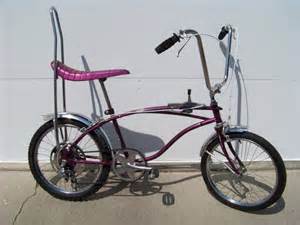
“Can I have a bike for my birthday this year?”  A typical, impatient eight-year-old, I must have asked my parents this question a million times.  I was excited for my upcoming birthday, and really wanted a bike with a big banana seat, and raised handle-bars.

“You’ll have to wait and see,”  was the constant reply, but my birthday falls in the middle of the summer, and so many perfect bike-riding days were passing me by.

As my big day approached, my father teased me that I was getting bubblegum for my birthday.   I was confident he was kidding and that I would soon be soaring through the streets on my new, longed for wheels.

Birthday morning came, and no present.  “You have to wait till your party,” Mom informed me.  The hours just didn’t pass fast enough.   My friends arrived in the afternoon, and we swam for awhile before my father barbequed burgers and hot dogs, and then it was time for gifts.  After opening all the gifts from my friends, the moment I had anticipated finally arrived.

“There is one more gift,”  my father announced, disappearing into the garage.

And there it was!  A shiny, new, all-mine, bicycle.  “Here’s your bubblegum,”  Dad beamed.  I beamed back.  It was exactly what I wanted.

“Thanks so much!”  I gushed, and was about to say more when I noticed my mother following with something else.  Another new bike……for my little sister.

What?  It wasn’t her birthday until November.  “Me too, me too,”  she started to squeal.

I didn’t say anything.  I didn’t know what to say.  I got what I wanted, so why was this bothering me so?

It was a question that would fester inside me for a long time.  That year would mark the end of birthday excitement for me.  It was the start of a legacy of disappointment that I never addressed, and therefore; allowed to grow out of control.

For my ninth birthday, I got a new bike, but I also gained the realization that life is not always fair.  I knew without asking why my sister got a present on my birthday – it was so she wouldn’t throw a temper tantrum – but I also knew with certainty that I wouldn’t get a present on her birthday, and somehow that didn’t seem right.  I wasn’t given to temper tantrums, but did that mean that I also had to forgo being special for one day?

In the years that followed, my birthdays were celebrated on family vacations, usually in public places with just a cake to mark the occasion.  I told myself it didn’t matter.

I lied.

Truth is, I allowed that initial seed of disappointment to ferment inside me.  I didn’t confront the issue because I thought I was being oversensitive.  I didn’t want to hurt my parents feelings, and I certainly didn’t want them to think I was ungrateful.  But the more I pushed the hurt down, the bigger it grew.  In my own mind, I compounded the issue.  My parents didn’t love me as much as they did the other children;  there was something wrong with me.   Every time I felt left out or overlooked, my feelings were just confirmed.  I came to dread my birthday month.  By the time I reached adulthood, this dread was accompanied by depression.

The issue exploded on my 40th birthday.  My mother, in her usual way, had been calling me leading up to my birthday, making comments such as:  “You have everything you need, I don’t suppose there is anything I could get you anyway,”  or “Don’t know if I’ll get you anything for your birthday this year,” and so on.  When she showed up with a frozen turkey, I lost it.

“Mom!  Why do you have such a problem with my birthday!  If you don’t want to celebrate it, then don’t, but don’t taunt me with it!”

“Of course, I want to celebrate your birthday.”  She was taken aback.

“You never have!  You always make it sound like it’s such a hardship.  I’d rather you didn’t acknowledge it at all!”

“What do you mean?  I’m here with a gift aren’t I?”

“Yes, Mom, but all week longed you’d hinted that there might not be a gift, as if you really don’t want to give me anything.”

“Well, it’s just that you have everything.”

“It’s not about the gift, Mom.  It’s about the acknowledgment.”

The conversation didn’t go well.  My mother left feeling hurt, and I felt I had made a worse mess of things.  I would like to say that things have improved, but they haven’t.  For the second year in a row, my mother has completely forgotten my birthday.  I asked for it, I guess.

When you allow things to fester, they grow roots, and like untended weeds, can get out of control.

I am fifty-four years old, and I still don’t know how to uproot the weed associated with my mother and my birthday.

One Way Conversation with Dad

Happy Birthday, Dad.  You would have been 88 today.

I miss you today, Dad.  I miss your wisdom; I could use some right now.

I don’t know if you can read this, Dad, or hear me, but I’d like to pull up a chair anyway, so we can talk.  You see, I’m just not feeling that confident today, Dad.

I know, I know.  You’d say “Why not Squeegie?  Life’s what you make of it, and you’re doing a pretty darn good job, from what I can see.”  And I would smile, despite myself, and thank you for the vote of confidence.

Truth is, I’ve made a lot of mistakes in life, Dad, either from stubbornness, or just plain stupidity, and I’m beginning to think that that old saying is about me – you know, the one you used to say all the time:  Failure to plan is planning to fail.  Well, I failed to plan, Dad.

Before you say anything, I’m not bemoaning my life – it has been good.  I’m just recognizing, at my age, that if I had planned, life would be a lot different right now.  I’d be retiring with my friends, and looking forward to spending many days with my grandchildren.  Instead, I don’t even have a full-time job, so retirement is definitely not in the cards.

I know what you’re thinking: you weren’t a very good role model, because you failed to plan also. ( Oh, by the way, I was mad at you for that – for leaving Mom with so little, despite all the money that you made.)  Seems I’m doing the same to myself.

But it’s more than that, Dad.  I just don’t feel like I can trust myself, enough to make right choices, career-wise.  I don’t know what’s wrong with me, but I have a hard time telling if I’m doing a good job, or am appreciated.  I always feel apologetic or inadequate.  Why is that?

No, don’t start, it’s not all your fault.  Okay, you didn’t help, but I’m an adult now, you’d think I’d be over that.  I’m just tired of doubting myself.

Remember when my marriage fell apart, and how the day I realized it, I drove directly to you?  You sat in your chair and listened, while I crumpled on the couch, spewing anger, and disappointment, and heartbreak.  I felt so defeated, and you cried with me, and shook your head, and raged on my behalf.  I don’t remember exactly what you said, but this is what I heard:

“Squeege (your pet name for me), I don’t know why this has happened to you, but I do know this:  you are a bright, loving woman, and you give your heart and soul to everything you do, and everyone you love, and you deserve better than this.  Goddamn it, you deserve better than this!”

You could be a bastard, a lot of the time, Dad, but you were also my rock.

I’m just sorry that today, you weren’t here for me to tell you so. As for my problems, guess I’ll have to figure this one out on my own.

I was too proud to tell you when you were alive, Dad (and too stubborn), but truth is, I needed you.  Still do.

Thanks for listening, and by the way, Happy Father’s Day.

Love you,

Squeege

Three Sides To A Story

My first impression of Sherry was “Stepford Wife”.  A tall, thin, blonde, Sherry appeared to be the perfect wife and mother.  The stones in her garden coordinated with the ruffled awning above her front door, and accented her meticulously manicured lawn and flower bed.  Inside was no different:  her floors shone spotlessly, despite the presence of three children; and a smell of fresh baking wafted through the air.  Even though my visit was impromptu, Sherry was dressed stylishly in a crisp white blouse, and form-fitting skirt, complete with heels, and suitable accessories.  I was immediately intimidated.

My next visit to her home, this time invited, revealed much the same.

Sherry’s husband, Rob, was equally as impressive.  Also tall and thin, Rob was a quiet intellectual, who stayed fit by running marathons, and coaching his boys’ soccer teams.  He seemed to take his wife’s efficiencies into stride, and like her, was unruffled by his rambunctious young family.

Sherry and Rob soon became part of a social circle:  a group of ten couples that met once a month for dinners, cards, and sometimes, social outings.  They fit right in.  Once a year, we would all gather with our children for a large barbeque and fireworks.   Life was good.

Then, one day, I got a phone call from a mutual friend.  “Sherry is in a bad way,”  she said.  “Can you help?”

I knew something was wrong the minute I stepped in the door by the state of disarray in the house.  Sherry’s six-year-old daughter let me in.  She appeared frightened and withdrawn.

“Where’s your Mom, Sweetheart?”

She led me through the house to the kitchen, where Sherry sat crumpled in a chair, head down on the table, hair matted, and smudges of makeup streaking her face.

“Sherry?”

“He left me.”  She didn’t even look up.  Her voice, flat and lifeless, spoke volumes.

I spotted her two boys in the adjacent room, watching television.  I could see them glancing our way anxiously.  Please help!  their eyes pleaded.

I reached for the kettle.  “Have you eaten yet today?”  Telltale signs of kids preparing their own food and abandoning the dishes suggested she hadn’t.

Sherry was slow to respond.  “What?……um….I’m not hungry.”

I made her tea and toast and put it before her, and encouraged the children to go out and play.  Relieved, they complied.    “Tell me what’s going on.”

“He left me for another woman.”

I was stunned.  “Honey, try to eat something, and let me help you.”

She sat up, staring at the offering before her with complete disinterest.  She pushed the plate away, and cradling the cup, took one tiny sip, then pushed that away too.  Her normally thin frame appeared gaunt.

“Back up,”  I suggested.  “Tell me what happened.”

Rob had had an affair three years earlier with a woman from work.  When Sherry found out about it, Rob ended the affair and he and Sherry entered marriage counselling.  She had tried really hard to be the perfect wife and mother, so that he would love her again, and thought everything was going well, but out of the blue, he left.  He was now living with his mistress.

Sherry’s heartbreak was so intense, it threatened her life. Within weeks she was hospitalized because of severe malnutrition.

It was hard not to sympathize with her situation and write Rob off as a total jerk, but as always, there is another side to every story.

“I reached the end of my rope,”  Rob explained.  I love my wife, and I adore my children, but living in a constant state of perfection is exhausting.  Sherry has to be the best at everything, have the best house, wear the best clothes, everything is about impressing others.  There is nothing genuine about her, about us.  She is incapable of authenticity.  I tried to stay for the children’s sake, but I just couldn’t do it anymore.  I am dying inside.”

“So you left for another woman.”  I couldn’t keep the edge out of my voice.  I am, after all, a woman.

“If you met her, you would understand.  She’s so real! “

I wanted to understand.  I wanted to know what would drive one person to put his/ her family through so much pain.

“When two people divorce,”  a colleague told me, “there are always three truths:  his, hers, and a truth that lies beyond their stories.”

I tried to stay impartial, but supportive, and as I did, I began to realize the wisdom in my colleague’s words.  Once released from the hospital, Sherry became a woman obsessed.  She stalked her husband and his new lover, both at their home, and their places of work.  She was determined to get Rob back, and refused to see the folly of her actions.

On his part, Rob became more and more enraged, and retaliated with acts of violence against Sherry.

The scene was escalating out of control, until Rob’s therapist broke the pledge of confidentiality and advised Sherry her life was in danger if she didn’t back off.

Sherry did eventually let go of Rob, but only to rush head long into a tempestuous affair, with no regard for her children.  Rob withdrew from his former life, avoiding his friends, and maintaining minimal contact with his children.

Who was right, and who was wrong in this tale?  Like many conflicts, there are too many grey areas to tell for certain. Both his and her story made compelling arguments, but the real truth laid somewhere beyond all our comprehension.

One thing was certain, though:  the real victims here were the children.


Muskoka Meditation

Closing my eyes, I imagine a body of water.  In my mind’s eye I see a lake in Muskoka:  a thick morning mist hovering over the surface.  I breath and imagine the fog rolling back to reveal a shimmering gray surface, the sleight swells of the water reflecting shards of light.   A fish jumps and distracts me, and my mind scans the surface for more life.

I breathe again, this time more deeply, slowly, holding it awhile before slowly exhaling.   The waters of my lake calm…..then the dog growls, pulling me from my reverie, his insistent barking terrorizing a passerby.

Another deep breath.  Where was I?  I allow the heaviness of meditation to settle my body and focus again on the water’s surface.  I imagine the call of a loon, beckoning me further into the reverie.  I imagine I can smell the water, and the freshness of the Northern air.  The early morning rays catch the ripples and sparkle.    The morning mist is gone now, and the wind recedes, calming the surface of the water, and with it my mind. Ah, the beauty of stillness!

I surrender to the serenity of the moment.

(Image: flickriver.com)

Setbacks

Today is where your book begins; the rest is still unwritten.  These song lyrics have run through my mind all night, keeping me from sleeping.  A perfect lead in to today’s topic.

I am old enough to know that setbacks are not the end of life; they are usually just a transition point.  If you have been reading along, you know that it is the stuff of my writing.

When I experienced what we used to call a mental breakdown, at the age of thirty-one, I recognized that it was a wake up call to make some changes in my life.  Obviously, the way I had been living was not working for me, so I needed to learn a new way.

Losing my mind was like falling into a black hole.  I felt as if I was at the bottom of a deep abyss, with no visible means of escape.  Four things saved me:  my faith, my children, my writing, and my friends.

I knew that if I was to survive the experience, I would have to build my own stairway out.  I began with my beliefs.

Step one.  I believed that God never gave us anything we couldn’t handle, so therefore, I had it within me to heal.

Step two.  I believed that what happened, happened for a reason, so that there was a purpose for my suffering.

Step three.  I believed that God gives us what we need, so that help would be there for me.

Don’t get me wrong, losing one’s mind is a horrible thing.  In the beginning, I shook uncontrollably for most of the days, lying in a fetal position on my bed. But I knew if I was ever to get better, I had learn to “walk” again.

I set baby step goals for myself.  As my children were still considerably young, I made them a priority.  The first goal was to spend fifteen minutes a day of quality time with my children, without the trembling and tears.  I found I was able to control the anxiety for short periods of time, when I focused on them, instead of me.

The second goal was to get out of the house everyday, even if I was only able to walk to the end of the street (driving was out of the question). This was difficult, but I knew it was important not to give into the fear and become housebound.

In between times, I wrote and wrote, processing every thought, fear, and emotion, until I reached some aha moments.  I used my dreams as a guide.

When I grew a little bit stronger, I called upon trusted friends, who put together a healing circle that met once a week in support of my healing.

I learned many things from that time of darkness.  Mostly, I learned that if something is not life or death, then it is not worth worrying about.  I let go of my need for perfection.  I learned that nothing is as precious as the relationships that sustain us.  And I realized the depth of my own inner strength.

None of us would ever choose setbacks, but in retrospect, would we ever grow without them?

Accepting Success

My husband always tells me that I am failing my way through life with an A+.

It started when I returned to university to upgrade my degree.  I would sweat over every assignment, proclaiming uncertainty about the expectations and certainty that my efforts would fall short.  I would get the paper back with a mark in the nineties.

Despite my high marks, the insecurity persisted.  When I graduated from the Faculty of Education, I didn’t even notice that it was with distinction until my stepdaughter asked me what that meant.  Surprised, I responded:  “It probably means that I was the oldest.”

The assumption behind all this angst is that I am not capable, and that every task is designed to trip me up.  Of course, this is nonsense, and when I spell it out like that, my rational mind can see that it is.  Yet, somewhere inside me is an insecurity that my success is phony; that I am a fraud.

I am working on moving towards an easier approach to life.  I am trying to be consciously aware of how I complicate things with insecurity, and replace those thoughts with simplicity. I’m trying to take a step back before responding.  Reassessing a situation usually does reveal a simpler solution.