Love, Like Shoes

If searching for love
was like shopping for shoes,
I’d fixate on the simplest
of finds, choosing practicality
over fashion flair.

My preference is for earthy,
unassuming, plain is fine
as long as the structure
gives me room to breath –
no grasping too tight.

If I shopped for love,
like I do for shoes,
I’d ignore those pushy
sales lines, opt instead
for a supportive sole,

settle for guaranteed comfort
over flashy heels, can’t bear
the instability of pedestals,
love flattery like most,
but need to feel grounded.

No doubt I’d question
my selection, offer it up
to my children for feedback
be mocked, dissuaded,
put it back and search anew,

discover futility in my seeking,
realize that I need new love
like I need new shoes –
only a foolish indulgence
for a woman who lives in bed.

th

Dear Child

I know a little girl,
whose hair in ringlets
falls, unkempt from lack
of brushing; who stands
when she should be sitting;
who laughs with defiance when
challenged, her dark eyes gleaming
with mischief; who holds her chin up
high and stamps her feet, arms folded
in protest when she does not get her way.

I see that little girl,
have watched her play,
with a wild imagination,
and a fearless temperament;
have watched her climb a tree,
scrap with any bully, and dare to
venture on her own; have witnessed
her alone times, hidden and obscured,
watched as she cried unheeded, buried
herself in books, drawing, and future dreams.

I feel that little girl,
who wears such a brave
exterior to mask her inner
fears; who bears a burden of
responsibility to carry the weight
of those around her;  who believes
she has the power to make her mother
cry, to cause her father’s violence, to save
her sisters from pain; who feels the punishment
of her situation and ascribes it to unworthiness.

I love that little girl,
whose mind is always
churning, who prays to a
god she’s never seen, and
makes wishes on rainbows;
who longs to make a difference,
and refuses to believe that suffering
is all there is; who devotes herself to
being a better person, and hopes one day
that she’ll finally feel at peace in the world.

I hold that little girl,
warm within my heart,
listen to her fears, hear
her heart’s longing;  praise
her courageous efforts, appease
her doubts, offer condolences for
losses, encouragement for change,
forgive her of her burdens; allay her
misperceptions, reassure her worth,
promise to never let her go: she is me.

Lights, Cameras, Heartache

Dressed herself in sequins,
sparkled from head to toe,
courted celebrity, falling for
the spell – could not see the
lies presented, nor the trail
of endless tears behind him.

He was drawn by her passion,
a radiant exuberance buoying
his spirit, her love reminiscent
of the mother he’d lost long ago,
like the family he never knew,
he followed her lead;  intrigued.

She set the scene for perfection,
fretted over each detail, prayed
that all would come together,
a relationship fated to be,
failed to see the patterns that
would surely sabotage her.

Love was never his intention,
preferred young women, was
already involved, thirsted only
for her charm, hungered for
the brilliance of her soul, it was
her mystery that he craved.

She immersed himself in his
cause,  committed to finding
his truth, failed to heed
inner authority, broke her
own rules, lost balance after
his abandonment; ashamed.

He’d never wanted saving,
thought he’d been clear all
along,  preferred being single
avoided tarnishing his star,
had merely liked his reflection
shimmering beneath her glow.

Seasons of Love

Winter came early –
seeped into intimate
corners, froze hearts.

Walls papered white,
intending cheer, only
accented bitter cold.

Layers of submission,
hope, denial, ineffectual
in refueling the warmth.

She followed him down
the unavoidable slope
deep into the abyss.

Chilled, shaken she
braced for the arduous
trek ahead, injected

lightness into an
impossible situation,
committed, unaware

that he’d moved on,
abandoned her with his
customary indifference.

Years later,  thawed
by the warmth of solitude
she reflected, wondered

how the blatancy of his
oddities has escaped her –
his fixation on antiquated

ideals, how he furnished
her mind with incoherencies,
collected things, not values.

She had merely been
an observer in his life,
yet it had escaped her

that it was the fiery
summer of her soul,
that had melted his ice

her scorching, all-
embracing passion
that had united them

and, as in all things
seasonally inevitable,
their love would die.


I Did

My husband wears a band wrapped
around his head – a long, constantly
bobbing pole attached – where all
his ideas dangle like carrots,
just out of reach – propelling
him absent-mindedly forward.

He tries to stay in the moment,
begins with full intent, gathering,
for instance, the makings of a grand
sandwich, and assembling successfully
but wanders off, leaving a trail of
opened packets and jars and crumbs

Too bad the contraption is invisible
or I’d snatch it off his head, and demand,
lovingly of course, that he stop a moment,
take the time to complete the task;
It’s a trap I fall into once in a while:
the fatal expectation that he’ll change.

I’ve tried leaving the mess, willing
myself to be accepting, hoping surely
that he’ll take notice and tidy up,
but I am always deluding myself –
he is after all mid 60’s, and not
about to break the habit now.

So, I content myself with my chosen
role, plow through the piles of messes,
and thank God that his brain still functions,
and remember how that very same carrot
drew me in once, compelling me
wholeheartedly to say “I do”.

Love? Really?

“Love,” my grandmother told me, “is a four-letter word.”

“She was beautiful as a young woman, and everyone wanted to court her,” her sister explained. “Our parents were heartbroken when she chose Charlie. Charlie was a farmer. She could have done so much better. We were city girls, you know. I don’t think she knew what she was getting herself into.”

“He could make me laugh,” Grandma said. “Played a damn good fiddle too, and he could dance. How we loved to dance.”

“When I think of my mother, I picture her standing over the woodstove cooking, always cooking, and crying. Seemed like she was always pregnant.” This from my mother, her daughter.

“Every time my fool husband hung his pants on the bedpost I was with child again. Carried ten to full term. Three of them died young.” She said it matter-of-factly, as if that is how life goes.

“Do you miss him?” I asked. “I mean, he died young, did you ever consider remarrying?”

“Hell, no! When he died, I started living. Took up drinking and smoking. I’d let a man buy me a drink, take me for a twirl on the dance floor, maybe walk me home, but that’s it. Let them in and they are only after one thing. They’re not getting that here!”

“Just don’t go putting the cart before the horse,” my mother advised me when I asked about love.

I knew she was talking about herself; I was born just three weeks after she married my Dad. I assumed she was telling me it had all been a horrible mistake.

“Were you in love the first time you got married?” Unwilling to give up on the notion.

“What did I know of love? He was handsome, drove a motorcycle and paid attention to me. Sure, I thought it was love, until I learned that he did the same for every other woman he met. I was the only one stupid enough to marry him.” She reflects for a minute. “Must have loved him, ‘cause I sure was crushed when he left me for my best friend.”

“It’s just as easy to fall in love with a rich man as it is a poor one,” my eldest sister cautioned, but I knew she was just cynical. She put the proverbial cart first, got pregnant while still in high school, married and was divorced two years later.

“Can’t imagine who would ever love you,” Mom told me often. “Men don’t like smart woman.”

Watched my sisters bounce from man to man, in and out of their beds without discretion, slandering the bastards for not respecting them. Knew I didn’t want to follow them.

Decided I wanted the kind of love that Ryan O’Neal and Ali MacGraw had in Love Story. When it didn’t come along, I began to believe that love is meant to be unrequited as in all the great romantic classics. My heart ached with a longing I couldn’t control.

“You’re just waiting for your white knight to arrive on his trusty steed and scoop you up,” a school friend accused.

“Am not!” But she’d struck a chord. Maybe I was.

Married the first man who was willing to stick around (pretty sure it was me who asked him). Joined my sister in the divorcee lineup less than two years later.

Began to think my mother was right – I was not loveable.

Finally swept off my feet six months later – a man of my heritage, a man who wanted to make me happy, who made my heart beat with excitement. Disregarded the short courtship and fell in headfirst.

“If you really loved me, you’d take better care of yourself,” he told a bedraggled version of myself, pounds heavier after bearing three children in five years.  If you really loved me, became code for you are not good enough.  The point was driven home frequently.

“I never really loved you,” he told me seventeen years later. “I just stayed for the children’s sake.” He left me for a woman who bore an uncanny resemblance to my younger self.

I was certain that my mother was right. Love was an intangible notion unintended for the likes of me.

Love yourself. The message trickled through the airwaves. New Age, talk shows, psychobabble, it was all the same. Love yourself and love will find you.

Love myself? I was forty-years-old and had no concept of what that might look like, couldn’t even remember a time where I’d felt loved, actually accepted for who I was, without criticism or disappointment present. Knew there were no models in the ravaged hearts that surrounded me. Had to dig deeper.

I started with what it would feel like to be loved. Daydreamed about the feeling, experimented by buying myself flowers, doing things that made me felt good, cherished.

Learned that love calls for defined needs, and the ability to set boundaries – two things I had always denied myself. Recognized that in the realm of give and take, I was afraid of receiving, felt more comfortable giving (more in control), discovered the dark side of me.

Opened my heart once again and for the first time felt loved. Took my time, and

focused on the moment, not the long term. Allowed genuine affection to grow naturally, nurtured respect.

It’s not perfect – no relationship ever is – but it’s a start. We’ve been married ten years now, and love is still growing.

You see, love is a four-letter word (not the cursing kind) and works better as a verb than a noun. It is a process, an opportunity; not a static concept that passively sits by.

I think I am finally catching on.

Grandmother’s Rhapsody

Tiny pink boots,
with yellow ponies
stomp on the doorstep
announcing the arrival
of a granddaughter.
Wispy blonde hair
gathered atop her head
bobs as she chatters
not stopping to say hello.

“Hello Pumpkin!” I announce
helping her out of her puffy
pink jacket, purple leggings
jumping up and down.
“My cousin’s a pumpkin, too!”
“She is indeed!”  Pumpkin two
dances up behind her, eyes
shining, also in pink, barging
ahead with hugs and a kiss.
I pull them into a group embrace
and breathe in the wonder
of their sweetness.

Dinner time is wiggles
and lighthearted scolding:
“Stay in your seat if you
want cake.”  Easily excited.
Rapturous laughter over
the silliest of things –
a word that sounds funny,
an eyebrow raised,
an involuntary snort –
such innocent glee.
My heart is full.

Afterwards, little feet
scatter, giggling as
they scramble –
the smallest one
taking a running leap
to scale our massive bed –
duck beneath my throw,
make a sorrowful effort
to hush – hiding –
as if i cannot see the
two-humped mass
beneath the blanket.

On tiptoes, I sneak
around the bed,
grasp the edge
and whisper “Boo”
as I lift the cover
to delighted squeals
and we play it again
and again, as if for
the first time, until
the smaller can no longer
contain herself and falls over,
weakened with rapture.

We cuddle, me sandwiched
in the middle, tiny legs
draped over mine,
heads leaning in.
“It’s so fun here, Grandma”
pudgy little hands touch
my cheeks, blue eyes
speaking such tenderness.
“Promise me you’ll come again.”
Then it’s time to leave,
and with mighty hugs
and mushy kisses
they are gone
and the sound of their
joy echoes in the silence
of their absence, filling
the empty spaces.
My heart smiles on.

A Husband and a Son

Mistook a man for a boy
once – married, realized
error, buried self in misery.
We were just nineteen.

My son is quite athletic:
quarterback, downhill racer,
musical, too – we expected
great things – a doctor, lawyer.

He laid in bed till two, rose,
reclined on couch,  amassed
piles of litter around him,
while I worked two jobs.

Recruited by the drama coach,
he made a wonderful leading
man – handsome, rugged looks,
a certain charm to his smile.

We didn’t consummate – I’m
not sexy enough, he said –
although he seemed to eye
the friend that kept him up …

He met this girl – she was
a year ahead of him – leading
lady – suddenly, he’s going out,
needs a car, gets a job –

He bought a slot car – joined
a club, raced in our basement
till 3 am – men with tiny cars-
going nowhere fast, I reeled…

She was years ahead of him –
left home at seventeen, knew
independence, responsibility –
a go-getter, highly energetic.

He couldn’t hold a job – excelled
at failure – unwilling to settle for
second best – I took on a boarder
to maintain the status quo.

We liked her all right – fit in-
like the daughter I never had,
but when they said they were
getting married – what to say?

I booked us a getaway – plan
to reconnect, ignite a spark,
instead we fought – he said
it was so easy for me – what?

He dropped out of school, took
a job at a bank – would-be manager
– sounded promising -let go a month
before the date- unfortunate.

I started staying out after hours
hanging with men – platonic;
anything to avoid the coldness
of home – an emotional void.

We told him he could call it
off – wasn’t too late.  He was
still a child – so much of life
to experience yet – why not?

Tried talking to his parents,
they said he needed a career,
not just any job – wanted him
to be somebody – I exploded.

The wedding was extravagant,
such a waste of money, really –
an embarrassment for us, but
we smiled and acted pleased.

It’s okay for the slut to work
sixteen hour days, is that it?
Nothing’s good enough for
your son – but okay for me?

We had them for dinners
Sundays – a happy ritual –
kept our eye on them, could
see the tension building.

Kicked him out before second
anniversary – either work or
leave, said I – he left – home
to mom’s couch I assumed.

He’s really still a child, my son,
needs his mother, needs to
ripen, too young to be plucked
from the vine – give it time.

Half the furniture and all
the debt and I feel like a
failure – used, betrayed,
who’ll want me now?

I worry about him – never see
him – wonder where he spends
his time – is he warm, fed, is
someone washing his clothes?

Someone does want me –
shares my dreams, opportunity
for a new life – but I can’t find
ex – shunning divorce, he hides.

He comes to Sunday dinners now
with a new woman at his side –
a soft-spoken country gal, polite
enough – I somehow miss the first.

His parents won’t tell me where
he is – hire a detective – need
to serve papers – be free of this
blemish on my heart – move on.

I ask him what his plans are, he
shrugs, looks away.  Have you
divorced?  No, Mom – nothing is
settled – still just a boy, really.

I find him at his mother’s house –
Sunday dinner – the new woman
at his side – as if nothing happened
as if my life had not been destroyed.

She was big as a house when she
came – in a hurry, of course – getting
re-married, having a child, leaving
him behind – always such drama.

It’s an old story now, child’s play –
two not-quite adults making poor
decisions – no one to blame –
I had always like his mother.

She dropped by today, to say
hello, heard I was ill, wanted to
apologize – strange child really,
old in some ways, lost in others.

Can the past ever be undone?
They were good people really –
undeserving of my recklessness,
unwittingly caught up in my pain.

We didn’t know what hit us,
I laughed – you were so full of life,
but he wasn’t ready, timing was off
for the life you were craving.

Is he happy? I ask (not mentioning
the fraud charges – saw it in the news)
I’m glad he found someone (did they
find the love that we had missed?)

He’s fine, I tell her, had his share
of tribulations – as we all do – (don’t
say he was just here this weekend
thinking about divorce – still failing.)

I wonder that she’s never moved,
still keeps this house of empty rooms,
hollow dreams echoing in the hallway,
has she found contentment in her life?

She leaves, and the warmth goes with
her – always full of sunshine despite
the rain – I let her go – like I did before –
the tempest who changed our lives.

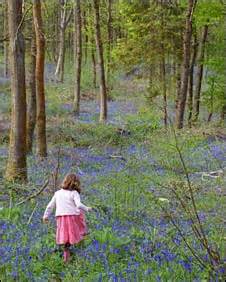
 

Day 251 Careful and Carefree

Dreams have provided a source of personal revelation for me since I started recording, and subsequently learning about them, in 1986.  The poem “The Shadow of Shame” was based on the dreams of several nights, all bearing a similar theme – my ability (or rather inability) to form relationships.   By weaving together the images from those dreams and writing the poem I was able to recognize the underlying culprit.

Shame is insidious, silently spreading its menace, growing like a weed rooted in the soul.  It began for me the year I turned nine, when my teenage sister got pregnant.  While no one directly spoke to me about what was happening, I knew by the raised voices and frantically whispered arguments that something was dreadfully wrong.   A wedding was hastily arranged despite my father’s protests and my sister’s life was changed drastically.  That fall, when I started a new school, the shadow was already casting its pall over me – I felt myself on the outside of the circle looking in.  None of these kids, I was sure, was already an aunt or uncle.

Then, the summer of my eleventh birthday, my parents sat me down to tell me about my mother’s previous marriage and divorce.  Imagine my shock to learn that my sisters were half-sisters, and that two of my male ‘cousins’ were actually brothers.  “Divorce is a sin,” my mother told me, “So we don’t talk about it.  People would not approve.”  Marked by this new secret, I knew my hopes of belonging were shattered.

When we moved, mid semester, in the eighth grade, I was taken out of my gifted classroom and thrust into the mainstream.  Where previously being an oddball was celebrated, my new peers scoffed at my quirky abilities further fueling my growing awareness that I was fatally flawed.  When a boy I had latched onto and actually crushed on, publicly called me a dog, I learned how deep humiliation can run, as I then became the target of relentless bullying – everyone in our school took to barking at me at school and anywhere else I happened to be.

When we moved from that community, I had already learned the importance of caution around others.  I knew that making friends required careful observation and consideration, and demanded that I not reveal my true self.  There was little provision for letting one’s guard down, or being carefree.

And then my father dropped his bombshell – revealing to me the duplicity of his life – and any shame I might have felt before was now multiplied a thousand fold.  I was certain that others could tell by looking at me that my family was a total wreck, and furthermore, I knew they were justified in their judgments of me.  I shrank into myself, seeking dark corners, avoiding eye contact, or skipping school all together.  I tried running away, cutting, drinking, but nothing numbed the emotional pain, nor brought me closer to others.

When, at fifteen, I was abducted and raped, my family unwilling and unable to deal with the fact, just didn’t talk about it.  Called a whore by my father, I pushed the memory to the back of my consciousness and fixated instead on ways to end my life.

I thought I had put all that behind me.  I believed that through therapy, and just as a side effect of maturation, I had eluded the black cloud of my youth – and yet here it is -rearing it’s ugly head again, reminding me that I still struggle with getting close to anyone, certain that they will despise me if the truth comes out.

Ridiculous, isn’t it?  Yet, I bet that we are all, in some degree, affected by this plague.  Shame builds walls where there are none, creates distorted images of superiority and inferiority, and takes personal blame where there is no fault to be had.

In the final dream, I am befriended by a troubled youth ( something that occurs regularly in my chosen occupation).  It is at the moment in which we both realize that we have shameful pasts that we are able to let down our guards and freely be with one another – just two humans being.

Maybe it is the very things that shame us that make us human, and the willingness to share our shadows that brings us connection.

I know that this heart longs to step out of the restrictions of careful interaction to experience carefree intimacy with another.

In the meantime, I will keep dreaming.

No Words

I have no words
that will change your plight.

I cannot undo the past
nor change the course of your life.

I am powerless to rescue,
fix, or uplift you in your time of need.

Please know that I see you,
know that in my heart I weep.

Know that while I empathize
I can never fully understand your pain.

There is no judgment here,
only heartfelt compassion.

When I reach out a hand to you,
wordlessly, it is out of respect.

I believe in you.
I believe in your strength and your courage.

In my silence, know that I bear witness
to the potential that lies within and before you.

I believe in the power of your own love to overcome.
There are no words to define what is possible in life.

(Image: imgarcade.com)