Children As Mirrors

When I think of my grandchildren – one now six months, and one on the way – my heart swells and tears fill my eyes; I love them so much.  I hope that I have extolled upon my daughters that children are a blessing to be cherished.

One thing I can tell them is that children will be their greatest teachers.  Honest, straightforward, and ever curious, children will tell it like it is, question inequities, and challenge everything.  Like little parrots, children repeat what they hear, and mimic gestures and behaviours.  They will also reflect the good, the bad, and the ugly.

My moment of revelation about how intrinsically linked mothers and children are came when performing therapeutic touch on the mother of a boy with severe autism.  His constant spinning and screaming was a source of anxiety for the young mother seeking my help.  She had hoped I could calm him, however; he was not receptive to staying still, so I offered her a treatment instead.  Amazingly, as soon as the mother began to relax, so too did her son.

All the way home, I thought of my own children, and questioned how many times their anxiety or distress was merely a reflection of my own emotional imbalance.  Over time, I had to admit there was a definite link.  If I would return home tired and distraught, that would be the time my children were acting up.  If I was feeling happy and positive, the children would reflect that back.

In therapeutic touch we have an analogy that the therapist is like a tuning fork:  when s/he is centered and grounded then the client can follow suit.  The same goes for children.

Another way of looking at this, is that children are mirrors for their parents.  When my oldest, Marie, is being impulsive, she is reflecting my own tendencies.  When Ester is feeling anxious, or John is burdened by being overly introspective, they are exhibiting the very traits I myself struggle with.  The challenge for me, as parent, is to a) take ownership of my shortcomings, and b) work to heal them so that my children can do the same.

Children are teachers because they offer us the opportunity and the incentive to become better people.

Grandchildren teach us how to fall in love all over again.

I’m so glad I enrolled in the school of parenting!

Mickey Mouse Meets Gestalt

Looking out from under the big white wooden chair, I can see Mickey Mouse approaching with a kettle of boiling water.  He’s going to pour the water on me, and even though my family are all around, and I am screaming, no one notices. 

“I had this dream repeatedly as a child, from about the age of five.”

“What is the significance of the white chair?”

“My father used that chair to teach us how to skate.  We had to push it around the rink until we learned to stay up on our own.  I remember being very frightened, because my father wasn’t a patient man and I didn’t want to upset him.”

“What would happen if you upset him?”

“He would yell, call us names, tell us how stupid and incompetent we were.”

“Why Mickey Mouse?”

“I don’t know.  I’ve often wondered about that.  Mickey Mouse would have been the prominent cartoon character back then, and I loved watching the Mickey Mouse Club on TV.  I really wanted to be a Mouseketeer.”

“In Gestalt therapy, the belief is that each aspect of the dream represents a part of you.  Would you be willing to try something with me?”

I nod.

“I want you to put yourself back in the dream and let me guide you.  Imagine you are five years old again, and let me know when you can picture the scene.”

I close my eyes and remember.  “Okay.”

“How are you feeling?”

“Frightened, very frightened.”

“Tell me what’s happening. Talk it out.”

“Mickey Mouse has a kettle of boiling water and he’s going to pour it on me.  I scream, but no one is paying attention.  I can see my Dad and my sister Joanne, but they are not looking my way.”

“What do you want to say to them?”

“Help me!  Help me!  Can’t you see I’m in trouble?  Somebody stop this from happening!”

“Tell them what’s happening.”

“He’s going to hurt me.  That man is going to hurt me.  Please, somebody stop it!  Listen to me!”

“Tell them what you need.”

“I need you to hear me.  I need you to see what’s happening. I need you to see me.  Nobody sees me….”  I break off crying.

“Tell me why you are crying.”

“My childhood home was very chaotic.  There was always lots of fighting going on, and although I don’t remember much of the early years, my mother says I was always tossed over the fence to the neighbour’s house, so they could look after me. ”

“Why do you think this dream has stayed with you?”

“I never felt like I mattered in my family growing up.  There was so much going on that I felt insignificant.”

“In every family there is a rivalry for attention.  How did that play out for you?”

“Well my oldest sister was always sick, so she got most of the attention, and my next sister withdrew into herself, and later we found out she was schizophrenic.  My youngest sister was a handful, throwing tantrums and being difficult to get along with.  I tried to stay out of the way, and not cause any more trouble.”

“So what did you try to do to get noticed?”

“Achieve.  I tried to be the smartest and the most successful?”

“How did that work for you?”

“It didn’t.  I never felt like I could be good enough, and when I did do something worthwhile I got shot down for bragging about it.”

“Do you still feel that way?”

“Not so much.  I’ve struggled with not feeling good enough, but I don’t need the glory anymore.”

“Why do you think that is?”

“Maturity.  Life experience.  When I first learned how to do Therapeutic Touch I did a lot of volunteer work, and I soon realized that there were many people whose lives were worse off than mine, and that by giving a little bit of my time, I could make a difference.  It felt so amazingly rewarding to help another, that I realized how unimportant everything else was.”

“So what would you tell that little girl today?”

“Well, first of all, I’d reach in under that chair and offer her my hand; then I’d pull her to me and give her a great big hug and tell her that I love her.”

“Tell her as if she is here.”

Come on, Sweetheart, lets walk away from all this commotion.  You are okay now.  I am here, and I can see you, and I’m not going to let that man hurt you. 

Why doesn’t anyone see me?

Because they can’t right now, Honey.  They can only see their own pain, but that doesn’t mean you’re not important.  You matter very much. 

Are things going to get better?

Eventually, but not for a long time.  But I want you know that you will be okay.  You will be better than okay. 

Why are you here?

Because I think it’s important that you know you are perfect just the way you are. 

“Do you feel better?”

“I feel like I have had a breakthrough.”

“How so?”

“I understand now that the little girl in me sought attention for a long, long time, and I don’t need to do that anymore.  It feels lighter.  Achievement is good in and of itself.  The need for glory only taints it.”

“And Mickey Mouse?”

“Well that’s just what we become when we seek out fame and fortune, I guess.  Burned.”


Learning About Death

Taylor was diagnosed with lung cancer at the age of twenty-one. Although he never smoked a day in his life, his father’s family were heavy smokers, and he suffered for it.  He was my cousin Lynn’s only son.

I belonged to a weekly meditation circle at the time, and Taylor, who was studying to be a physicist, asked if he could join.  I told him that we not only meditated, but liked to explore the realm of intuition as well, and he said that was fine with him.  So week after week, Taylor would join in and add his scientific musings to our experience.  He told me that while he was skeptical, he was sure physics was going to bridge the gap between the rational world and the irrational.  He said that I needed to involve myself in research, if I was ever to prove the existence of anything beyond the accepted norm.  I would laugh and tell him that I was a Literature major, and research was outside my norm.

Taylor’s bald head, and limping figure became a fixture at our weekly meetings, and we all came to love his gentle banter.  Unwilling to accept anything at face value, he brought a healthy balance of skepticism to our circle.

Then one evening, he did not attend. Nor the next.

His mother called me.  “Taylor is in the hospital, and they think he has three more weeks to live.  He is asking for you.”

He was asleep when I entered the room.  His girlfriend greeted me and told me that he slept most of the time, but that if I could wait he would wake up.  She excused herself and left us alone.

Taylor’s body look so fragile and boyish lying in that bed.  An oxygen mask covered his face, so that only his closed eyelids could be seen.  His head was still bald, and he looked more like an infant than the young man I had come to know.  At this point in my life, I had not been this close to death, and I wasn’t sure what to say.

Taylor’s eyes opened and I saw him register my presence.

“Hey, Tay!”  I tried to sound cheerful, compassionate.

He reached up and pulled the oxygen mask down.  “Thanks for coming.”

“No problem.”

“I asked you to come, because I want to talk about what’s happening to me.”  His words were laboured.  I could see it was an effort for him to talk.

“Okay,”  I began.  “Are you sure it won’t be too much for you?  Are you okay without the mask?”

“Oh, yes.  It just keeps me comfortable.”  He replaced the mask and took a few breaths.  “I fall asleep a lot.  Even mid-sentence.”

“That’s okay,” I reassured him.  “I’ll just wait.”

“Thank you,” and he was gone again, sleeping behind the mask.

I looked around.  The room was spacious with a large picture window overlooking the southwest part of the city.  A recliner sat in the corner by the window, and several other chairs allowed for many visitors.  The blue walls reminded me of the night sky just as the last rays of light are vanishing:  a blue tinged with indigo.  So this is where people came to die.

“I want to talk about my dreams.”   I understood now why he had invited me.  I had enrolled in a course at the university that explored the meaning of dreams.  It was actually a religious studies class, and examined how God speaks to us through our dream messages.  “Everyone else wants to talk about things that have no meaning for me anymore, like getting their cars fixed, or the weather.  I don’t have time for small talk.”

He closed his eyes again.  I waited.

“I have been dreaming about horses.”

“Interesting.  Horses were the original mode of transportation, so they are seen symbolically as the vehicles that transport us from one realm to another.  Apparently horse dreams are common at the end of life.”

He nodded.  “Sometimes I can’t tell if I am dreaming or it’s real.”

“What do you mean?”

“I am so emotional.  I can’t seem to turn it off.”  I had to smile.  My highly rational, intellectual cousin not being able to control his emotions.

“Well, I’m no expert, but I’m going to guess you are going through one hell of an emotional time.”

His eyes met mine and we both laughed.  “You’re right about that.”

We both fell silent.

* * * * *

Our visits became a daily occurrence, but I never stayed long as it tired him too much.  We talked about his dreams, his emotions, and as it got closer to the end, we talked about his fears.

“I’m not sure if I’m actually dreaming,”  he told me one day.  “More and more I feel like what I am experiencing is real.”

“Describe it to me.”

The silences were growing longer.  Speaking, or even staying awake, seemed to take great effort now.  I would hold his hand to let him know I was still with him.  I felt such reverence towards my young cousin for letting me share these moments with him.

“I see figures.  Grey figures.”

“Do you know who they are?”

His eyes stared, unfocused, into the space before him.  “No.  Can’t really say they are people.”

I pondered this revelation while he rested. I thought back to a story my mother told me about my birth.  During my delivery, she suddenly lost physical consciousness, and found herself, disembodied, floating above the delivery table.  She said she saw her father beside her reaching out his hand, and as she went to take it, she realized what was happening and pulled back, being jolted back into her body and the labour pains.  She claims that she had refused death in that moment, and remembers telling her father that she had five babies to look after and couldn’t go with him.

Taylor’s eyes were open again.  “What if the figures that you see are here to escort you to the other side?”  I asked.  “How do they make you feel?”

“Afraid.”

“Maybe your fear is what is clouding your ability to see them.”

He didn’t wake up again that visit.

* * * * *

The next day I arrived at the hospital later than usual.  Taylor’s mom met me in the hallway.  “He’s gone.  He tried to wait for you, but didn’t make it.  He did leave a message for you, though.  I don’t know what it means, but he said to tell you that you were right, that all came out clear in the end, and not to worry about him.”

As I hugged her in condolence, I thought my heart was going to burst.

In his short life, this beautiful young man shared so much with me:  his theories and questions, his deepest vulnerabilities, and his experience of the beyond.   Together, were we able to strip away all the noise and distractions of everyday life to touch something much more sacred and real.


Saying Goodbye To Father

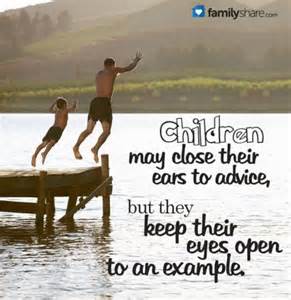
My father fought against death at the end, even though he was wracked with pain,  had difficulty breathing, and spent many of his nights in hospital.

“At what point do we stop all this intervention, Dad, and talk about keeping you comfortable?”

It was the early hours of the morning after another night spent in emergency.

“Now,”  his voice cracked as he spoke.  Dad was so clearly in distress it was alarming.  Involuntary spasms of pain kept him from resting, and the strain was telling on his ashen face.

I took his hand in mine.  “Dad, all I want for you is peace,”  I hesitated.  “To be honest with you, Dad, I have never known you to have peace in your life.”

He squeezed my hand.   “Not a lot.”

“Do you believe that there is something for you on the other side, Dad?”

“I don’t know, Honey.  I don’t have the faith that you do.  I don’t know what to believe.”

“Some say that our feeling about God is related to our relationship with our own father.”

“How so?”

“When you were a boy, huddled in the coat closet, hiding from your father, what were your thoughts?  Did you ever think about God in those moments?”

“All the time.”  My father closed his eyes and laid back.  “I remember asking God over and over, what I did wrong to deserve the beatings.  I thought  God was punishing me.”

“Exactly, Dad.  Maybe your fear of death is because the little boy in you thinks God will reject you, or inflict more pain.”

He opened his eyes and looked at me.  “You could be right.  I know I’m afraid.”

“God didn’t punish you, Dad.  Your father did.  I have to believe there is something better awaiting you.”

He closed his eyes again, processing what I suggested.  “You were a child, Dad.  It wasn’t your fault.  You need to forgive yourself.”   A tear trickled down his cheek.

We didn’t talk about it further, but we did speak to the doctor on duty about changing Dad’s care.  Plans were made to transfer my father to palliative care.  The day he was to be moved, my father announced that he didn’t want any visitors.  He said he needed time to settle in.  They moved him mid-morning.  He died within hours.  I rushed to his side, but it was too late.

“Good for you, Dad,” I cried.  “You finally made it.”


Path Rights

Born underweight, and with a hole in her heart, my oldest sister seemed doomed from the start.   By the time I was born, her condition had deteriorated, and she spent most of her time in hospital.  My parents were told to expect the worst.  Open-heart surgery was the great new procedure that saved her life at thirteen.  She got better.

Two years behind her peers at school, she was hell-bent on catching up.  Years of being pampered had not helped her emotional development, and she was not afraid of acting out.  She loved being the center of attention, and didn’t care if it was for being good or bad.

Eleven years her junior, I found my sister’s volatility scary.  It was almost a relief when she would lock me out of the house, or ignore me for long periods of time.  Our relationship didn’t really develop until she gave birth to her own daughter, then she needed me.  I was a built-in babysitter.

I watched my sister jump from one bad relationship to another.  I witnessed my parents rescuing her time after time, and I was dumbfounded at her disrespect and lack of gratitude in return.

She could be sweet as anything when she wanted something, but if she wasn’t interested, or changed her mind, look out.

When she got sick again, I decided to explore ways to help her.  The more I learned about the body-mind connection, the more I was sure I could save her.  She laughed in my face.  You are so naive, she would say.  Or, You are playing with the Devil.  Personally, I’d always thought she was the devil.

One day, I decided that I would just let her be, and stop trying to change her.  I told her as much.  She tried to fight with me.  I stood my ground.  She cried.  Then finally, we talked.

“Everything I’ve been studying and doing is to help you,”  I explained.  “But it’s not working, so, I’m not going to push anymore.  You are sick, it is your life, and you have to do what is right for you.”

“You don’t understand,” she said.  She was right, I didn’t.  “I don’t know how to be any different.”

“What do you mean?”

“If I did what you say, and got better, then what?   Being sick gives me power.  It lets me get away with whatever I want.  How could I do that if I got better.”

She had a point.  Being sick gave her enormous power.  How could I argue with that.

In all the years that I had judged, and fought with my sister about her life, I had not appreciated that it was working just fine for her purposes.  We all have the right to our own paths.

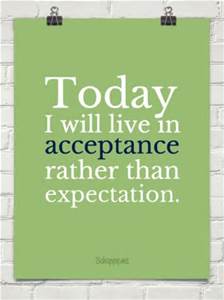
Acceptance

“I know what I want to give my Father.”  Dee looked at me through her veil of blonde hair.  Her face always bore such sweetness, yet the young girl I knew was so intense.

“Tell me.”

Dee was dying.  This was her third dance with cancer, and the doctor’s said it would be her last.  I visited daily, at her request, and we talked about fears, and dreams, and spirituality.  Lately, it had been on her mind that if her life was to be a short one (23 years), then she had to make it purposeful.

“I have decided that the best gift I can give him is to accept that he loves me, even if he doesn’t show it the way I’d like.  What do you think?”

Dee and her father had been fighting since the news came.  He wanted to take her home, but she refused.  She wanted to die here, in the town she had been living the past four years.  He couldn’t understand her unwillingness to fight in the face of death.  He wanted the doctors to do more.   She wanted him to let it go, and to be more emotionally available to her.  We had been discussing their relationship during my past two visits.

“I think that is an amazing gift, Dee.  I am forty years old, and I haven’t even been able to do that with my own father.  That’s the best gift ever.”

* * *

Dee had me thinking.  What would happen if I were to accept my father, just as he was?

Dad’s 75th birthday was coming up and I hadn’t yet bought him a gift.

He had asked for my acceptance once, and I’d said no.  It was the night he shared with me his awful secret.  He sat the family down and told us all.  He said that all he wanted was acceptance, and when he turned to me I said I couldn’t do it.  I said I needed my Father, and what he asked of me was too much.  I stormed out.

So, on his 75th birthday, I wrote him letter.  I apologized for that girl so many years ago, and I told him that I never really understood his problem.  I told him that I knew he loved me,  and that I loved him too.  And I said that when I got past all my self-righteous anger and frustration, I had to admit that he was probably the best teacher I ever had in life.  If it hadn’t been for his struggles and the challenges they presented for all us, I might never have been the person I was.  If there is a divine plan, or higher purpose for life, I wrote, then he accepted a hellish existence in order to give us the opportunity to grow and evolve.

He cried when he read it, and he called me up after, and said I had an odd way of looking at life, but that he appreciated it.  He appreciated it that I was willing to accept him as he was, but he wanted to be better.   Did I think it was too late?

I told him what Alan Cohen said:  “Look in the mirror.  If you see yourself looking back, then there’s still time.”

* * *

Dee’s father liked his present, too.  His anger had broken the next time I saw him, and he even let me see him cry.


Whiskey Fights

Most evenings I would return home from work at 10:30 exhausted by my day.  Juggling school, homework, and a part-time job was taxing, particularly as I worked from six to ten, four evenings a week, as well as eight hours on Saturdays.  Typically, I would stop to visit with my parents before heading off to bed.  It was always at these times that my father would engage me.

It started with an empty drink glass he would balance on his knee. This was to be my cue.  I would ignore him.

“Ahem!”  He would nod at the empty glass.

Continuing to ignore him, I would talk to my mother about the day.

Clink, clink, clink.  My father would tap the glass to get my attention.

“Your legs worked fine the last time I saw them.”

He’d raise his eyebrows in displeasure.  “I worked hard all day.  It’s the least you could do.”

“I worked hard all day, too.”  I’d object. “Get your own drink.”

My mother, the peacemaker, would take a step towards him.

“Don’t you dare, Mom!  You worked equally as hard all day.  He can get his own.”

“Is this the thanks I get?  All I want is a simple drink, and my own daughter won’t even get up and get it for me.”

It was the point of the thing.   My father was the epitome of male chauvinist pig.  It was his home, his castle, and everyone and everything was expected to pander to him.   It made me mad.

My mother stood by, hesitant.

‘It won’t hurt him to serve himself once in awhile.”  Now I was arguing with her.

“Your not going to win,”  she’d sigh.  My father leered with satisfaction.

“Not if you give in.”  It was a hopeless plea.  My mother always gave in.  Didn’t she realize I was on her side?  I was doing this for all of us?

This wasn’t about the drink.  It was about all the times he made her have dinner on the table the moment he walked through the door, then pushed his plate away after two bites, exclaiming disgust at her cooking; humiliating her in front of all of us.  And how he always had to have the first helping of pie, and it had to be flawlessly served; no broken pieces for him.   It was about how he insisted on napping in a chair beside the dinner table, forbidding us to talk even though we were busting to discuss our day.  And how every time we were watching the movie of the week, he would come in just at the climax and insist on changing the channel, even though he had a TV set in his room, which only he was allowed to watch.  He was the King of the Castle, he’d remind us.  As if we needed reminding.

For once, I wanted to win.  To prove him wrong.  To see him back down.  It wasn’t going to happen.

I got up and grabbed the glass.  There was no winning against my father.  He knew it.  She knew it.  I seethed inside.

(Image: www.photigy.com)

Gift of Communication

It was a Friday afternoon and I was picking up my three children from school.  Within five minutes of climbing on board, the oldest had her younger brother in tears.  I felt my ire rising.

By the time we got home, she was lacing into me.  My first instinct was to let her know who was boss, but I was the adult, so I walked out of the room, and took a deep breath, willing myself to gain some perspective.

Calmly, I rejoined my daughter, gently placing my hand on her shoulder.  “What’s wrong?” I asked.  “Your brother and I weren’t around you long enough to get you this upset.  What’s bothering you?”

My eleven year-old daughter’s anger melted into tears.  “The kids at school are pressuring me to smoke,”  she sobbed.  “I told them I don’t want to, but they keep bugging me.”

I sighed with relief.  Thank goodness I had not met her aggression with more aggression, shutting down any communication between us.  This child needed someone to confide in, and I was so grateful I could be there for her.

That was the day my daughter taught me never to take another person’s moods personally, because when you do, you miss the possibility of greater intimacy.

(Image: www.nhs.uk)

Abuse and Money

I arrived home from school one day to find my mother sitting in a corner trembling, her face face blotched red and swollen from crying.  “Mom?”

The eyes that stared back at me were distant.  This was not my mother.  I took stock of the situation.  It was 3:15.  My little sister would be home from school in half an hour.   Dad would be home at 4:30 and expect dinner on the table.  Nothing had been started yet.  I dropped my books and got down to business.

“Mom.  You need to talk to me.  D is going to be home soon, and we have to get dinner on.  What’s going on?”

She nodded slightly.  “I can’t do it anymore.  Your father……..”  Her voice trailed off, but she didn’t need to say anything.  I knew how brutal my father could be.  I heard daily how stupid she was, and how she never cooked anything properly, even though that was her only job.  I wanted her to leave him, too.

“I’ll do whatever I can, Mom.  In two years, I can quit school, and get a job.  I’ll support us.”

Was that a faint smile?

“We’ll make it work, Mom.  We’ve got each other.”

Reaching for the pots and pans, I added, “Now what can we get started for dinner?”  There would be hell to pay if dinner wasn’t on the table the moment my dad walked in.

* * *

At twelve  years of age, I learned that money was what kept my mother in an abusive relationship.  It never occurred to me that she had the option of getting a job; she was a stay at home mom.  Five years later, we would go through a similar scenario, only then I was already living on my own, and had enough sense to get her to a lawyer.  In the end, my father convinced her to stay.

Years later, I would find myself a stay at home mom, with a husband who controlled the purse strings.  Like my mother, I felt powerless, and inferior.  Unlike my mother, I left anyway.  I braved poverty in order to find my worth.  Nevertheless,  I struggled, seldom able to give my children the material things they craved.  I felt guilty, worthless, inadequate.  After six years, I had a serious talk with God.

“God,” I said, “I want to make a difference in the world, but I can’t do it if I don’t even know where the next meal is coming from.”

I tried affirmations:  All my needs are always met; there is enough for everyone.

Eventually, things turned around. Yet, my relationship with money has not yet healed.  I want to be able to say the money’s the money, the way my new husband does.  I want to be able to see money as a means to an end, and not the end of my means.

My attitude towards money still needs work, but I am ready for change.

(Image:  empoweringparents.com)