Independence

“Take the train into the city, Mom.  It would be so much easier.”

“No,” I insisted.  “I like the independence of having my car.”

So, I arrived at my daughter’s Monday morning to find there were no parking spaces on her street.  I texted her to meet me outside.  It was close to lunch time, so I suggested we go for some lunch and then, hopefully, find a place for my car afterwards.  I parked near the restaurant, which was just blocks away from her home.

“I can leave my car here.”

“No, parking here is only one hour.  We’ll have to move it after lunch.”

We lingered on the patio, enjoying the day and catching up on each other’s lives.

After lunch, we drove around again, searching in vain.  I parked in the one hour zone again, hoping something would come up later.

We rested for a while, then drove the car to get some groceries from the store that was, also, just around the corner.  On our return, I found a spot across from their townhouse.

“I won’t want to move my car any time soon,”  I joked.

And, in fact, I didn’t.  My daughter’s home is situated in a trendy neighbourhood close to shops and restaurants – really anything you need is in walking distance.  My car, it turned out was just a burden.

My need for “independence”, on my terms, really only complicated things for me.

I wonder how many other routines or habits complicate my life.

Simplifying my life means being willing to let go of some of the beliefs that I cling to, and being open to another way of doing things.

Birthday Weeds

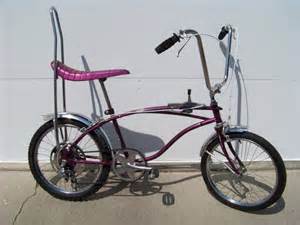
“Can I have a bike for my birthday this year?”  A typical, impatient eight-year-old, I must have asked my parents this question a million times.  I was excited for my upcoming birthday, and really wanted a bike with a big banana seat, and raised handle-bars.

“You’ll have to wait and see,”  was the constant reply, but my birthday falls in the middle of the summer, and so many perfect bike-riding days were passing me by.

As my big day approached, my father teased me that I was getting bubblegum for my birthday.   I was confident he was kidding and that I would soon be soaring through the streets on my new, longed for wheels.

Birthday morning came, and no present.  “You have to wait till your party,” Mom informed me.  The hours just didn’t pass fast enough.   My friends arrived in the afternoon, and we swam for awhile before my father barbequed burgers and hot dogs, and then it was time for gifts.  After opening all the gifts from my friends, the moment I had anticipated finally arrived.

“There is one more gift,”  my father announced, disappearing into the garage.

And there it was!  A shiny, new, all-mine, bicycle.  “Here’s your bubblegum,”  Dad beamed.  I beamed back.  It was exactly what I wanted.

“Thanks so much!”  I gushed, and was about to say more when I noticed my mother following with something else.  Another new bike……for my little sister.

What?  It wasn’t her birthday until November.  “Me too, me too,”  she started to squeal.

I didn’t say anything.  I didn’t know what to say.  I got what I wanted, so why was this bothering me so?

It was a question that would fester inside me for a long time.  That year would mark the end of birthday excitement for me.  It was the start of a legacy of disappointment that I never addressed, and therefore; allowed to grow out of control.

For my ninth birthday, I got a new bike, but I also gained the realization that life is not always fair.  I knew without asking why my sister got a present on my birthday – it was so she wouldn’t throw a temper tantrum – but I also knew with certainty that I wouldn’t get a present on her birthday, and somehow that didn’t seem right.  I wasn’t given to temper tantrums, but did that mean that I also had to forgo being special for one day?

In the years that followed, my birthdays were celebrated on family vacations, usually in public places with just a cake to mark the occasion.  I told myself it didn’t matter.

I lied.

Truth is, I allowed that initial seed of disappointment to ferment inside me.  I didn’t confront the issue because I thought I was being oversensitive.  I didn’t want to hurt my parents feelings, and I certainly didn’t want them to think I was ungrateful.  But the more I pushed the hurt down, the bigger it grew.  In my own mind, I compounded the issue.  My parents didn’t love me as much as they did the other children;  there was something wrong with me.   Every time I felt left out or overlooked, my feelings were just confirmed.  I came to dread my birthday month.  By the time I reached adulthood, this dread was accompanied by depression.

The issue exploded on my 40th birthday.  My mother, in her usual way, had been calling me leading up to my birthday, making comments such as:  “You have everything you need, I don’t suppose there is anything I could get you anyway,”  or “Don’t know if I’ll get you anything for your birthday this year,” and so on.  When she showed up with a frozen turkey, I lost it.

“Mom!  Why do you have such a problem with my birthday!  If you don’t want to celebrate it, then don’t, but don’t taunt me with it!”

“Of course, I want to celebrate your birthday.”  She was taken aback.

“You never have!  You always make it sound like it’s such a hardship.  I’d rather you didn’t acknowledge it at all!”

“What do you mean?  I’m here with a gift aren’t I?”

“Yes, Mom, but all week longed you’d hinted that there might not be a gift, as if you really don’t want to give me anything.”

“Well, it’s just that you have everything.”

“It’s not about the gift, Mom.  It’s about the acknowledgment.”

The conversation didn’t go well.  My mother left feeling hurt, and I felt I had made a worse mess of things.  I would like to say that things have improved, but they haven’t.  For the second year in a row, my mother has completely forgotten my birthday.  I asked for it, I guess.

When you allow things to fester, they grow roots, and like untended weeds, can get out of control.

I am fifty-four years old, and I still don’t know how to uproot the weed associated with my mother and my birthday.

Growing Wings

“Thank you for being here, Mom.”  The exhaustion in my daughter’s voice was echoed in her face.  The epidural had finally kicked in, and we were all feeling a sense of relief.  It was 5 a.m.  Her first contraction had hit at 1:20 the day before, as we were walking home from a lunch out.

I didn’t know what to say.

So many feelings were flooding me.  It didn’t seem like that long ago that I had laboured with her, pacing the hospital hallways, seeking relief in any way that I could.  Now my baby was having a baby.  It was a miracle to behold.

So I was feeling sentimental, and at the same time, wishing I could do it for her – taking her pain away.

I was in awe of the strength and courage she was showing, this young woman who as a child feared everything.   She cursed a few times, and moaned as the pain wrapped around her and squeezed relentlessly, but not once did she complain, or wish it away.  From somewhere inside her she had harnessed a determination to see this trial through, and her focus was admirable.  I could not be more proud.

I knew what awaited her at the end of this journey.  I knew all about the indescribable bliss and wonder that fills you the moment that baby emerges and is placed in your arms.  I understood how in that moment there is an instantaneous shift of realization that this new little being is totally dependent on you.    I couldn’t tell her, but she would experience it soon enough.

And I couldn’t tell her that my presence on this sacred occasion was no burden to me, but an incredible gift.  She could never know how grateful I was to her, and especially the baby’s father, that they had invited me here to witness this sacred event.

So, I smiled and squeezed her hand, and stroked her face, and reassured her that it would all be over soon, and bit the inside of my cheek to stop my own flood of emotion from pouring forth.

Somewhere along the way, my baby had become a woman, and as I bore witness, she grew wings and took on her mission with grace and dignity:  ascending to motherhood without looking back.

One Way Conversation with Dad

Happy Birthday, Dad.  You would have been 88 today.

I miss you today, Dad.  I miss your wisdom; I could use some right now.

I don’t know if you can read this, Dad, or hear me, but I’d like to pull up a chair anyway, so we can talk.  You see, I’m just not feeling that confident today, Dad.

I know, I know.  You’d say “Why not Squeegie?  Life’s what you make of it, and you’re doing a pretty darn good job, from what I can see.”  And I would smile, despite myself, and thank you for the vote of confidence.

Truth is, I’ve made a lot of mistakes in life, Dad, either from stubbornness, or just plain stupidity, and I’m beginning to think that that old saying is about me – you know, the one you used to say all the time:  Failure to plan is planning to fail.  Well, I failed to plan, Dad.

Before you say anything, I’m not bemoaning my life – it has been good.  I’m just recognizing, at my age, that if I had planned, life would be a lot different right now.  I’d be retiring with my friends, and looking forward to spending many days with my grandchildren.  Instead, I don’t even have a full-time job, so retirement is definitely not in the cards.

I know what you’re thinking: you weren’t a very good role model, because you failed to plan also. ( Oh, by the way, I was mad at you for that – for leaving Mom with so little, despite all the money that you made.)  Seems I’m doing the same to myself.

But it’s more than that, Dad.  I just don’t feel like I can trust myself, enough to make right choices, career-wise.  I don’t know what’s wrong with me, but I have a hard time telling if I’m doing a good job, or am appreciated.  I always feel apologetic or inadequate.  Why is that?

No, don’t start, it’s not all your fault.  Okay, you didn’t help, but I’m an adult now, you’d think I’d be over that.  I’m just tired of doubting myself.

Remember when my marriage fell apart, and how the day I realized it, I drove directly to you?  You sat in your chair and listened, while I crumpled on the couch, spewing anger, and disappointment, and heartbreak.  I felt so defeated, and you cried with me, and shook your head, and raged on my behalf.  I don’t remember exactly what you said, but this is what I heard:

“Squeege (your pet name for me), I don’t know why this has happened to you, but I do know this:  you are a bright, loving woman, and you give your heart and soul to everything you do, and everyone you love, and you deserve better than this.  Goddamn it, you deserve better than this!”

You could be a bastard, a lot of the time, Dad, but you were also my rock.

I’m just sorry that today, you weren’t here for me to tell you so. As for my problems, guess I’ll have to figure this one out on my own.

I was too proud to tell you when you were alive, Dad (and too stubborn), but truth is, I needed you.  Still do.

Thanks for listening, and by the way, Happy Father’s Day.

Love you,

Squeege

Three Sides To A Story

My first impression of Sherry was “Stepford Wife”.  A tall, thin, blonde, Sherry appeared to be the perfect wife and mother.  The stones in her garden coordinated with the ruffled awning above her front door, and accented her meticulously manicured lawn and flower bed.  Inside was no different:  her floors shone spotlessly, despite the presence of three children; and a smell of fresh baking wafted through the air.  Even though my visit was impromptu, Sherry was dressed stylishly in a crisp white blouse, and form-fitting skirt, complete with heels, and suitable accessories.  I was immediately intimidated.

My next visit to her home, this time invited, revealed much the same.

Sherry’s husband, Rob, was equally as impressive.  Also tall and thin, Rob was a quiet intellectual, who stayed fit by running marathons, and coaching his boys’ soccer teams.  He seemed to take his wife’s efficiencies into stride, and like her, was unruffled by his rambunctious young family.

Sherry and Rob soon became part of a social circle:  a group of ten couples that met once a month for dinners, cards, and sometimes, social outings.  They fit right in.  Once a year, we would all gather with our children for a large barbeque and fireworks.   Life was good.

Then, one day, I got a phone call from a mutual friend.  “Sherry is in a bad way,”  she said.  “Can you help?”

I knew something was wrong the minute I stepped in the door by the state of disarray in the house.  Sherry’s six-year-old daughter let me in.  She appeared frightened and withdrawn.

“Where’s your Mom, Sweetheart?”

She led me through the house to the kitchen, where Sherry sat crumpled in a chair, head down on the table, hair matted, and smudges of makeup streaking her face.

“Sherry?”

“He left me.”  She didn’t even look up.  Her voice, flat and lifeless, spoke volumes.

I spotted her two boys in the adjacent room, watching television.  I could see them glancing our way anxiously.  Please help!  their eyes pleaded.

I reached for the kettle.  “Have you eaten yet today?”  Telltale signs of kids preparing their own food and abandoning the dishes suggested she hadn’t.

Sherry was slow to respond.  “What?……um….I’m not hungry.”

I made her tea and toast and put it before her, and encouraged the children to go out and play.  Relieved, they complied.    “Tell me what’s going on.”

“He left me for another woman.”

I was stunned.  “Honey, try to eat something, and let me help you.”

She sat up, staring at the offering before her with complete disinterest.  She pushed the plate away, and cradling the cup, took one tiny sip, then pushed that away too.  Her normally thin frame appeared gaunt.

“Back up,”  I suggested.  “Tell me what happened.”

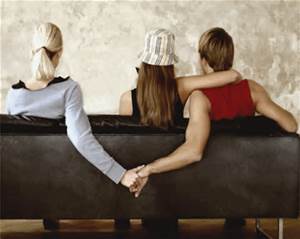
Rob had had an affair three years earlier with a woman from work.  When Sherry found out about it, Rob ended the affair and he and Sherry entered marriage counselling.  She had tried really hard to be the perfect wife and mother, so that he would love her again, and thought everything was going well, but out of the blue, he left.  He was now living with his mistress.

Sherry’s heartbreak was so intense, it threatened her life. Within weeks she was hospitalized because of severe malnutrition.

It was hard not to sympathize with her situation and write Rob off as a total jerk, but as always, there is another side to every story.

“I reached the end of my rope,”  Rob explained.  I love my wife, and I adore my children, but living in a constant state of perfection is exhausting.  Sherry has to be the best at everything, have the best house, wear the best clothes, everything is about impressing others.  There is nothing genuine about her, about us.  She is incapable of authenticity.  I tried to stay for the children’s sake, but I just couldn’t do it anymore.  I am dying inside.”

“So you left for another woman.”  I couldn’t keep the edge out of my voice.  I am, after all, a woman.

“If you met her, you would understand.  She’s so real! “

I wanted to understand.  I wanted to know what would drive one person to put his/ her family through so much pain.

“When two people divorce,”  a colleague told me, “there are always three truths:  his, hers, and a truth that lies beyond their stories.”

I tried to stay impartial, but supportive, and as I did, I began to realize the wisdom in my colleague’s words.  Once released from the hospital, Sherry became a woman obsessed.  She stalked her husband and his new lover, both at their home, and their places of work.  She was determined to get Rob back, and refused to see the folly of her actions.

On his part, Rob became more and more enraged, and retaliated with acts of violence against Sherry.

The scene was escalating out of control, until Rob’s therapist broke the pledge of confidentiality and advised Sherry her life was in danger if she didn’t back off.

Sherry did eventually let go of Rob, but only to rush head long into a tempestuous affair, with no regard for her children.  Rob withdrew from his former life, avoiding his friends, and maintaining minimal contact with his children.

Who was right, and who was wrong in this tale?  Like many conflicts, there are too many grey areas to tell for certain. Both his and her story made compelling arguments, but the real truth laid somewhere beyond all our comprehension.

One thing was certain, though:  the real victims here were the children.


How Tables Turn

“All I want is to have my family around me.”

I was giving my father a therapeutic touch treatment to help ease his pain.  His suffering was relentless in his last years.

“I guess they’re all too busy for their old Dad.”

“You didn’t exactly teach us how to be around you, Dad.”  I didn’t want to be unkind, but he needed to hear the truth.  When I was too young to understand about his ‘needs’, I thought we were an inconvenience to him.  Mom would whisk us off to bed before he got home from work, so we’d be out of the way.  Later, when his secret was out, we would have to call ahead to make sure it was okay to come home.  When I moved out and became a parent, Dad would visit for ten or fifteen minutes before he had to leave.

“I suppose that’s true.”  Were those tears in his eyes?  “I lived a very selfish existence.”

“Yes, you did. You just have to be patient with us, and give us time to see that you have changed.”

He caught my hand in mid-motion and gave it a squeeze.  “I always loved you, though.”

“I know that now, Dad.  But there were many times when I didn’t.  I could never compete with sports.”  Sports were Dad’s excuse for everything:  I can’t come see your play, because the game’s on; or:  I’d love to spend time with my grandchildren, but this is the deciding match.  Trouble is, there was always some sporting event on.

“Silly, isn’t it?”

“You missed out on a lot.”

“I know.  I know.”

My father had changed.  We never could have had this conversation years ago.  He was too intimidating, and never open to criticism.  Something in him had softened.  Mom said he cried regularly over all the things he had done to us throughout the years.  Still, I wasn’t totally convinced.

“It’s ironic how the tables have turned.  It was always Mom who suffered with so much pain, and now it’s you.”

Isn’t that the truth, Dad’s face said.  “I wasn’t very sympathetic either,”  he confessed.  “Serves me right, I guess.”

I didn’t say anything.  Dad had never understood Mom’s suffering; he couldn’t tolerate weakness.  Now he depended on oxygen to breathe, and didn’t go out much because his immune system was so compromised.  His life was reduced to pain medication and ointments.  Mom seldom left his side.

“I messed up, didn’t I Squeegie?”  It was his nickname for me when I was little.

“You certainly had your trials, Dad.  No one can imagine what it was like to be you.  I guess you did the best you knew how.”

He squeezed my hand again.  “You’re a good kid.”

“I wish I could take your pain away, Dad,” I responded.

In the back of my mind, I was remembering something my father had always preached:

You get out of life what you put into it. 

On Suffering

“All I need is to win the lottery,” Mae often proclaims.

“That’s not true,” I tell her.

“But if I had enough money, my problems would all be solved.”

“No.  If you had lots of money, you would still be schizophrenic.”

She takes this in and nods solemnly.  Then she laughs.  “You’re so funny.”

“I am studying the dictionary, though.  If I can get smarter then I’ll be better, don’t you think so?”  (Mae finished nursing school with 96%).

“Schizophrenia has nothing to do with intelligence, it’s a chemical imbalance.  You are smart already.”

The conversation is redundant.  We will revisit it many times.

Mae, like many people, just wants an end to her suffering.

As a student of alternative health care techniques, and a caregiver, I too have looked for answers to the riddle of why suffering exists in the world.  I have witnessed parents watching their infant die, and young children sitting at their dying mother’s bedside.  I have met those whose disease has debilitated them to a point of total dependency; and others whose lives have changed in an instant due to an accident or violence.  And I have met many, like Mae, who are born into suffering, with no hope for a cure.  Void of answers, I am only left with more questions.

What I have come away with, though, is a sense of awe for the spirit that drives each and everyone of these people.  In the midst of so much tragedy, I have encountered strength, willingness, compassion, and incredible resilience.

I don’t believe, as some do, that suffering is a choice; I believe it is inevitable.   And in some instances, I believe that suffering can open the doors for much discovery.

Soul’s Guardian

“Mom, I don’t know how to say this, but…”  I was tucking my ten-year-old son into bed.

“Go ahead.”

“Well, I don’t want to hurt your feelings, but you know how if there is a sale on at Eaton’s, you want to get there early.”

“Yes?”  I wasn’t sure where this conversation was going.

“You want to get there early because the best stuff gets picked over first, right?”

“I suppose so.”

“Well, no offense, but you’re not getting any younger.”

“What are you on about?”

“Maybe you need to get out there before all the good ones are picked over.”

“Are you saying I should start dating?”

He nodded solemnly.

“Well, I’ll give it some thought.”  It had been over six months since his father and I had separated, and dating was the furthest thing from my mind, but there was wisdom in those words.  Still shattered from the unexpected end of a seventeen year relationship, I coped by going to bed early every night, and staying away from people.  My son was probably right – avoiding life was not the answer – life was passing me by.

‘Obi-Wan Kenobe’, one of my friends called my son.  From an early age, he has had an uncanny wisdom, well beyond his years.  He’s my soul’s guardian.

(Image from: www.kidscreativechaos.com)

Lifelines

The forest is thick with the smell of new leaves, tinged with the lingering winter musk.  The trees here stretch endlessly upwards, their trunks a testimony to the timelessness of the place.  Rays of warm sunlight reach downwards, creating pockets of warm glow.  The soft moss and dry earth beneath my feet cushion my steps.  Birdsong fills the air, adding to the aura of enchantment.  I come here to meditate.  This is my oasis:  a calm, nurturing retreat where I can find renewal.  I breathe deeply and allow all my senses to revel in the beauty.   A crackling of twigs alerts me to the presence of another.  A horse and rider come into my line of vision and stop.  The young man’s eyes meet mine, and there is a rush of recognition.  He is young, maybe mid twenties, with thick dark hair, and dark eyes.  I feel that I have known him many lifetimes, and that ours has been a relationship of deep and abiding love.  “I am coming back to you,” is all he says, and I feel my heart leap with joy. 

The unexpected vision and accompanying emotional surge forces me back to consciousness.  The meditation had been so deep and relaxing that it find it hard to shake off the drowsiness.  It was so real.  I open my eyes to find my friend, Sam looking at me.  “It’s a boy!”  I blurt out.  “You’re going to have a boy!”

I was right about the boy, but the message was not for my friend who was so desperately hoping for a child.  It was for me, who although I thought I was finished my childbearing, was about to discover myself pregnant again.  My dark haired, brown-eyed boy was born the next fall.

Mothers know that there is an unseen cord of consciousness that runs between them and their children.  It is first experienced when they wake up seconds before their sleeping baby.  Or maybe earlier, in the dream time.

Laughter: Mother’s Medicine

“I’m so mad!”  My nine-year-old self slammed the front door and stomped down the hallway to the kitchen, where my mother was constantly positioned.  My little sister sat at the table, her legs swinging contentedly as she finished off a fresh baked cookie and glass of milk.

“Well, hello!” my mother responded.  “Not a good day?”

“That Chet Tesney makes me so mad, I want to kill him.”

Mom looked me up and down.  “Looks like you already did.”

“Not today.  I got in a scuffle with some kids at the bus stop.”

My mother sighed.  “There are cookies or muffins, but you are not to touch the pie until after dinner.  I’d wash up first if I were you.”

Catching myself in the mirror, I saw that I was a real sight.  I pulled a twig and a piece of leaf out of my matted hair, and washed the muddy scrape on my cheek.  Both hands, caked brown, were red beneath.  Looking down, I saw the stockings I had put on this morning now had a big hole in one knee, and mud was caking on more than one place on my clothes.  Stripping off the dirty clothes, I ran upstairs to change.

“How was school today?” My mother asked cheerfully as I helped myself to a warm cookie and pulled up a chair.  My sister had wandered off.

“Okay, I guess.  We were picking parts for the class play and that Lesley Mann got the main role again.  I hate her, it’s not fair!  Mom!  Jane has my favourite Barbie!  Put that down you little brat!”

“Girls!  Play nice.”  Mom seldom skipped a beat from her dinner prep.  She wouldn’t intervene.  I sighed.

“School is so unfair!  Miss P. said we’d be able to pick our topics for the history project, but Michael and David picked the same as me, so now I have to choose something else.  I hate school!  Now, she has my Barbie car, too!  Moooommm!  She’s going to break it!”

“Shreeeeeeaaaakkkkk! my sister screamed as I tried to retrieve my treasures.

“She won’t hurt it.  Let her play.  Why don’t you play with her?”

“It’s not fair!  You always take her side.  Why don’t you support me for once?!”  I could feel the rage inside me boiling over.  I wanted to hit someone and fast.

“Tee hee.  Ha ha.  Ho ho.”

“Don’t you start, Mother!”

“Ha ha, ho ho, he he, ha ha ha.”

“Mom, I mean it!”

“Ho, ho, ho, ho, ha ha ha ha ha ha, he he he he he he, ho, ho.”

Giggle.  “Mom, don’t make me!  He, he.”

“Heeee, heeee, hoooo, hoooo”  The laughter was so contagious I couldn’t help but join in.  Soon we were laughing so hard we could hardly catch our breath.

“What’s so sunny?” my four-year-old sister couldn’t say her ‘f’s, sending us into another howl, until the tears rolled down our cheeks.

“It’s not sunny!”  But it was!

“Oh, I’m going to pee my pants!”  Doubled over, my mother ran for the bathroom.

We laughed some more.  By the time the laughter subsided, I couldn’t remember what I had been angry about.

This is the gift of my mother.