Simplicity: A Noble Quest

At thirty-one, I had to learn to change my approach to life, because the old way wasn’t working.

th-2The old way put me at the center of the family (even though I was fifth born), listening to and attempting to resolve every family issue:   Do you think your younger sister is okay living out there in isolation?  Your older sisters are not talking to each other.  I can’t talk to Mom, will you?  Why do men always leave me?  Your brother thinks I abandoned him as a child.  I can’t talk to Dad; he’ll listen to you. Your brother is coming to stay, and well, you know about his wife.   I can’t live with your Father.  And on and on.

The old way was me constantly trying to run from my problems, striving to be better, to do better, and to get ahead.  I was invested in the belief that if I could just do the right thing, my life would be perfect.  I beat myself up trying to reach some magical destination where peace would prevail, and all would be well with the world.

Attachments, chaos, interference, and desires were destroying me.  I lived in a perpetual state of strife and discontentment.

And then the blessing came:  my mind snapped.

As I picked up the pieces of my life, I had to learn to simplify.

th-3I was gifted with new objectivity.  I realized that even though my own life had come to a screaming stop,  everyone else’s went on without me.  The chaos and drama of my family continued, and for the first time in my life, I recognized that I had no ability to control it.  Never had.  My need to feel important and responsible in the midst of that whirlwind was my own sick way of coping.  Nothing I said, did, or sweat over was going to change the outcomes.  I learned to detach and stop interfering.

Mom and Dad are trying to run my life.

“You are strong and have supports.  I trust that you can deal with this.”

Find out what’s wrong with your sister.

“I have my own relationship with my sister, and would prefer that you do the same.  Let’s not get them confused.”

It was the first step to learning to breathe again.

Losing my mind also put a stop to all that rushing around.  I was forced to stand still, which meant everything I had been running from caught up to me.  Egads!  I went into therapy.

th-4My family, I came to understand, dealt with dilemma’s by creating more distractions: new problems.  Our momentum came from the next crisis and there was never any shortage of those.  The problem with this way of living is that the underlying message is that there is something so wrong, so unmentionable, that it is not safe to relax, and so we hang on until the next cliff hanger.  The only control I had in all of this was to no longer choose to be part of it.  Peace, I discovered, was an inner journey and not an outer destination.  Boy, had I been on the wrong track!

“What is it that you really desire?”  the therapist asked me one day.

“I don’t know,” came the response, and it was true.  I had been driving myself so hard, I had forgotten what it was that I was aiming for in the first place.

Life, I concluded, is not a game in which the person with the best ideas, and the most responsibility wins.  It is a journey of moments, and discoveries, and connections, which if we’re not careful, we will miss.  Simplicity, my heart’s actual desire, is being able to minimize the attachments, resist the need to interfere, and be the calm at the center of the storm.

I’m still working on it, but at least now, I am more aware.

Choosing Self Love

The day was sickly hot, and my allergies were bugging me.  I just wanted to hunker down in the corner of my room and lose myself in a good book, but when I tried the back door, it was locked.  I knocked.  No response.  I knocked harder and longer.

The door swung open angrily, and my oldest sister yelled for me to get lost, slamming it in my face.

I knocked again, more persistently.

She opened again hissing at me:  “Seriously, V.J.!  You need to stay away, or Mom will kill herself.”

“But it’s hot and I don’t feel well.  Please let me come in.”

“No way!  Mom can’t handle anything else.”  She slammed the door again.  I heard the lock slide into place.  I slumped down on the step, thinking over what she had said.  Was it really possible for me to be the cause of my mother’s suicide?  The rest of the family, save for my Dad, were inside.  I was the only one locked out.  Was I really that bad of a kid?

That was the day I learned that I could be responsible for another person’s well-being.  I wasn’t yet eight years of age.

* * *

“I am not a very good daughter,”  I explained to the therapist I had been seeing.  I was thirty-seven and having difficulty with my own daughter, so I sought help.

“What makes you say that?”

“Well, I upset my mother and she hasn’t spoken to me for a week.”

“You think you are that powerful?”

“Pardon me?”

“You actually believe that you can influence how someone feels?”

I hadn’t thought of it that way.  “You mean, my mother’s reaction is out of my control?”

“Exactly.”

* * *

“My husband tends not to look after himself when I am away.”

“And how does that make you feel?”

Eighteen years later and I am back in therapy again.  Situational anxiety and depression is the diagnosis.  I feel like I have regressed.

“Guilty.”

“Why is that?”

“Well, if I was home I know he would be cared for.”

“So you are responsible for his choices?”

“No….well…..I guess that is what I am saying.  Shit!  How do I let this go?!”

“You will not always agree with the choices that your husband makes, but you can at least let him have responsibility for them.”

“That makes sense, so why is it so difficult for me?”

“It’s really about control.  Somehow you believe that if you can control the other person’s behaviour, then everything will be all right.  It never works, of course, but it’s a product of growing up in an out-of-control family environment.  It’s part of being a people pleaser.”

I thought I had dealt with all this years ago, and said so.

“The subconscious tries to heal those parts of self that are still wounded, so it repeats patterns.  The secret is in re-parenting yourself.  This need for control is a reflection of a childhood need that wasn’t met.”

“Like the part of me that thought she was responsible for my mother’s suffering?”

“Yes.  As an adult now, you need to offer that little person a different perspective.  What would you tell that little girl now?”

“Well, I would sit down on that porch step with her and explain that whatever her mother was going through was not her fault.  I would tell her that her sister was coping with a bad situation, and that it was not related to her behaviour.  None of it was her fault.”

“That is a good start.  Can you see anything else that the child might be missing in this scenario?”

“Caring for.  I was hot and tired and needed shelter.  I probably needed some comfort too.”

“So how will you give that to her?”

I think this over.  Am I good at looking after myself?  Occasionally, but not always.  “Why is looking after myself so difficult?”

“You tell me.”

I look back at the little girl locked out of her house, and I suddenly know.

“She doesn’t think she deserves to have her needs met,”  I realize.  “I still don’t think my needs matter.  Others are always more important.”

“So who should you be responsible for?” the therapist asks gently.

“Me.  And her.  She needs me to take care of us.”

“Can you do that?”

“It’s the only choice that makes sense.”

(Image: hdimagelib.com)

Distinguishing Past from Present

My father had a habit of tilting his glass in such a way as to indicate that it needed refilling.  He would perform this ritual without saying a word, but the accompanying look would speak volumes:  I am the Master here, and you are to do my bidding.

I hated it, and I fought against him, but the reality was that he did hold all the power.

When my husband was laid up, I took on the role of caregiver.  One morning, he tipped his coffee cup and gave me a look of appeal.  I felt myself cringe.  He is just like my father! my mind screamed.  I felt the weight of years of oppression and depression hovering over me.  Have I married my father?  Is there no hope for me?  Is my joy always to be squashed?

th-1My therapist recommended Perfect Daughters, by Robert Ackerman.  It reveals the struggles, characteristics, and patterns associated with adult daughters of alcoholics.  I learned that women of alcoholic fathers will often enter into relationships where they see an opportunity to heal the original father/daughter rift, and that this attempt is seldom successful.

What I have gleaned from experience is that I often tolerate behaviours for a long time, and that instead of seeing fault in the other, I will be quick to blame myself.  I know that I do not like confrontation, and that I feel like my complaints are trivial in the light of the bigger picture.  I have also learned that I often project unresolved feelings about my father into my current relationships, and  I recognized immediately that the gush of emotion over Ric’s innocent gesture was just that.

Many feelings related to childhood have bubbled up as a result of the stress of the past years.  I have been feeling the despair of never seeing an end to the hurt.  Ric, tired of his predicament became more defiant, pushing his limits, and striving to regain control over his life.  My response was accelerated anxiety and as much as I understand that he is an adult and makes his own choices, I find it hard not to react, spiraling into a dysfunctional dance of feeling like a child again, caught in a cycle of chaotic impossibilities, destined to be crushed.

Then I had a dream.  I don’t remember what it was, but I awoke with sudden understanding.  The panic I had been feeling is a product of my child’s need to finally feel in control.  Somehow, she believes that if she could just control my father /Ric’s behavior, then everything will be okay.  Her desire to control stems from a need to know that there is consistency in life, and that the process can be trusted.  She needs to feel secure and know that she is loved no matter what, not only if she behaves herself, or manages not to upset anyone.

The adult me knows that none of this is possible.  People will always behave and make choices outside of our control.  It is not a reflection of their love for us, but a product of their own inner workings.  Ric’s struggles and his attempts to resolve them are not about me, in reaction to me, or more importantly, because of me.  If his actions have consequences that affect me, then it is up to me to look after myself and make sure I have taken appropriate protective measures.

I am reminded of something one of my university profs once said.  It went something like this:  Where there is power over, love cannot exist.  Where there is power for all, love exists.   My father behaved as if he was the only one with power in the family.  I did not feel loved.  My marriage to Ric is a partnership and a sharing of power.  I feel his love for me.


Criticism Be Gone!

I was forty before I could finally ask my mother about her constant criticism of me growing up.   We were alone together, in the car, driving out of town.  I had her undivided attention.

th-4“Help me to understand, something,” I prefaced the conversation.  “When I was young, you always told me no one would ever love me.  What was that about?”

“I didn’t say it to be mean,”  she explained and I believed her.  My mother was not typically a malicious person.  “It’s just that you were so different from your sisters, and I was afraid for you.  I thought I was helping you by preparing you for the inevitable.”

“But why, Mom?  What was it about me that you thought was unloveable?”

“You were just so smart, and independent minded……”  she trailed off.  “I guess I thought that men don’t like smart women.”

“Do you understand that I heard what you said to mean that I was impossible to love?”

“Oh my God, that is not what I intended at all!  Of course you are loveable.  You are compassionate and kind, and you deserve to be loved.  I thought I was preparing you, that’s all.  You were just so different,  and I thought I had to protect you.  I never meant for you to think you weren’t loveable.”

She paused in reflection.

“When the school came to us and told us they had done some testing and wanted to send you to a special school for the gifted, I was scared.  I didn’t know how to handle it.  Your father was all for it, but all I could think about was how would you fit in, and who would ever love you.  I guess I thought I was helping.  You were an enigma to me.”

Mother’s criticism of me was born out of fear and ignorance;  my acceptance of her harsh words was a reflection of my need for her approval. 

I understood.  Within the context of my mother’s upbringing and beliefs, I did not fit the mold.  She was merely expressing fear related to her own limitations.  Unfortunately, for the first forty years of my life, I lived out my mother’s legacy, choosing partners who were incapable of loving me.

My mother was not the only one to be critical of my intellectual abilities.  “Everyone hated you,”  a drunken cousin once confessed to me, then added, “but I don’t know why – you’re so nice.”  Classmates called me Browner, implying that I only got good grades because I ‘kissed up’ to the teachers.   Even close friends have commented that I’m not really that smart.

By listening to the criticism, I began to devalue myself.  Driven by a need to be accepted, I started to act dumb.  Better to deny self than to be criticized, right?

Wrong!

Embracing criticism and taking it to heart is ultimately a sin against the self.  We are each uniquely created, and destined, and it is only through accepting our differences, and nurturing them, that we can truly be fulfilled.

th-3Rejecting criticism is the first step to living authentically, and the only hope for living purposefully and to full potential.

Armed with this new understanding, I will stop apologizing for who I am.  I will let go of the need for praise from others, and recognize that their criticism is more about their process than mine, and let it be.  I will celebrate who I am by committing to my own process, and focusing on my goals and gifts.

I will finally start living.


Mastery

“Why can’t I play hockey, Mom?”

John and I were watching boy after boy try to shoot a puck through a hole punched out of the middle of a cardboard goalie.  It was a fundraising event for his older sisters’ school.

Truth was, I didn’t have a good answer; I just didn’t like the violence that playing hockey entailed.  How could I tell him that?  At four-years-old, John was already demonstrating a natural athletic talent.  Did I have a right to choose sports for him?

“Tell you what,”  I offered, “If you can hit a puck through that hole, I’ll let you play hockey.”

The odds were in my favour.  So far no one had been able to do it.

John shot four out of five.

As a goalie, he excelled at shutouts.  His quick reflexes and ability to anticipate his opponents moves served him well.

My fears about hockey were never founded.  John himself dropped out once body contact became part of the sport.  He had found a new passion to focus on:  skateboarding.

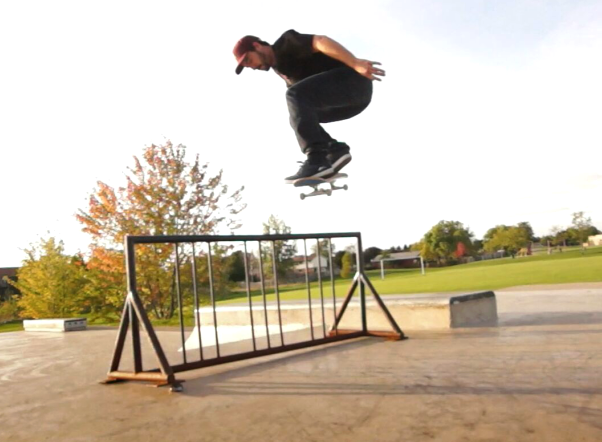
For fifteen years now, John has practiced diligently, pushing himself through the fear and pain, to become an accomplished skateboarder.   To onlookers he is “The King”, gliding through any course with grace and ease.  He makes it look so simple.

Only John knows how hard he has worked to hone this skill:  hour upon hour, overcoming disappointment and frustration, always willing to try again.  He talks about a ‘zone’ – a state of mind – that he strives for, which helps him maintain balance and focus.  His art is very disciplined.

When John rides the board, he is free.  A freedom only someone who has mastered the art of movement can  understand.

Tragedy Visits

Something’s happened to Billy!

I shot bolt upright in bed.  He had just been here.  I saw him standing at the end of my bed, but that was not possible:  Billy lived miles away in the country and it was the dead of winter.  How could he have gotten here?

I lay back down on my bed trying to piece together what had just happened.  Billy had been there, long enough to wake me from a deep sleep.

I’ve come to say good-bye, I remember him saying.  Tell everyone we’re okay.  That’s right, he wasn’t alone.  His little brother and sisters were with him.  All of them fading back into the darkness.

I couldn’t shake the vision.  Only ten years old, this wasn’t my first night visit, but I never quite knew what to do with them.  I dragged myself out from under the comfort of my warm bed, and shivered down the hallway to my parents’ room.  The first rays of a new day were starting to break the darkness.  The phone rang.

Mom was sitting on the edge of her bed when I entered, listening intently as Dad spoke into the phone.  She gestured for me to be quiet.

“Carl and Maureen?  Are they alright?”  My father spoke with deep concern.  I knew it was tragic.  “No, no.  Oh my God.”  He listened, shaking his head and tutting.  “Oh my God.  Well, thank you for calling, and please,  keep us posted.”

“They’re both alive, but they’ve had quite the ordeal,” my father said to my mother as he hung up the phone, then turning to me, he pulled me closer, sitting on the edge of the bed beside my mother so that we were all at eye level.

“There has been a fire,”  he started,  “at your cousin’s house.  I’m afraid it’s quite tragic.”

“I know, Dad,”  I reassured him.  “Billy came to see me.  Just now.  He said they’re okay.”

My parents exchanged that look; the one they always did when they didn’t know how to take me.

“Well, your cousin didn’t make it out of the fire.  None of the kids did.  All four……gone.”

The news that night showed the pictures.  The house had been reduced to a rubble of ashes, and from those ashes men were carrying away four small stretchers bearing the remains.  The remains of my cousins.  I had never been this close to tragedy, and I really didn’t know what to do.  That afternoon, in school, I’d broken down crying when the story we were reading talked about a fire.  All I could picture was Billy and the little ones being burnt alive.  The teacher had called my mother to come and get me.

“Come away from the TV,”  my father commanded.  “Damn them for showing those pictures! Can’t a family have privacy?!”

We turned off the set, but the images remained etched in my mind.

Billy’s parents weren’t at the funeral; they were still in the hospital recovering.  It was just as well, I thought, this was one sad place.  A single coffin sat at the front of the church, bearing the bodies of all four children who ranged in ages from two to ten.  Billy had been the oldest, just two weeks younger than me.  A line of sobbing people extended from the coffin and out into the cold February day.

I had no right to be there, so I shrunk back from the crowd, hoping no one would notice me.  We always fought, Billy and I.  He was full of mischief, with deep brown eyes that twinkled with trouble.  He just had to look at me to fill me with rage.  It was only two Sundays ago when we’d had our last fight.  I wish you were dead!  I’d told him.  And now he was.  I hadn’t said it quietly, either.  I’d yelled it in front of all my other cousins and my aunts and uncles.  I was sure they all knew it was my fault.

After the funeral and burial, we all gathered at another aunt’s house.  While the adults drank tea and coffee and ate tiny sandwiches with no crusts, the cousins removed themselves to an upstairs bedroom.

“It’s just awful,”  my cousin Kate exclaimed.  “Can you believe it happened?”

“He’s okay,”  I blurted.  “I saw him, and he said he’s okay.”   I explained my nocturnal visit.

“Why would he come to you and not to me?”  Kate and Billy were closer, and actually got along.
“I loved him.  You didn’t.”

“I loved him, too,”  I protested, “It’s just that he made me so mad.”

We all fell silent.  They knew what I meant.  Billy was a tease, and could be a total pain.

I didn’t really want him dead, I thought.  I just wanted him to stop pestering me. 

The horror of our loss hung in the room between us, as cold as the icicles visible through the frosted pane.

“I wish I’d seen him,” Kate said quietly.  “Then I’d be able to believe he’s okay.”

I had seen him, but I wasn’t sure that made it any better.  The sorrow was still pretty raw.  He was still gone from our lives, and every time we got together, his absence would be a huge black hole.  Billy, who’d been so full of life, so wild, and energetic, was now dead.  It just didn’t seem possible.

It was the winter of ’69 that I first learned that even though life exists beyond death, it doesn’t minimize the depth of sorrow felt at the loss of a loved one.

A Diagnosis

My intention in starting this blog was to chronicle my journey through cancer, however; after a lumpectomy and a brief recovery time, the threat was gone.  Nothing to write about, really.  I kept going anyway.

Yesterday, life as I knew it took an unexpected twist.  Thor was diagnosed with cancer.

“High risk,” the doctor informed us.  “Your only options are surgery or radiation, but we’ll want to do more tests first to ensure the cancer is contained.”

I felt the room spin.  My eyes were fixed on the doctor, hopeful that he would add something else, anything, uplifting.  Oh my God, I thought, my poor husband!  What must he be feeling?  Without shifting my focus, I reached for Thor.  He needed to know that I was there for him, no matter what.

“I’m sorry, doctor, but I want to be clear.”  I struggled to keep my composure, but the tears were already breaking through.  “What do you think is the best option?”

We had arrived with a list of questions, which Thor now thrust at me.  Prepared as he was, he couldn’t access them.  I glanced at the paper, but nothing was making any sense.

“Well, I really can’t say,”  the doctor hedged.  “There will be side effects, of course.”

Together, we managed to breath through the consult, but I fell apart outside of the office.  Thor remained stoic.  Shh!  he gestured towards another patient.  How can he be so calm?

“I was expecting this,”  he told me on the way out.

“I’m so sorry,”  I blurted out.  “You don’t deserve this. I mean, you are a good person…..”

There are no right words, and mine certainly sounded empty.  Truth is, goodness has nothing to do with it.  I knew that.  I’d seen so many people suffer with cancer; sat with them through their pain and suffering, watched them die.  And I’d witnessed others who’d battled and survived.  None of them deserved the suffering.

“Even the blackest hole has silver somewhere,”  Thor offered.

Damned if I can see it, but I sure hope he’s right.

The Thief Within

It’s time to call a meeting of the troops.

“Gather around, everyone.  We need to talk.”

The air is cool in the cave, sheltered from the hot August sun.  A small fire provides light and a focus for our gathering.  I, Self, am seated where everyone can see me clearly.  I want to make my point.

“I have called you here, because there is a thief amongst us, and I am angry.”

“Oh!”  the exclamation echoes around the circle, then a mumble of agreement – this is serious.

“I woke up this morning, full of anticipation and plans for a wonderful day – the kids are coming for dinner, and my granddaughter is staying overnight.  I planned to make goodies, and soup, and a special dinner.  As I made my shopping list, Thor added to my excitement booking a flight for our next big excursion abroad.  I couldn’t have been happier, then…..”  I paused for effect, “….one of you came in and stole my joy, leaving me in this state of raw anger.”

The nervous shuffle of feet was accompanied by a shifting of eyes and lowering of heads.  No one wanted to fess up, I could see.

“We see that you are upset,”  a kind old woman stepped forward,  “and in the interest of inner harmony, we would like to get to the root of the problem, but we’ll need more information.”

Heads bobbed in agreement.

“When did you first notice that your mood had changed?”

“When I was baking.  I noticed that my happy thoughts were missing, and I was ranting inside my head.”

“Just like that, all of a sudden?”

I thought about it.  “Well, I did start to feel really tired just before it happened.”

“What do you suppose made you tired?”

“I was up early this morning, getting work done so I could enjoy my family, so I was thinking that was catching up with me, but then I realized I was probably hungry,  which……”

“Would effect your mood,”  she finished my sentence.

“Well, true.  So, that is no one’s fault.  But then I started to eat things that weren’t good for me, and I knew I only do that when I’m trying to bury unwanted emotions, so I started to think about that, and then I realized my happy thoughts were gone, and that’s when I got angry and decided to call this meeting.”

“Was anyone else present when all this was happening?”

“I was,”  a little voice piped up.  “I was excited that we would get to play with the granddaughter.  She’s so cute and fun and makes me happy.  But then Mae called, and she called again, and again, and someone started pushing me out of the way.”

“Really?”  The women turned towards the others.  “Does someone have a problem with Mae?”

“No!  Well, yes,”  said a shadowy figure huddled in the back.  “She can’t help it that she is mentally ill, I know, but she stirs me up.”

“How does she stir you up?”

“She reminds me of all the times I was pushed aside for the others.”  I recognize her now; it’s my twelve-year-old self.  “My parents only had time for those who were broken, never for me.  They never helped her;  they encouraged her to be that way.  They liked their children to be victims so that they could rescue them over and over again.  It makes me angry.”

“So you stole my joy?”

My question seemed to jolt her out of her self-indulgence.  “No!  I mean, I had to protect you.  You’ll just get hurt again.  You should know better.  Just when it seems that everything is good, and going our way, someone will destroy it.  You know it!  That’s how it always is.”

“Oh dear,”  the little one plopped down, head on her hands.  “Here we go again.”

“What!  Why are you all looking at me that way.  You all know it’s true.  Why won’t you admit it!”  Twelve was getting hostile, almost hysterical.  “I hate it that life is unfair.  I hate it that we work hard, and try hard and always get the short end of the deal!  I hate that other people don’t have to work hard and life just gets handed to them and everyone caters to them.  I hate it that my sister wasn’t strong enough to fight them, like we did.”

“Amen to that,” said a large, blob of a character, who didn’t look very bright, but was happily stuffing his face.  Ah, I thought, you’re the one I feed when I feeling emotional.  If I’m not careful, I’ll start looking like you.  

“Can I say something,”  a slighter older teen spoke up. I recognized my independent self.  “I don’t mean to sound cold and radical here, but if you keep venting over what you can’t change, you are going to die an unhappy soul.”

“What do you know about it?”  Twelve was on the defensive.

“I know that life is full of many opportunities beyond the limitations you experienced in your home life, and I believe that while we can’t change where we’ve come from, we can make new choices for the present and the future.  Do you want to be unhappy all your life?”

“Well….no, but don’t I have the right to be heard?  Don’t I deserve justice?”

“We all deserve to be heard, and while we’d all like justice, it doesn’t always work out that way.  I’m just suggesting that you are robbing yourself of the joy of life.”

I could see Twelve wrestling with herself.

“Twelve,”  I offered, as kindly as I could.  “You say you hate victims, right?”

“Yeah.”

“Well, you are kind of acting like a victim yourself, no offence.”

“What do you mean?”  her fists balled up instinctively.

“I just mean that while you rage and wait for someone else to deliver justice, you are like a victim – giving the power to someone else.”

“What do you suggest I do?”

The Wise Woman stepped up, putting her hand on Twelve’s shoulder.  “Express your feelings, certainly, because we all care.  Can I ask you something Twelve?”

“Fire away.”

“What would help ease your rage?  What do you need?”

Twelve fell silent.  I don’t think she’d ever thought of that.  She shrugged.

“What could anyone possibly do to make you feel better?”  the young woman asked. “Do you think everyone is suddenly going stop being themselves, see the predicament, and apologize?”

“Maybe they’ll stop being nice to your sisters and spoil you!” the little one chirped in.

“That’s absurd!”  Twelve scolded.

“Is it?  Isn’t that what you want?”

Twelve thought about this.  We all thought about it.  Then one of us started to giggle.  I’m not sure who, but soon the whole room felt the relief.  It was a ludicrous thought.

“I feel like a fool,”  said Twelve.

“No hard feelings – you’re only a kid!” said the slightly older one.

“And you always look out for me,”  said Little.

“None of us blame you,”  another added.  “We all went through it, you’re just the one who held out for justice.”

“Is there never any justice, then?”  Twelve asked, confused.

“Oh there is justice:  but you need to look for it in other ways,”  Wise Woman offered.

“Like embracing life’s blessings despite the strains of the past,”  Independent Self offered.

“What she’s trying to say, I think,”  I added, “Is that if you continually refuse to be happy because you don’t like what happened long ago, then you rob all of us of the joy of the present.  Can you see that?”

“I can, but I just feel so angry sometimes.”

“I know, I know, so do I, obviously.  That’s why I called this meeting.  And Twelve, I suspect you’ve been hanging out with someone else, who is the real thief here.”

I could tell by the look on her face, that Twelve knew exactly who I was talking about.

“Jealousy is not a friend to any of us,” I addressed the crowd.  “I suggest we do our best to keep her out of our circle.”

“Here!  Here!” came the cry of approval.

“What about me?” said Emotional Eater, pausing mid-bite.

“Wouldn’t hurt you to eat a little less” came the unanimous response.

“You should try therapy,”  added Little.  Everyone laughed.

“Thanks for talking this through,”  I concluded the meeting.  “I hope we all feel better.  Little, Twelve, we got some things to get ready, our guests will be here soon!”

(Image: dymir.org)


A Cup of Tea

My husband and I recently returned from a trip to the US, and as usual, the first thing I wanted on return was a cup of tea.  It is the one thing – next to my own bed- that I miss the most  when I am away.

What is it about a cup of tea?

Raised by a Brit, tea is part of my heritage.  Growing up, we started every day with a cup of tea, and quite often ended each day with one also.  I especially remember that as teenagers, my siblings and I would convene at the end of a night out and share stories over a late night cup of tea.  Every dinner would end with someone putting the kettle on.

My children’s father was also a Brit, and he introduced me to tea time – a ritual cup every day at four o’clock, always accompanied by a sweet or biscuit.

The secret, not practiced in many restaurants, is in the preparation:  the pot must be warmed first, and the boiling water added to the tea and not the other way around.  In our family, the milk went in the cup first, with just the right amount of sweetener to offset any bitterness.

Special tea, a concoction of mostly warm milk and honey, with a splash of tea, is a family recipe for curing childhood ailments.

I don’t drink tea in the afternoon anymore as the caffeine keeps me up at night, and I have replaced the milk with non-dairy alternatives, but I still have a sense that all is not well unless I’ve started the day with that one lingering cup of tea, prepared just the way I like it.

Ahhh, the simple luxuries of home.

(Image: officemum.blogspot.com)

Independence

“Take the train into the city, Mom.  It would be so much easier.”

“No,” I insisted.  “I like the independence of having my car.”

So, I arrived at my daughter’s Monday morning to find there were no parking spaces on her street.  I texted her to meet me outside.  It was close to lunch time, so I suggested we go for some lunch and then, hopefully, find a place for my car afterwards.  I parked near the restaurant, which was just blocks away from her home.

“I can leave my car here.”

“No, parking here is only one hour.  We’ll have to move it after lunch.”

We lingered on the patio, enjoying the day and catching up on each other’s lives.

After lunch, we drove around again, searching in vain.  I parked in the one hour zone again, hoping something would come up later.

We rested for a while, then drove the car to get some groceries from the store that was, also, just around the corner.  On our return, I found a spot across from their townhouse.

“I won’t want to move my car any time soon,”  I joked.

And, in fact, I didn’t.  My daughter’s home is situated in a trendy neighbourhood close to shops and restaurants – really anything you need is in walking distance.  My car, it turned out was just a burden.

My need for “independence”, on my terms, really only complicated things for me.

I wonder how many other routines or habits complicate my life.

Simplifying my life means being willing to let go of some of the beliefs that I cling to, and being open to another way of doing things.