Dear Charlotte Perkins Gilman

I have examined your wallpaper,
discussed the scholarly attributes
of shades of yellow, traced the edges
of your unravelling with my mind,
argued the merits of Gothic horror;

marvelled at the brilliance of wording,
the courage to define the nature of
feminine madness, the boldness to
highlight inequalities long before the
establishment of a Person’s Act.

Forgive me, but I need to set aside
this keyboard for a moment, for I tire
easily, am suffering from an exhaustion
that is systemic and calls for elimination
of all stimulus in favour of rest, you see

I share your sentence of confinement,
isolated to a room with windows, my
mind wandering to ancestral gardens,
contemplating shadows and movement
cognizant of underlying forces, creeping.

My husband has just left, dear man, having
checked on me, taking on my burden,
concerned that I am not sleeping at night
thinks that by reading and rereading your
words I am only fueling an already over-

active imagination; begging me to be still
as the doctor has recommended; but I am
burning to tell you that time has no
relevance between us and that you and I
exist simultaneously – a secret we dare

not confess – how correct your impulse
that there was more than one woman,
that we are many, barred by the designs
of society, papered over by irrational,
outdated shades of yellow, lacking

symmetry, or sensibility, suffocating
our creativity, tortuously contorting
ourselves to been seen, accepted.
It is the smell of our discordant souls
that pervades your consciousness

the rotted withering of  a stifled
existence – a yellowed existence –
once hopeful, sunny, now molding
mucous, desperately torn away
at the edges, pleading for escape

How grateful I am that you see –
may I call you Charlotte – that you
have smelled the angst, witnessed
the struggle, are willing to tear at
the sticking places, to set us free.

200px-Yellowwp_med

( The Yellow Wallpaper, by Charlotte Perkins Gilman [not sure why 1899 edition depicted here bears a different surname] in its entirety can be found here:

https://www.nlm.nih.gov/literatureofprescription/exhibitionAssets/digitalDocs/The-Yellow-Wall-Paper.pdf )


Salvaged

Delegated to the back room,
I am marginalized, invisible,
employ-ability in question.

I am a peripheral observer,
self-conscious of my status,
disintegrating at the edges.

Watch as relationships form,
people engage, socialize, find
purpose, ignore my presence.

Desperate, I grasp at meanings,
decipher holes in conversations,
measure lacking in interactions.
Ennui drives introspection –
a terrifying abyss of endless
confrontations and shortfalls.

Unable to bear the tedium –
madness threatening – I push
forward, reconsider stock

determine redundancies,
discern detrimental agendas,
am inspired to make changes.

Experience bears fruit, I can
salvage the situation, trim
excess, purge the sedentary.

Ideas flood, passion igniting,
prospects are not lost – creativity
fuels a new sense of belonging.

Fleeting Libido

Crazy catches me –
semi-conscious/ zoned out –
body slams me,
hot mouth pressed on mine
suppressing objection
(as if I’d object)
working my juices
my mind overboard
passion flaming

I forget
who I am
where I am
yesterdays
tomorrow

Modesty intervenes
compelling flight –
flesh torn from flesh
prematurely –
this seduction,
taunting me in youth,
surprisingly vital still

I forget
who I am
where I am
yesterdays
tomorrow

Breathless,
heart palpitating
loins throbbing…
abandoned again.
It was only a ghost
a spectre from the past
mocking me –
false ecstasy.

(Linked to dVerse pub where desire and sexuality are on the board tonight.)

Creative Process

Routine, I find, is both a comfort and a discomfort.  Stripped of all routine when I first became ill, I floundered about looking for some order to the resulting chaos.  I longed for a routine, like a navigational device, to help me define exactly where I was in all the madness.  (Still compass-less I’m afraid.)

At the same time, I fear a numbing sameness – a morose monotony of nonsensical repetition.  I remember doing anything to break the boredom – taking a different route home from work, turning my lessons upside down, or rearranging the classroom – anything to invite new energy.

I feel the same about writing.  It is seductive to find a comfort zone and stay there – convincing myself that this is perfecting my craft, however; I suspect a trap.  Ego, I’ve noted, likes to sabotage.  Exploration is the only way to expand creativity and ignite revelation.

Let me illustrate.  Take a simple thought:

I cried because I was alone
then opening my eyes
discovered another
also alone
my image in the mirror.

Possibly interesting concept, dull delivery.  The image craves development.  One thing I have been experimenting with (wherever possible) is removing pronouns, or any references that personalize my poetry.

loneliness cried
opening eyes
discovered another
also alone
mirror image

Well, this is better, but sounds like a flowery way of saying misery loves company and that’s not the essence I wanted to capture.  What if I do some word/concept association?  Will this help me expand my ideas?

loneliness – feeling of rejection, abandonment, not belonging, desire unrequited, left out
crying – tears, release, unable to contain, unrestrained emotion, grief
open-eyed – awakening, willing to see, open to possibility, searchingdiscovery – new appreciation, renewed hope, joy, alternatives, perspective
other – outsider, relationship, communion, community, connection
alone – isolated, cut-off, solitude, retreat, respite
mirror image – reflection, reversal, commonality, empathy/sympathy, not alone

Not sure this helped, but I’ll try putting it back together using the associations.  Maybe I’ll play up the personification.

Loneliness,
abandoned and rejected,
grieved unrestrained,
then willingly,
hesitatingly,
opening to possibility,
discovered hope,
connection,
in solitude –
not alone.

I like this better – the message is more satisfying.  What happens if I turn the whole thing upside (taking liberties, of course)?


In solitude,
connection
discovers –
hope, and
possibility –
opening.

Hesitatingly,
willingly,
unrestrained grief
abandons,
rejects,
loneliness.

Wow – I like this even more.  I feel as if it is an invitation from the soul to grieve.

I challenge you to explore and expand your own writing.  What hidden messages await your discovery?

Death Threat

“Viewers are cautioned that this next report contains images that may be disturbing to some.”

Naturally, I turn toward the television to see what all the fuss is about.  Photos of a crime scene where two women have been brutally stabbed to death are plastered across the screen along with images of the hotel they had been staying in and the victims themselves.

“Uh, Ric,” I manage to utter before sheer terror takes over me.  Not only are we staying in the same hotel, but the two women are occupying the same room we had originally been assigned.  When we’d arrived, just days before, and found there had been a double booking, we gracefully offered to move rooms.  What if we hadn’t?  Suddenly, I feel deadly cold.

“Maybe you should stay at the farm tonight instead,” Thor suggests.  The ‘farm’ is a small rural property we have purchased for our retirement.  As the house needs repairs, we decided to take a vacation at this nearby resort in the meantime.  Ric has to return home on business overnight, which means I will be on my own.

“No, the report says the police have a suspect in mind – a drifter who has been seen loitering in the nearby town.  The farm is too isolated.  I’ll be safer here with people around.”

Somehow, in the deep middle of the night, isolation feels more pronounced.  From where I lie I can see the outline of the door to our room and try to reassure myself that the deadbolt will hold.  I pray the double sliding doors in the adjacent room are secured enough to prevent an intruder.  I must fall asleep at some point, because when I awaken it is morning.

Relief floods me.  Daylight brings a return to normalcy, sanity.  All is well.

I have a quick wash and throw on some clothes, deciding to catch breakfast in the restaurant.  This suite we are staying in has two rooms – the bedroom, which is accessed from the outside, and a living/dining/kitchenette area, which is accessed by the pool area of the resort.  A short hallway with a bathroom separates the two living spaces.  It isn’t until I pass through into the kitchen area that I notice the intruder and I stop short.

Standing well over six feet tall, he is a giant of a man, with a disfigured face and scarred hands.  Like a rabbit, I freeze, assessing the situation.  In my mind, I picture the exits, both locked as far as I know.  How long has he been here?  Do I have time to unbolt the door before he’d catch me?

As if reading my mind, he flashes a pass key.  He works here, I realize.  Remain calm, I counsel myself.

“Am I going to die?”  I ask willing my voice to remain steady.  “Because if I am, do you mind if I have one more cup of tea.  Tea is my favourite thing?  Could you allow me that?” An element of surprise is my only hope of defense.  It worked for me once during an attempted mugging.  The would-be assailant stepped in front of me and demanded money and cigarettes.  In my nervousness, I laughed and said: “Do I look a smoker?”  The ruse worked long enough to let me dart away from the mugger and yell for help.

He doesn’t answer, just glares at me with that menacing expression, reminding me who’s in charge here.

“If it’s about sex, I’ll do anything you want, no need to get violent.”

“It might get rough.”  Do I detect a hint of bemusement in his voice.

“That’s okay, but I’d still really appreciate that cup of tea.  Can I make you one?”

“No, I don’t want any damn tea!”  but he doesn’t move to stop me and he’s dropped down onto the couch now, stretched across it, his legs splayed out over the end, his massive belly displaying one long scar carved into his side, and I realize he’s removed his shirt.

Cautiously, I make for the sink, feeling like I’m moving in slow motion.  His voice stops me.

“Why’d you have to put lanolin on the food tray?”  His voice is mournful, gravelly, and if I didn’t know that my life is in danger, I might l have laughed out loud.  My mind races:  He must work in food services.

“I didn’t,”  I stammer.  “I mean…I don’t use lanolin…don’t even have any.”  Then, sensing the opportunity:   “Somebody would do that?” I play the sympathy card.

“Makes my job damned near impossible,” he mumbles.  “Makes me angry enough kill!”

So we’re back to that.  Is that what happened to the two young women?  They greased the dinner tray?

“Hurry up with the tea already; I don’t have all day.”

He closes his eyes for a moment and I examine his face.  An unfortunate soul, really, I think.  Large, beefy jowls, and a bulbous nose that likely indicates years of alcohol abuse.  A scar covers one eye socket, and his lipless mouth seems to hang open unaware of itself.

Just as I turn again towards the kitchen, a light tapping on the door precedes the entrance of an entourage of people.

“Housekeeping, Miss.” A woman bustles in carrying freshly pressed and hung laundry.  “Where would like these?”  Behind her comes another housekeeper bearing clean towels, and a team poised to clean.  “Is this a good time?”

“A very good time!”  I turn to see that the hulk has gone.  Did he slide away?  I wonder.  Did anyone see him?  I direct the clothes to be hung in the bedroom closet and smile with genuine gratitude for the disruption, but keep my council.  He may still be hiding in the suite.

Two young teens then barge through the now open door and buzz around delighting at everything in the room.

“Excuse me,” I say to them.  “What are you doing?”

“This is our room!  We just checked in!”

“This is my room,”  I can feel the anger rising up in me.  I have had enough disruptions this morning already.  Things are beginning to feel surreal, and I just want some peace to recollect myself.  “There has been a mistake.  Leave!”

The doorway fills with what must be the rest of the family:  a man and woman and four more children.

“Check-in,” I tell them, ” is not until four o’clock.  The room is still mine.”  I had forgotten that today was check-out and the realization brings me new hope – I might get out of this alive yet.  I have work to do.

The family and housekeepers all leave with the exception of one little straggler.  I start to give him directions to the lobby, then realize he is too little to understand, so I walk him down the hall instead.  As we approach the reunion with his parents, I see that Ric has returned and is approaching the building.  The nightmare is finally coming to an end.

I turn back towards the room, anxious to get packed up.  I see him in my peripheral vision as he steps out of the shadows.  I stop.  Surely he won’t accost me here in the hallway, with people around.

“Did you see my scars?” he asks, eyes turned away.

“I did,” I respond unemotionally.  What can he possibly want me to say?  Like the wounds you left on those poor young women, I think.

I hear Ric’s approach and see the killer step away.  Should I tell my husband? I decide not.  Ric would react protectively, and could end up getting killed as well.  I greet my husband warmly, and turn our attention to the task at hand.

Car loaded, Ric pulls toward the exit just as a police vehicle drives in.

“Stop here.” I command, rolling down the window and catching the driver’s attention.  “The man you’re looking for works in the kitchen,” I tell him.

Then I signal for Ric to drive away and wake up.

It’s all been a dream.

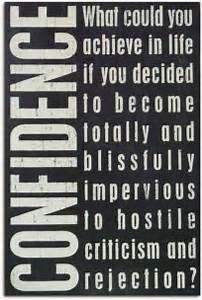
Criticism Be Gone!

I was forty before I could finally ask my mother about her constant criticism of me growing up.   We were alone together, in the car, driving out of town.  I had her undivided attention.

th-4“Help me to understand, something,” I prefaced the conversation.  “When I was young, you always told me no one would ever love me.  What was that about?”
“I didn’t say it to be mean,”  she explained and I believed her.  My mother was not typically a malicious person.  “It’s just that you were so different from your sisters, and I was afraid for you.  I thought I was helping you by preparing you for the inevitable.”

“But why, Mom?  What was it about me that you thought was unloveable?”

“You were just so smart, and independent minded……”  she trailed off.  “I guess I thought that men don’t like smart women.”

“Do you understand that I heard what you said to mean that I was impossible to love?”

“Oh my God, that is not what I intended at all!  Of course you are loveable.  You are compassionate and kind, and you deserve to be loved.  I thought I was preparing you, that’s all.  You were just so different,  and I thought I had to protect you.  I never meant for you to think you weren’t loveable.”

She paused in reflection.

“When the school came to us and told us they had done some testing and wanted to send you to a special school for the gifted, I was scared.  I didn’t know how to handle it.  Your father was all for it, but all I could think about was how would you fit in, and who would ever love you.  I guess I thought I was helping.  You were an enigma to me.”

Mother’s criticism of me was born out of fear and ignorance;  my acceptance of her harsh words was a reflection of my need for her approval. 

I understood.  Within the context of my mother’s upbringing and beliefs, I did not fit the mold.  She was merely expressing fear related to her own limitations.  Unfortunately, for the first forty years of my life, I lived out my mother’s legacy, choosing partners who were incapable of loving me.

My mother was not the only one to be critical of my intellectual abilities.  “Everyone hated you,”  a drunken cousin once confessed to me, then added, “but I don’t know why – you’re so nice.”  Classmates called me Browner, implying that I only got good grades because I ‘kissed up’ to the teachers.   Even close friends have commented that I’m not really that smart.

By listening to the criticism, I began to devalue myself.  Driven by a need to be accepted, I started to act dumb.  Better to deny self than to be criticized, right?

Wrong!

Embracing criticism and taking it to heart is ultimately a sin against the self.  We are each uniquely created, and destined, and it is only through accepting our differences, and nurturing them, that we can truly be fulfilled.

th-3Rejecting criticism is the first step to living authentically, and the only hope for living purposefully and to full potential.

Armed with this new understanding, I will stop apologizing for who I am.  I will let go of the need for praise from others, and recognize that their criticism is more about their process than mine, and let it be.  I will celebrate who I am by committing to my own process, and focusing on my goals and gifts.

I will finally start living.


Attitude Check

Energy flows where attention goes, is a principle of Huna.  It means that whatever we focus on we create.

Every spring, facing the end of my current teaching contract, I feel the tug of anxiety in the pit of my stomach.  I begin to doubt myself, and see only the impossibilities around me.  I wonder what will happen to me if they don’t hire me back, and I look at the colleagues who will be competing against me for jobs, and grow increasingly certain that I do not stand a chance.

“It doesn’t look good for next year,”  I recently expressed to a colleague.

“Hard to tell,”  she responded.  “Things turn around.”

I went on to explain to her why I didn’t think that would happen this year, and convinced her that I may have a point. We both parted in gloom.  Misery is contagious.

I began to read negatives into conversations, and convinced myself that I was neither valued nor wanted.  Then I decided to change my attitude and act as if I was appreciated and valued.

And guess what?

People started to tell me how appreciated I am, and many expressed hope that I will be able to continue in my job. I feel valued, and for the past two days, have felt a release in the tension.

Attitude is everything.  Gratitude is key.

The Valley

(This fable follows “The Kingdom” )

After years of being “locked” away in the tower, the Princess came out.  She joined her father, the King, in his celebration of the new advisers in the Kingdom.  She felt inspired by the changes her father was making, and decided it was time she made some too.

So, she moved out of the castle and into the valley.

Because she was royalty, the Princess sent a messenger and servant to prepare the way.  She wanted to live among the common folk, and did not want any special privileges.  She would be sending along her own furnishings, but needed somewhere to live.

The people of the valley were simple folk, who valued their peaceful existence.  Wary of the Princess, but willing to be accommodating, they found her a suitable cottage, surrounded by beautiful and well-tended gardens.  On the day of her arrival, the villagers lined the streets with banners of welcome, and threw petals of roses to honour her.

The Princess was delighted, but reminded the citizens that she had come to live among them, and she expected to be treated as an equal.

It was a difficult transition for all to make.  The villagers tried to pretend she was an ordinary young woman, but the Princess maintained many of her former habits.  She refused to carry her purchases home from the market, and always expected everyone else to step aside when she was walking down the street.  She never learned the art of making an appointment, assuming everyone would be available for her at her whim.  And when the village got together for potlucks, she would command the menu.  The problem escalated when the Princess began to commandeer all the best workers to tend her gardens and do her household chores.  Work around the valley was being neglected in order to keep the Princess happy.

“This has to stop!” proclaimed the people during a meeting of the Valley’s folks.  The Princess was not in attendance.

“We cannot deny the Princess,”  the elders said.  “Her father, do not forget, is our King.”

“But she is destroying the peace!  People can’t get good service,  and businesses have lost their most productive workers, and they’re not even getting paid.  Everyone is upset!  We just want our peace back.”

“Here!  Here!”

“The Princess did say she wanted to be one of us.  Maybe we should invite her to hear our complaints.”

The room went quiet.  Everyone was afraid of upsetting the Princess, and ultimately, her father.

“Well, then.  We shall just have to continue to make her happy, and fulfill her every wish.”

The room erupted in moans and yelling.

“Wait,” came a voice from the back.  “I think I have a solution.”

It was the young woman, Sheboygan, now adviser to the King.  “I will invite the Princess to come live with me.”  Despite her new status, Sheboygan had maintained her home on the edge of the village.

The Princess accepted the invitation wholeheartedly.  Truth was she had not found happiness amongst the common people, and she was becoming disillusioned.

“Leave your belongings,”  Sheboygan advised.  “You will not be needing them where we are going.”

On foot, the two women walked through the village to the foothills of the valley, where they found themselves besides a beautiful lake.  “We will rest here for the night,”  Sheboygan told the Princess.

“What?  Outside?  Without a bed?”

Sheboygan nodded and busied herself with collecting kindling to start a fire.  “Make yourself useful.”

The Princess trailed after her, her gown getting caught on the underbrush, and smudges of dirt appearing on her skirts.  Not used to physical labour, she felt herself becoming winded, as she blew at a piece of hair that had fallen from her normally well-coiffed hair.   Incensed, the Princess was about to complain, when Sheboygan ordered her to build the fire, while she went in search of food.  “Or would you rather I start the fire, and you prepare dinner?” Sheboygan added, which shut the Princess up immediately.

Left alone to her own devices, the Princess was at a complete loss.  Although many fires had been built for her, she never gave any thought to how it was done.  Trying to recall what she had seen she piled the sticks and brush together, but could not imagine how to ignite them.  She looked around for someone to command, and when it hit her she was totally alone, she sunk down into the dirt and cried.  “Look at how useless I am!’

“Looking for something?”  came a deep voice from behind her.

Not turning around, the Princess continued with her rant.  “Yes!  I need to start this fire, but I don’t know how.  Will you do it for me good citizen?”

“I might, but what will you give me in return?”

“Anything,”  the Princess wailed.  Who could be so insolent?  “Just light the fire!”

But her visitor wasn’t so easily persuaded.

“Will you promise to thank me kindly?”

“Yes, yes!”  said the Princess, now fully exasperated.

“Will you promise to be my friend?’

Friend?  The Princess had never had a friend, and the stranger’s offer struck a lonely chord in her.  “I’d love to be your friend,”  she said more softly.

“If you want to be my friend, then you must accept me just as I am, and not try to change me to fit your needs.”

“I will, I will.”

“Look at me then,” commanded the voice.

The Princess turned, and immediately forgot her despair, for in its place she felt a sudden rush of terror.  There before her, in all its frightening glory, stood the dragon.

“Oh my!”

“Oh, yes,”  said the dragon, for he was really a peace-loving dragon and had a good sense of humour.

“But you’re……..”

“A dragon.  And you’re a Princess.  A good match don’t you think.”

“But, but, don’t you…….”

“Eat Princesses?  Maybe once upon a time, but nowadays I’m strictly vegetarian.  About that deal?” He glanced at the pile of wood.

“Oh, yes.”  The Princess stopped to consider her situation.  “Friends, huh?

“Buddies for life!”  The dragon raised his eyebrows in a comical way, and held out one of his talons.  “Shake?”

“I already am.”  The Princess made a joke despite herself, and they both laughed.  She looked at her poor attempt at a fire.  “Can you really ignite that?”

“In the wink of an eye,” said the dragon, and he did.

That night, the Princess, the dragon, and the woman of the lake sat around the campfire, eating nuts and berries and telling stories about their lives before they met one another.  The Princess forgot all about her discomfort, and discovered what she had been missing all along:  camaraderie.

The three slept beneath the stars and when the morning came, the Princess awoke with a new sense of self, and a pain in her back.  “Can’t say that was the best night’s sleep,”  she said, “but the fresh air and excellent company has done me a world of good.”

“Good,”  Sheboygan said, ” Because you’ll be staying awhile.”

“I will?”  The Princess was dubious.  One night of inconvenience she could tolerate, but she was missing her bed.

“You have much to learn about being a commoner.”

“What do you mean?  I live amongst them.”

“You live amongst them, but you continue to be a Princess.  When was the last time you did anything for yourself?”

“Well…..”  try as she might, the Princess couldn’t think of one thing.

“Exactly.  You expect everyone to cater to you the same way they did in the castle.  Servants in the castle wait on you because they are paid to do so;  the people in the village are not.”

The Princess thought this over.  Sheboygan was right.  She had never thought about it this way.  “You mean all those people who do work for me…….”

“Are not getting paid.  Their families are suffering, and so are their employers who need them.”

“Oh my.  How ungrateful they must think I am.”

“And there’s more.”

Sheboygan continued to tell the Princess about the townspeople’s concerns.

“I have led such a sheltered life,”  the Princess realized.  “I have only had to think of myself, and now I see that everything I do affects all the others.  How can I ever redeem myself?”

“Oh, you will.”  Sheboygan reassured her.  “But first you must learn how to be useful.  That is why you will live with the dragon and I until you have earned the right to be one of the common people.”

“Do you really think I can?”  The Princess knew she’d had years of being pampered.  She wasn’t sure she could adapt to anything else.

* * * * *

Days turned into months and the people of the Valley resumed their lives and forgot about the Princess.  Businesses began to prosper, and people went about their lives, harmony restored.

Then one day, a lone figure entered the town.  She was tall and thin, with the complexion of one who spent her days outdoors.  Her long, dark hair flowed down her back, and her eyes shone with a kindness that drew others in.  She stopped to greet the little children that ran to her, and smiled at the adults along the way.  When an old woman stumbled on her path, the young woman took her arm to steady her.  She unburdened a mother whose arms were full, and followed her home.  She seemed to have time for everyone and a willingness to help out.

People were soon talking amongst themselves, wondering where this woman had come from and who she was.  They followed her through the town to the local market, where she stopped at the grocer’s.

“I have no money,”  the young woman explained to the man in charge.  “But I would be grateful if you would let me work in exchange for food.”

The old man nodded, and handed her a broom. The young woman worked until the last customer was gone and all the shops were closed for the night.   Then she bundled up her earnings, and made her way silently through the streets to the little cottage with the well-tended gardens.

The Princess was finally home, and ready to take her place as part of the Valley.

(Image from Pinterest)

The Kingdom

The King sat at his favourite lookout pondering his life.  He rested his chin on the large gold ring that adorned his index finger and adjusted his ermine cloak around him, as a chill ran over him.  An omen?  he wondered.  He sighed.  What is the matter with me?  My queen loves me…well, at least when she’s not preoccupied with all the other commitments she makes.  Not many kings can say that.  

He looked out over the vast valley below him, and couldn’t help but feel pride that all this belonged to him.  A mist hung over the village, but it was early yet, and all that would soon dissipate and the sun would shine once again on his kingdom.

My son is off at University, bettering himself, his thoughts continued.  What more could one expect from a future King, even if he is forty?  I just wish he’d settle on something!  The King sighed again.  The chill came once more.  Maybe I’m coming down with something.  I’ll have to call the Royal Physician.

The mountains that surrounded his kingdom were now emerging from the fog,  He loved these mountains.  They were like old friends that never faltered:  strong and bold.  He could stare at their magnificence all day.

He continued to take inventory of his life.  My daughter is as a princess should be:  beautiful, articulate, kind;  I just wish she would come down from that tower!  Admittedly, he’d locked her there years ago, after that awful incidence with that man – and a peasant, too – but she wasn’t getting any younger, and, well……  He sighed again, looking heavenwards.  So much for one man to manage, God.  

At least my kingdom is at peace. The thought warmed him.  He loved his people.  He loved their industry, their loyalty, and above all, he loved it when they were all content.  It had been over thirteen years since they’d suffered any strife.  He didn’t want to think about those times.  Four years the battle had gone on, and while they won, they had also lost so much.  Ah, well, such is the price of war.  

The King shifted his position.  He was feeling it again:  the restlessness.  He hated this sensation; it made him feel as if he wasn’t in control, and he couldn’t abide that.  Two weeks ago he’d sent the Royal Page out on a mission to find something to cure this abomination, but the boy had not yet returned.  Blasted child!  the King thought to himself.  I should have sent a man. Or maybe a woman.  But who else could be trusted?

Wrestling with his thoughts, the King failed to notice that the sky had cleared and the valley was now in full view.  All was not calm.  There, in the middle of town, stood an eight-foot-tall dragon, breathing fire, and lashing his long spiky tail in a wide, destructive arc.  People were fleeing in droves, their cries filling the air.

At first, the King thought it was the cry of the morning birds he was hearing, but soon he recognized the sounds of panic.  Alert once more, he spotted the source of the problem.  What the…..?  “Guards!”  The King was up and running.

A call went out in the castle, and all available knights mounted their steeds in a race to save the kingdom.

But this was no ordinary dragon.  He moved with the agility of a trained martial artist:  eluding the knights lances, and scorching them as they passed.  Within the hour the streets had cleared, and no one dared approach the beast.  It looked as if the town was lost.

Then one lone figure stepped out from the shadows.  Bare legs and arms revealed the slender figure of a young woman.  Clad only in a deerskin tunic, her hair pulled back in tidy braids, she held what looked like a tree branch at her side.  She approached the dragon from the side, and all gasped as the dragon caught the young woman in his peripheral vision.  Ten feet away, she stopped and nodded slightly to the beast, holding her hand up, palm towards him, as if in greeting.

The beast groaned, but seemed to settle.

The woman spoke a few words that surely only the dragon could hear.  The dragon let out a howl, and the crowd screamed in response, but the young woman remained calm, gesturing to the crowd to stay back and be quiet.

She took another step.  The dragon shifted its weight, angling slightly towards her.  The crowd held its breath.  The King too.

Then the young woman did an extraordinary thing.  She sat down.

The dragon sat down.

She stretched out her legs, and leaned back on her arms, in a state of repose.

The dragon stretched his paws out before him, and laid his head on the ground before him.

The young woman then laid herself down and gently rolled over, closing in on the dragon.  To the amazement of all gathered there the dragon didn’t flinch, in fact, some would say later that the dragon itself, moved towards her, but the King was so excited by what was happening, that he didn’t see any of that.  He’d run off to the stables to get himself a horse.  He needed to meet this dragon-tamer, and now!

By the time the King caught up them, the young woman had mounted the back of the dragon, who was contentedly munching on the tree branch.

“Stop!”

The dragon and his rider blinked in unison, turning their heads to find the source of this command.  The woman whispered to the dragon and he stopped eating.  She stayed where she was.

“Your Majesty,”  she bowed her head out of courtesy.

“What is going on here?”

“I am Sheboygan, and this is my friend, the dragon.”

“Your friend!  Did you cause this destruction?”

“Oh no!”  protested Sheboygan.  “I have no desire to destroy your kingdom.  I noticed that the dragon was missing and I came in search of him.  That is all.”

“Explain yourself, young lady.”

“I am Sheboygan,”  she repeated with authority.  “I live beyond the woods, near the body of water over there.”  She pointed to the west.  “The dragon is my neighbour.  I know him to be peaceful and loving, but when I saw he was gone, I knew something must be wrong.  So I came in search of him.”

“If this dragon is peaceful, why did he just threaten my village?”

“He didn’t mean to, your Majesty.  He was only looking for food.”

“For food?  What does he eat, children?”

“No, not at all.  He is vegetarian.  He eats only the fruit and berries of a particular tree.  But sometime in the night, all those trees were cut down.  He must have been awfully hungry to show such anger here.”

The King started to say something, but found he was at a loss for words.  A vegetarian fire-breathing dragon?  Who’d ever heard of such a thing?  Was he dreaming?!

“I don’t understand. Who would cut down those alleged trees, and why?”

“You’ll have to look to your own people, King, to answer that question.”  And with that, dragon and rider ambled off.

The King, who didn’t like it when things happened without his knowing, called an immediate meeting of his advisors.  While the men were assembling, the King spotted his Page sneaking in through the a side door.

“Halt, there!  I’ve been looking for you.”

The Page looked exhausted.  His hair was all array, and bits of twigs and leaves clung to his tunic.

“What is this?”  the King demanded, pointing to a saw the young man was holding.  “What have you been up to?  Cutting down trees, perhaps?”

The young man couldn’t tell a lie, especially to his ruler.   Holding up the saw, he proclaimed: ” I was finding a cure for your restlessness, you Majesty.”

“Yes, yes I’d say!” remarked the King.  “Effectively so, and you almost caused me my kingdom.”

“Oh, no, Sire!  The dragon was harmless!  I swear!”

“Well, you certainly shook things up young man.  Now tell me, who was the young woman that saved the day?”

“Sheboygan?  She’s a friend of mine, Sire.  A very worthy young woman.”

“Worthy, indeed.  In fact, I’d say the two of you are just what this kingdom needs.  Clean yourself boy, and get some sleep.  I’ll be expecting yourself and your young maiden friend at supper this evening.  Now go!”

With that the King spun on his heels and strode into the council chambers where his advisers were gathered.  “Gentleman,” the King began, “today marks a time of change, and as with all change, there must be death before there can be rebirth.  While we have known peace in this kingdom for some time, we have also grown stagnant, and that can be a problem unto itself.  Today, in a time of real need, no one was able to rise to the occasion and defend this kingdom but one lone young woman.  None of our forces, and certainly none of you, were of help.  It took the energy and willingness of the young to make a difference.”

“But, your Majesty, the dragon was a formidable foe, even our best knights could not defeat him.  What were we to do?”

“The dragon appeared to be an insurmountable force, but you, like many of us, were fooled by appearances.  I pay you to see beyond appearances.  Your job is tell me what is really happening.  I have not felt at peace for sometime, and I now realize why :  I have been depending on men whose heads are in the sand, men who are not informed enough to give me the right advice when I need it.”

“But, your Grace…..”

“But nothing.  This dragon has lived on the fringe of our community for some time, yet none of you took the time to find about it.  A young woman did what none of you, and a legion of men could not!”  The King’s anger was rising, the veins in his neck popping as he raged.  “From this moment, you are all demoted!  I’ll let you know your new positions, when I’ve had time to think.”

Heads hung in shame throughout the room.  The men daren’t look at one another, knowing full well that what the King had said was true.  They had been lax.  They had wiled away their days with trivial activities, sated with complacency.  The King was right; they deserved to be disciplined.

“In the meantime, I have found myself two new advisers, and we shall be welcoming them at a feast tonight.  Busy yourself with the preparation, and make it fitting for a young woman and man of their nature.  Have the Royal Guest rooms prepared, and make arrangements for the young woman to be properly attired.”  Then on second thought, the King added:  “No, scratch that.  Let her come in the style she chooses.  Find appropriate entertainment.  Now be on your way.  I must advise the Queen.”

Solemnly, the group of men began to disperse.  They were not happy with the outcome, but they knew their King to be just.  In time; all in good time, they told themselves.

“Oh, and would someone please remind the Princess that the door to the Tower is no longer locked, and suggest that she might want to join us.”

* * * * * *

Part II – “The Valley”

Risking Excellence

I am with my son’s friend, and we are headed to meet John downtown where he will be competing in a skateboard competition.  John is a very gifted skater and the odds are good that he will win, but he is nowhere to be found.  As time passes, I feel more and more anxious that something has happened to him, and begin to search in closets and corners, anticipating I am going to find him dead.  Suddenly, a car pulls up, dumps a body, and squeals away.  A crowd gathers, and as I make way through, I know it is John.  He is not dead, but severely beaten, enough to stop him from competing.

I wake up,  immediately afraid for my son, but once I am conscious enough to remember the focus of today’s writing, I realize the dream is about me.

I was eight-years-old when school officials began to pull me out of class and subject me to a series of tests.  “She is gifted,” they told my parents,” and we would like to accelerate her one grade and enroll her in a special class with her peers.  She will have to attend school across town, and transportation is not provided.”

My mother didn’t know what to think.  I was a girl, and according to her, girl’s who were smart did not do well in life. (Doing well, in my mother’s eyes, was being a stay-at-home mom with a husband who made a lot of money.)  My father supported the decision.

Gifted children often feel like an anomaly, and I was no exception.  I knew I didn’t fit in at the regular school, but I somehow always felt like they made a mistake with me and I didn’t belong in the gifted class either:  these kids were so smart and, well, geeky.  I didn’t think I fit the mold.  Academically, however, I thrived.  The self-contained classroom was far more engaging and intellectually stimulating.  I loved school!

After school was another matter.  While I was driven across town each morning, I had to take two city buses home each afternoon, arriving long after my old classmates had been dismissed for the day.  The bullies waited for me, and I soon became game for their taunting, and physical abuse.    When we moved out of town in the middle of grade eight, I was thrown in with the regular population and the rift was apparent.  A town thug was hired to beat me up one day after school.

I learned to hide my abilities, and refrained from competing with others.  I developed the expectation of being beaten, both literally and figuratively.

As I’ve mentioned before, John shares my introspective side – that part of me that doubts, questions, and turns things over and over.  The friend that accompanied me in the dream suffers from depression and delusions.  I have that side to myself also.  Combine the introspection with the inability to see beyond negative thinking and there is an expectation of futility:  why try?

John is a gifted skateboarder, and if the dream was real, I would encourage him to hire a bodyguard and go for it.  By objectifying the issue, is the dream telling me the same?  While you may have been beaten at times, you still hold the same bright potential, so don’t give up.  Just let go of the expectations.