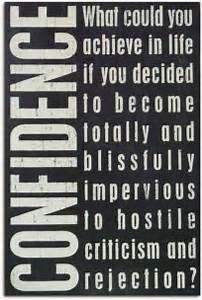
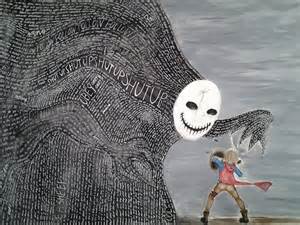
Criticism Be Gone!

I was forty before I could finally ask my mother about her constant criticism of me growing up.   We were alone together, in the car, driving out of town.  I had her undivided attention.

th-4“Help me to understand, something,” I prefaced the conversation.  “When I was young, you always told me no one would ever love me.  What was that about?”

“I didn’t say it to be mean,”  she explained and I believed her.  My mother was not typically a malicious person.  “It’s just that you were so different from your sisters, and I was afraid for you.  I thought I was helping you by preparing you for the inevitable.”

“But why, Mom?  What was it about me that you thought was unloveable?”

“You were just so smart, and independent minded……”  she trailed off.  “I guess I thought that men don’t like smart women.”

“Do you understand that I heard what you said to mean that I was impossible to love?”

“Oh my God, that is not what I intended at all!  Of course you are loveable.  You are compassionate and kind, and you deserve to be loved.  I thought I was preparing you, that’s all.  You were just so different,  and I thought I had to protect you.  I never meant for you to think you weren’t loveable.”

She paused in reflection.

“When the school came to us and told us they had done some testing and wanted to send you to a special school for the gifted, I was scared.  I didn’t know how to handle it.  Your father was all for it, but all I could think about was how would you fit in, and who would ever love you.  I guess I thought I was helping.  You were an enigma to me.”

Mother’s criticism of me was born out of fear and ignorance;  my acceptance of her harsh words was a reflection of my need for her approval. 

I understood.  Within the context of my mother’s upbringing and beliefs, I did not fit the mold.  She was merely expressing fear related to her own limitations.  Unfortunately, for the first forty years of my life, I lived out my mother’s legacy, choosing partners who were incapable of loving me.

My mother was not the only one to be critical of my intellectual abilities.  “Everyone hated you,”  a drunken cousin once confessed to me, then added, “but I don’t know why – you’re so nice.”  Classmates called me Browner, implying that I only got good grades because I ‘kissed up’ to the teachers.   Even close friends have commented that I’m not really that smart.

By listening to the criticism, I began to devalue myself.  Driven by a need to be accepted, I started to act dumb.  Better to deny self than to be criticized, right?

Wrong!

Embracing criticism and taking it to heart is ultimately a sin against the self.  We are each uniquely created, and destined, and it is only through accepting our differences, and nurturing them, that we can truly be fulfilled.

th-3Rejecting criticism is the first step to living authentically, and the only hope for living purposefully and to full potential.

Armed with this new understanding, I will stop apologizing for who I am.  I will let go of the need for praise from others, and recognize that their criticism is more about their process than mine, and let it be.  I will celebrate who I am by committing to my own process, and focusing on my goals and gifts.

I will finally start living.


Rage and Restraint

Thor and I have dined in a high-end restaurant, and he has gone to pay the bill.  I have chosen my food carefully to watch my intake, but still do not feel satisfied.  I look around and spot a dessert counter, with many cakes, pies, and sweet buns.  My husband is taking a while, and I am getting anxious.  On an impulse, I lunge for the cinnamon buns at the front of the counter, reaching across the cakes and pies, with no regard for social propriety.  I scoff the bun quickly, before anyone, especially my husband, can see me.  I needn’t worry.  He is nowhere in sight.  The room we were dining in is in the basement of the building, with a walkout patio.  Thor headed upstairs to the cashier’s desk.  Embarrassed by my actions, I decide to follow him, but I cannot see him.  I catch sight of him leaving by the front door.  Has he forgotten me?  I run to catch up with him and encounter two teenage boys, one of whom threatens to grab my breasts.  Angry with Thor for leaving without me, I am enraged by this young boy’s brazen behaviour.  “Do it and I’ll beat your head in,”  I warn him.  He makes the grab, and I retaliate by grasping one ear and twisting it, while simultaneously poking him in the eye with other.  I knee him in the groin, and as he goes down, I slam his head against the wall.  “That will teach you!”  I conclude.  I have caught my husband’s attention now, and we walk off together.

Restraint is obviously a theme in this dream: the ability to control my eating, and the need to control my anger.

Thor and I are in week four of Weight Watchers.  He has very successfully been following the plan and losing weight.  I am not faring as well.  It is frustrating, to say the least.

Dining out is the base of our problems.  I am vegetarian and Thor is meatatarian, and rather than cook two meals, it is just easier for us to dine out.  With only 26 points allowance in my day, that is a difficult task.  Last night, I had a veggie stir fry with the sauce on the side (8 points).  Thor, on the other hand, had a seafood linguine with garlic bread. (He has 45 points in the day.)  I went to bed hungry, while he had a midnight snack.  As I often do when watching my food intake, I got cranky.

I am proud of my husband, don’t get me wrong.  The changes he is making to his diet and daily routine are commendable.  I do, however; feel a bit like the woman in my dream:  left behind.

The two teenage boys in the dream are an interesting addition to this dilemma.  When I was a teenager, with new, but fully developed breasts, a boy did grab my breast as he passed me on the sidewalk one day.  I was so surprised that by the time I responded, he had fled.  Thus began a series of sexual harassments that continued well into my twenties.  In retrospect, it wasn’t until I had my third baby, and the weight stayed on that the unwanted advances stopped coming.  This is an aha moment.

Could the anger that I feel when dieting be related to inappropriate attention?  I clearly remember thinking, just yesterday, that the nice thing about being older is that you can be unattractive and get away with it.

I never felt attractive.  One of four girls, I thought of myself as the dumpy one.  I had reached full height in  elementary school, and filled out way ahead of my older sisters, earning the nicknames ‘Moose’ and ‘Linebacker’.  Whenever my sisters and I went anywhere together, everyone assumed I was the oldest, even though there were several years between us.  While they received endless attention for their beauty, I was the goofy looking one.  When I did bring boys home, I lost them once they caught sight of my siblings.

Despite my lack of self-esteem, or maybe because of it, I was always finding myself inappropriately propositioned.  Fathers of children I babysat, employers, boys I went to school with, and later colleagues, as well as friends of my then husband.  And, there was the rape.  I was targeted out of a whole gathering of schoolgirls.  I never understood it, but the more it happened, the angrier I became.  Occasionally, I did retaliate physically, but mostly I internalized it. “Boys will be boys,” my mother would say.  “It’s up to the woman to deter it.”  Like my mother, I learned to be a victim.

Why would I want to lose weight only to make myself vulnerable again, must be the question running through my subconscious.  No wonder I am cranky.  Being overweight is not desirable, but neither is being desirable, literally!   Maybe, I need to have a little talk with myself, and remind my inner young woman that I am a lot older now, and have learned to ward off unwanted advances, and protect myself.

Who knew losing weight was this complicated.

A little restraint please!


Abuse of Power

Although I never met the man, I can imagine him as somehow mesmerizing, with a captivating smile, a soothing throaty voice, or sparkling dark eyes.  From all descriptions he is an average middle-aged man, slightly balding, and plump around the middle.  Without a doubt, he knows how to charm.

I first heard about him at a conference for healers.  A reputable woman was promoting his work as ground-breaking, and rooted both in science and spirituality.  His workshops carried a hefty price tag, but were reportedly worth the sacrifice.

I didn’t go.

“He’s very mysterious,”  people reported back to me.  “And very powerful.”

As always, I listened without commenting.  New Age workshops were popping up everywhere, each one proclaiming to offer the answer.  I liked to bide my time.

“He only works with women.”

My ears perked up.

“And only if you are chosen.”

Why is that?  I wondered.

One by one, I watched the women flock to him.  “He gets us,”  one woman explained.  “It’s like he can look inside and he knows exactly what each person needs.”

“He’s seeing my wife at three in the morning,” a distraught husband told me over the phone.  “What kind of therapist meets with clients at three in the morning?”  I was wondering the same thing.  “I feel like I’m losing her.”

I agreed to talk to his wife.

“He’s helping me cleanse myself of the past and all the bad relationships I’ve had.”  True enough, she’d had her share.  But why the middle of the night?  “It’s the time of the day when there are the least physical distractions and the psychic energy is stronger.”

Looked like red flags to me.

Then I met Kay.  Kay was young, and beautiful, and highly intelligent, but something wasn’t right.  She had enrolled in a therapeutic touch class, and while she seemed to be enjoying the course, I noticed she seemed agitated.  I pulled her aside to ask if she was okay.

“Yes.  The course is great and all.  It’s just……..”

“Kay, if you have concerns, talk to me.  It’s not my intention to make you feel uncomfortable.”

“Oh, no.  It’s not you.  Not at all.  It’s just that I’m not sure I should be taking this course.”

“Does it conflict with your beliefs and values?”

“No, no.  It makes so much sense.  It’s my mentor.  He doesn’t like us to study with anyone else.”

Why on earth not?  I must have looked dumbfounded.

“Eventually, obviously……but for now, he doesn’t want us jeopardizing the work we are doing.”

A realization was dawning on me.  I offered her the name that had come to mind.

“Yes, I work with him!  Do you know him?”

“I know of him.”

“He’s amazing, so powerful, and he’s helped me so much.  I just don’t know why I feel so guilty about taking a course like this.  It feels so right, so why am I scared?

“Explain to me why you shouldn’t.”

“It’s part of the process.  In the beginning, he requests that we set aside all doubt, and questions, and trust solely in him.  He’s helping us gain faith.”

And he control, I thought to myself.

The next time I encountered Kay, she was visibly shaken.   “Can we talk?”

Ushering her into a back room, I pulled up two chairs.

“I’m not sure whether he followed me or not?”

“Would he do that?”

“He knows everything.  I can’t get away.  I tried, but he found me.  He says there is nowhere I can escape him.  I am so afraid.  I don’t know what to do.”

“Kay, back up a bit and tell me how you met him.”

“A friend of mine was part of his inner circle.  He told her to bring me to him.  He said he could help.  I was having difficulties.  I thought it was worth a try.”

“Did he mention you by name?”

“No, but he knew she had a twenty-three year-old, blonde friend at the university who was going through a hard time.  My friend knew it had to be me right away.”

“No offense, Kay, but this is a university town, and the chance of anyone having a friend that fits your description is pretty good.”

I could see that my words had hit their mark.  “Oh my God.  You’re so right!  What a fool I was.”

“No.  You just wanted to believe there was an answer for you.  It felt right at the time.”

“What about all the other things?  Could they be made up to?  But, no, not possibly.  You have no idea.”  The look of terror reappeared.  “Oh my God, he’ll kill me for talking to you!”

“You are okay, Kay.  We’re safe.  What else did he tell you?”

“He can command nature to do his bidding.  He has spies everywhere.  One woman went canoeing, off by herself, in a remote area, and he sent a hawk to greet her. She saw it!”

“Also possibly a coincidence.”

Searching my face for some reassurance, Kay continued.  “He told me once that he sent a bear to follow me.  I saw it’s shadow.”  Before I could say anything she added,  “Do you think that was just power of suggestion?”

“I think that’s a real possibility.”

Kay leaned back in the chair and let out a long groan.  “Oh my God, I slept with him.”

“You what?”

“I slept with him, and he’s gross, well you know, old.”

“How did that happen?”

“He made me meet him in the middle of the night.  He had all these candles and incense burning.  The lights were dim, and there was meditation music playing in the background.  I felt like I was in an altered state.  I didn’t want to at first, but he convinced me that this would be good for my soul; that it would cleanse me of all my past sins.  How could I be so stupid!”

I’d heard enough.  This man was going too far.  With Kay’s permission I called a friend who worked with the Victim’s Unit through the local Police department.  Kay’s story was not new to her.

Kay moved away two weeks later.  Unfortunately,  she was not the only woman I would encounter who had fallen under this man’s spell.  All of them attractive, intelligent women, whose only sin was the desire for enlightenment.


Risking Excellence

I am with my son’s friend, and we are headed to meet John downtown where he will be competing in a skateboard competition.  John is a very gifted skater and the odds are good that he will win, but he is nowhere to be found.  As time passes, I feel more and more anxious that something has happened to him, and begin to search in closets and corners, anticipating I am going to find him dead.  Suddenly, a car pulls up, dumps a body, and squeals away.  A crowd gathers, and as I make way through, I know it is John.  He is not dead, but severely beaten, enough to stop him from competing.

I wake up,  immediately afraid for my son, but once I am conscious enough to remember the focus of today’s writing, I realize the dream is about me.

I was eight-years-old when school officials began to pull me out of class and subject me to a series of tests.  “She is gifted,” they told my parents,” and we would like to accelerate her one grade and enroll her in a special class with her peers.  She will have to attend school across town, and transportation is not provided.”

My mother didn’t know what to think.  I was a girl, and according to her, girl’s who were smart did not do well in life. (Doing well, in my mother’s eyes, was being a stay-at-home mom with a husband who made a lot of money.)  My father supported the decision.

Gifted children often feel like an anomaly, and I was no exception.  I knew I didn’t fit in at the regular school, but I somehow always felt like they made a mistake with me and I didn’t belong in the gifted class either:  these kids were so smart and, well, geeky.  I didn’t think I fit the mold.  Academically, however, I thrived.  The self-contained classroom was far more engaging and intellectually stimulating.  I loved school!

After school was another matter.  While I was driven across town each morning, I had to take two city buses home each afternoon, arriving long after my old classmates had been dismissed for the day.  The bullies waited for me, and I soon became game for their taunting, and physical abuse.    When we moved out of town in the middle of grade eight, I was thrown in with the regular population and the rift was apparent.  A town thug was hired to beat me up one day after school.

I learned to hide my abilities, and refrained from competing with others.  I developed the expectation of being beaten, both literally and figuratively.

As I’ve mentioned before, John shares my introspective side – that part of me that doubts, questions, and turns things over and over.  The friend that accompanied me in the dream suffers from depression and delusions.  I have that side to myself also.  Combine the introspection with the inability to see beyond negative thinking and there is an expectation of futility:  why try?

John is a gifted skateboarder, and if the dream was real, I would encourage him to hire a bodyguard and go for it.  By objectifying the issue, is the dream telling me the same?  While you may have been beaten at times, you still hold the same bright potential, so don’t give up.  Just let go of the expectations.

Mickey Mouse Meets Gestalt

Looking out from under the big white wooden chair, I can see Mickey Mouse approaching with a kettle of boiling water.  He’s going to pour the water on me, and even though my family are all around, and I am screaming, no one notices. 

“I had this dream repeatedly as a child, from about the age of five.”

“What is the significance of the white chair?”

“My father used that chair to teach us how to skate.  We had to push it around the rink until we learned to stay up on our own.  I remember being very frightened, because my father wasn’t a patient man and I didn’t want to upset him.”

“What would happen if you upset him?”

“He would yell, call us names, tell us how stupid and incompetent we were.”

“Why Mickey Mouse?”

“I don’t know.  I’ve often wondered about that.  Mickey Mouse would have been the prominent cartoon character back then, and I loved watching the Mickey Mouse Club on TV.  I really wanted to be a Mouseketeer.”

“In Gestalt therapy, the belief is that each aspect of the dream represents a part of you.  Would you be willing to try something with me?”

I nod.

“I want you to put yourself back in the dream and let me guide you.  Imagine you are five years old again, and let me know when you can picture the scene.”

I close my eyes and remember.  “Okay.”

“How are you feeling?”

“Frightened, very frightened.”

“Tell me what’s happening. Talk it out.”

“Mickey Mouse has a kettle of boiling water and he’s going to pour it on me.  I scream, but no one is paying attention.  I can see my Dad and my sister Joanne, but they are not looking my way.”

“What do you want to say to them?”

“Help me!  Help me!  Can’t you see I’m in trouble?  Somebody stop this from happening!”

“Tell them what’s happening.”

“He’s going to hurt me.  That man is going to hurt me.  Please, somebody stop it!  Listen to me!”

“Tell them what you need.”

“I need you to hear me.  I need you to see what’s happening. I need you to see me.  Nobody sees me….”  I break off crying.

“Tell me why you are crying.”

“My childhood home was very chaotic.  There was always lots of fighting going on, and although I don’t remember much of the early years, my mother says I was always tossed over the fence to the neighbour’s house, so they could look after me. ”

“Why do you think this dream has stayed with you?”

“I never felt like I mattered in my family growing up.  There was so much going on that I felt insignificant.”

“In every family there is a rivalry for attention.  How did that play out for you?”

“Well my oldest sister was always sick, so she got most of the attention, and my next sister withdrew into herself, and later we found out she was schizophrenic.  My youngest sister was a handful, throwing tantrums and being difficult to get along with.  I tried to stay out of the way, and not cause any more trouble.”

“So what did you try to do to get noticed?”

“Achieve.  I tried to be the smartest and the most successful?”

“How did that work for you?”

“It didn’t.  I never felt like I could be good enough, and when I did do something worthwhile I got shot down for bragging about it.”

“Do you still feel that way?”

“Not so much.  I’ve struggled with not feeling good enough, but I don’t need the glory anymore.”

“Why do you think that is?”

“Maturity.  Life experience.  When I first learned how to do Therapeutic Touch I did a lot of volunteer work, and I soon realized that there were many people whose lives were worse off than mine, and that by giving a little bit of my time, I could make a difference.  It felt so amazingly rewarding to help another, that I realized how unimportant everything else was.”

“So what would you tell that little girl today?”

“Well, first of all, I’d reach in under that chair and offer her my hand; then I’d pull her to me and give her a great big hug and tell her that I love her.”

“Tell her as if she is here.”

Come on, Sweetheart, lets walk away from all this commotion.  You are okay now.  I am here, and I can see you, and I’m not going to let that man hurt you. 

Why doesn’t anyone see me?

Because they can’t right now, Honey.  They can only see their own pain, but that doesn’t mean you’re not important.  You matter very much. 

Are things going to get better?

Eventually, but not for a long time.  But I want you know that you will be okay.  You will be better than okay. 

Why are you here?

Because I think it’s important that you know you are perfect just the way you are. 

“Do you feel better?”

“I feel like I have had a breakthrough.”

“How so?”

“I understand now that the little girl in me sought attention for a long, long time, and I don’t need to do that anymore.  It feels lighter.  Achievement is good in and of itself.  The need for glory only taints it.”

“And Mickey Mouse?”

“Well that’s just what we become when we seek out fame and fortune, I guess.  Burned.”


Saying Goodbye To Father

My father fought against death at the end, even though he was wracked with pain,  had difficulty breathing, and spent many of his nights in hospital.

“At what point do we stop all this intervention, Dad, and talk about keeping you comfortable?”

It was the early hours of the morning after another night spent in emergency.

“Now,”  his voice cracked as he spoke.  Dad was so clearly in distress it was alarming.  Involuntary spasms of pain kept him from resting, and the strain was telling on his ashen face.

I took his hand in mine.  “Dad, all I want for you is peace,”  I hesitated.  “To be honest with you, Dad, I have never known you to have peace in your life.”

He squeezed my hand.   “Not a lot.”

“Do you believe that there is something for you on the other side, Dad?”

“I don’t know, Honey.  I don’t have the faith that you do.  I don’t know what to believe.”

“Some say that our feeling about God is related to our relationship with our own father.”

“How so?”

“When you were a boy, huddled in the coat closet, hiding from your father, what were your thoughts?  Did you ever think about God in those moments?”

“All the time.”  My father closed his eyes and laid back.  “I remember asking God over and over, what I did wrong to deserve the beatings.  I thought  God was punishing me.”

“Exactly, Dad.  Maybe your fear of death is because the little boy in you thinks God will reject you, or inflict more pain.”

He opened his eyes and looked at me.  “You could be right.  I know I’m afraid.”

“God didn’t punish you, Dad.  Your father did.  I have to believe there is something better awaiting you.”

He closed his eyes again, processing what I suggested.  “You were a child, Dad.  It wasn’t your fault.  You need to forgive yourself.”   A tear trickled down his cheek.

We didn’t talk about it further, but we did speak to the doctor on duty about changing Dad’s care.  Plans were made to transfer my father to palliative care.  The day he was to be moved, my father announced that he didn’t want any visitors.  He said he needed time to settle in.  They moved him mid-morning.  He died within hours.  I rushed to his side, but it was too late.

“Good for you, Dad,” I cried.  “You finally made it.”


Contemplation of Inner Lives

Wasn’t it Carl Jung who said that each of us has a cast of thousands within our psyche? What if I could meet with my inner personas, envision a way for us to all get along?

I am reminded of a recurring dream I have had about an underground cave full of people, through which I try to maneuver. I picture the cave to help me imagine my inner selves.  The space is roomy,  with high ceilings, and a fire that lightens the scene.  There is an underground body of water around which people are gathered.  It is crowded in here.  I visually push the crowd back, clearing a space in the light.

“Listen up troops!  This is ego talking.  Can we have a meeting?”

Who will come forward?

A small figure steps into the clearing.  She looks to be about three or four years old.  Dark curls of hair fall in disarray about her shoulders.  Dragging a stuffed animal by her side, she rubs her big, brown eyes with her free hand, as if just waking up from a deep sleep.

“Hello, Little One.  Welcome.”  I am delighted both by her innocence, and her bravery for being the first to step up.

Out of the corner of my eye, I catch more movement.  It is a twelve-year-old version of myself, who steps in to take the little one’s hand.  Ah, responsible me.  I know her well.

An older woman steps in next.  She is well-groomed, neat and trim.  Her hair is white, and obviously long, but caught up in a bun.  Her face is long; not my face.  I don’t know her.

“Welcome,”  I say and she nods approvingly.

“Anyone else?”

A pregnant version of myself steps forward.  Not the new mother me, but the woman expecting her third child.  The established mother.  She looks tired, but not unkind.  She has brought her babies with her.

A shadow darts across the opening, then fades back into the dark corners of the cave.  I try to see where it went and see a figure trembling there in the darkened crevices.

“Would you like to join us?”   The figure is slightly hunched, hugging herself tightly.  “Please.”  The others reach out their hands towards her.  She moves to the edge of the darkness.  Her long hair looks tangled, dirty.  Her eyes are cast down, I can’t see her face.  It looks like she is holding a blanket around her.  “If you are here, you are part of us,”  I offer.  “We’d like it if you’d join us.”  She looks up and it startles me.  The pain in her eyes it so real my breath sticks in my chest.  She steps forward and I see she is naked under the blanket.  She is my violated self.  “I’m sorry,” I whisper.  “Please come into the light.  I want you here.”  The others move to surround her.

The shadow darts again.  Is that a little boy?  I follow the movement.  There is a tall, proud, Aboriginal woman.  She is wearing some ceremonial costume, although nothing I recognize.  She steps silently forward.  I like her energy. Then three figures push out of the crowd to join in.  They too are of different ethnicity and race.  Arms locked like old friends they are laughing and jostling; a happy presence.  Another woman pushes forward, directing a young boy before her – the darting shadow.  He has a dishevelled mop of hair, and dark mischievous eyes, reminding of pictures of my father as a child.  She is a big bear of a woman, very motherly, and obviously very much in control.

There’s a boy here?  Are there any men? I wonder. I look around.  Many faces still stand on the periphery, and yes some are men, but none have come forth….oh, wait a minute, here’s one.  A whiff of pipe smoke hits me first.  Very professorial.  Tall, thin, with greying hair, and kind eyes.  A thinker, I’m guessing.  Another young man steps forward.  Dressed immaculately, and carrying a case, he looks driven by ambition: fearless.

“Okay,”  I say.  “It looks like we could do this all night, but we need to begin.  Can we get started?”

The big bear of a woman steps forward, with the little boy in tow.  “The goal here is to find some harmony,” she states.  “I think it would best if everyone could be heard.  State your concerns, and also what you bring to the whole.  I’ll start.  I am Mother Earth.  I believe in the unity of the whole, and am big and strong enough to hold us all together.”

Cool!  I am liking this exercise.

The white-haired woman is next.  “Well, I am wisdom, and I believe this can work also, but I am a little concerned about how ego is running the ship.”  She looks directly at me.  “We won’t live forever, you know; be a little mindful of how you take care of our body.  Some exercise would go a long way.”  I gulp.  Yes ma’am, I’m thinking.

“What do you have to offer?” Mother Earth asks.

“Perspective,” is the response.  “When the ego needs direction, and is willing to listen, I offer perspective.”

“Thank you,” I say.  “Good to know.”

The professor tilts his pipe towards me.  “Don’t forget intellect.  You have a good mind.  Use it.  No concerns right now, as long as she keeps learning.”  Fair enough.

My mother self just beams at me.  She is happy that the babies are still coming.

The twelve-year-old, still coddling the little one, gets my attention.  “Don’t forget us,” she says.

“What do you mean?”  I ask.  “How could I forget you?”

“But you do.  You often do.  We need care too.  We need fun and new discoveries, and most of all we need love and affection.  Well, not so much me, but the little one does.”

I have to smile, because I’m sure she means both of them.  “Of course you do.  Don’t I show it?”

“Not very often.  You spend far too much time worrying about the future, and where the next dollar is coming from.  You forget that we need attention and just to hang out sometimes.”

The little one nods, as if she understands.  She puts out her arms and I hug her to me.  She is so tiny, and pure.  “You are precious,” I tell her.  “I would never want to lose you.”  She snuggles up and leans into me.  I offer my hand to the twelve-year-old.  “I would like for you to let me be the adult,” I tell her.  “I appreciate everything you have done, you have a great sense of duty, but you also need to just be a kid.”   The look she gives me is undecipherable. I look to Mother Earth for some direction.  She nods at the younger me.

“Go ahead,”  she says.  “Tell her.”

“You have made promises to us that you do not keep.  We don’t know what to believe.  Little One needs to feel safe and secure, she needs you to be consistent.”

“What about you?  What do you need?”

Her lip starts to tremble.  Is that a flicker of anger I see behind her eyes.

“You can tell me.”  I try to keep my tone calm, and reassuring, but my heart and mind are racing.  “What have I done to this child?  Then I understand.  “Are you angry with me, or adults in general?”  I ask.  “I know you’ve been hurt by many.”

“I don’t know who to trust,”  she begins.  “I try and try to be good and make things better, but it’s like I don’t exist.  It’s unfair.”  The floodgates burst open.  “I feel like I don’t matter.  No one notices me.  No one cares.”  The little one runs to her and they hug again.  “We need to know you care.”

“But I do care!  Maybe I just don’t know how to show it.  Please, help me to understand what you need.”

“When you were us you knew what you wanted.  You promised that you would not put up with injustices, and you would make us count in the world.  You also promised that we wouldn’t need anyone.”

“I know I did,  Honey.  But that is not a healthy response.  Relationships are a natural part of life, and while I haven’t always been able to protect us from harm and abuse, I have made better choices, haven’t I?  I do care very much about you, and I know you have been hurt.”  There’s so much I want to say, but she does have a point.  “I’m sorry.”

“And what about her?”  They both glance in the direction of the young woman in the blanket.  She is too wounded to be angry.

“I made a terrible mistake, and you suffered for it.  I am so sorry.  I don’t know how to lessen your pain.”  Then, “Mother, I have stumbled through life, and made poor choices out of fear, anger, and impulsiveness.  I see now that I have hurt all of us.  How do we find alignment without trust?  Have I ruined our chances?”

“Of course not, Child.  There is always hope.  This is a good beginning.  We are talking, and you are listening.”

“I am listening, but I feel so responsible, and inadequate.”

“Oh, you are not inadequate;  far from it.”

“What we need,” interjects the Warrior Princess, “is direction and leadership.  You,” she is speaking to the young business man, “need to take a step back.  While your ambition is appreciated, it is not always in line with the common good.  Your energy and spirit are good, but you serve us better by working in the background.  As for you,”  she turns to the three friends, “your lightheartedness is wonderful, and we need you as a constant reminder of the need for tolerance and harmony.  Young lady,” she says addressing the twelve-year-old.  “You are mighty strong and that is admirable, but you are yet a child.  I invite you to be open to the future instead of always fearing it.  We need your youthful exuberance to power the movement.  And you, Little One, you are indeed precious, and we never want to be without your sense of wonder and innocence.  Professor, Wise Woman, you know your roles.  Young mother, you are much appreciated right now with these new grandchildren coming.  As for you, Young Man,” she turned to the little boy with the hair.  “You have the very important role of looking out for possibilities.  You have just the right amount of restlessness, coupled with curiosity and daring.  Every good team needs that. Now there is just one more thing to do.” Opening her arms, she gestures for the crowd to form a circle around her, then she invites the wounded girl and myself to join her in the middle.  Silently, she positions each of us facing one another.  I offer my hand to the girl and she takes it.  I clasp it to my heart.

“There is a lot of strength in this room, and I want you both to feel it.”  Although the room has fallen silent, and the faces are all somber, we can sense the truth in what she is saying.

“There is also a lot of hope, and love in this room.  Let that be with you, also.”  We both take a deep breath in, and I can see her shoulders relax a little, though she still clutches her blanket to her.

“There is no movement within a community of blame, only heartache and pain.  I want everyone here to release any blame that their heart may be holding.  Take a deep breath in and as you let it go, release any blame with it. Replace the blame with love for the whole.”  All chests rise on the inhale, and collectively we exhale a sigh of release.  Breathing in again, we begin to feel lighter.

“You are so beautiful,”  I tell my wounded self.  “You didn’t deserve this.  None of us did.  We all hurt for you.”  A murmur of agreement circles the room.  “And we all pray for your healing.”  The murmur becomes a rumble.

The Warrior Princess raises one hand in the air, placing her other palm on the Wounded One’s forehead.  “You are not alone,” she says.  “You must not carry the burden of this pain alone.  Let us each take on our share of the burden and lighten this young woman’s load.  Open your arms and receive her.”  All bodies push forward to embrace the Wounded One in a massive hug of energy.  From within the circle their is a heart-wrenching sob, then a flow of tears that passes from one self to the next until there is a palpable shift in the air.  Then, as if on cue, everyone steps back into the circle, giving us room.  Our eyes meet, and the most incredible thing happens.  The young woman lets go of her blanket, and standing straight and proud reaches her hand out for mine, and clasps it to her heart.  Her whole being shines with such radiance and light that I am not embarrassed by her nakedness.  She is beautiful!

I am beautiful.

We are all beautiful.

And in that moment we are so wonderfully aligned that we feel the perfection of our being, and the miracle that is existence.

“Thank you, all.”  I whisper, not wanting to break the reverie.

(Image: en.wikepedia.org)

 

Whiskey Fights

Most evenings I would return home from work at 10:30 exhausted by my day.  Juggling school, homework, and a part-time job was taxing, particularly as I worked from six to ten, four evenings a week, as well as eight hours on Saturdays.  Typically, I would stop to visit with my parents before heading off to bed.  It was always at these times that my father would engage me.

It started with an empty drink glass he would balance on his knee. This was to be my cue.  I would ignore him.

“Ahem!”  He would nod at the empty glass.

Continuing to ignore him, I would talk to my mother about the day.

Clink, clink, clink.  My father would tap the glass to get my attention.

“Your legs worked fine the last time I saw them.”

He’d raise his eyebrows in displeasure.  “I worked hard all day.  It’s the least you could do.”

“I worked hard all day, too.”  I’d object. “Get your own drink.”

My mother, the peacemaker, would take a step towards him.

“Don’t you dare, Mom!  You worked equally as hard all day.  He can get his own.”

“Is this the thanks I get?  All I want is a simple drink, and my own daughter won’t even get up and get it for me.”

It was the point of the thing.   My father was the epitome of male chauvinist pig.  It was his home, his castle, and everyone and everything was expected to pander to him.   It made me mad.

My mother stood by, hesitant.

‘It won’t hurt him to serve himself once in awhile.”  Now I was arguing with her.

“Your not going to win,”  she’d sigh.  My father leered with satisfaction.

“Not if you give in.”  It was a hopeless plea.  My mother always gave in.  Didn’t she realize I was on her side?  I was doing this for all of us?

This wasn’t about the drink.  It was about all the times he made her have dinner on the table the moment he walked through the door, then pushed his plate away after two bites, exclaiming disgust at her cooking; humiliating her in front of all of us.  And how he always had to have the first helping of pie, and it had to be flawlessly served; no broken pieces for him.   It was about how he insisted on napping in a chair beside the dinner table, forbidding us to talk even though we were busting to discuss our day.  And how every time we were watching the movie of the week, he would come in just at the climax and insist on changing the channel, even though he had a TV set in his room, which only he was allowed to watch.  He was the King of the Castle, he’d remind us.  As if we needed reminding.

For once, I wanted to win.  To prove him wrong.  To see him back down.  It wasn’t going to happen.

I got up and grabbed the glass.  There was no winning against my father.  He knew it.  She knew it.  I seethed inside.

(Image: www.photigy.com)

What Is Right If Everything Is Wrong?

My father ‘borrowed’ his brother’s identification and enlisted in the war effort at the age of fifteen.  He told me once that it was an opportunity to escape home.  He trained as a commando.  His mission was to go into enemy territory, scout out where they kept their ammunition, and get out without being caught.  His instructions were to swallow a black pill (cyanide) if captured,  and kill any soldier he should encounter, in order to keep his unit’s operation covert.  He did not carry a gun; gun’s were too noisy.  He was trained to kill with either a knife, that he kept strapped to his leg, or his bare hands.

He knew exactly how to render an enemy immobile, and apply pressure to end their life.  I know, because he practiced on me.

He never let me forget that he was boss, and he could snuff me out in a moment.

He would do it in a state of drunkenness, in front of his male friends.  He’d twist my body in such a way that if I moved, I would surely break an arm, or a leg.  He’d hold me there, humiliated, angry, and make me tell him I loved him.

“Yes, Dad.”  I would say, teeth clenched, breathing like a trapped animal.

“What?”  He’d pull tighter.  “I don’t think that was very convincing.”

“I love you.”  I don’t know who I hated more, him or me.  I felt so cowardly.  Inwardly, I plotted revenge.  He might conquer me in the moment, but not the long term.

How long he held me there, depended on how much pleasure he was deriving from the moment.  He said he did it because he loved me.

“Your father loves you,”  my mother would echo.  “He’d never really hurt you.”  I was not reassured.  She said the same thing when he attacked her verbally, and psychologically.

She said the same thing when her brother tried to slip me his tongue.  “Your uncle fancy’s himself a ladies’ man.  He’s harmless.”  Even when his own daughters accused him of sexual abuse and refuse to see him, she defended him.   “Boys will be boys,”  she’d say.  “The woman has to control the situation.”

I was twenty-eight before I told her the reason that I disappeared when I was fourteen was because I had been abducted and raped.  It took me fourteen years to build up the courage to tell my mother that when men behave inappropriately it is wrong.  That they alone are responsible for their crimes, and that women are not to blame.

“I’m sixty years old,” my mother told.  “And I’ve never told anyone.”

“What, Mom?”

“I always thought it was the girl’s fault.  I don’t why I thought that, but I just did.  I knew my mother would say so, so I never told.”  She was only six, and riding in the backseat of her family’s new car, when her uncle took her little hand and made her fondle his penis.  Her parents were in the front, but she didn’t say a word.  She thought she did something wrong.

The abuse did not stop there.  “My mother would make me visit my grandparents, even though I hated it.  Grandma would be working in the kitchen, and she’d tell me to go and keep Grandpa company.”  ‘Keeping Grandpa company’ meant climbing into bed with the old man.  Mom didn’t explain any further.

The same brother that tried to french kiss me, was also a problem growing up, she confessed.  She’d just shoo him away.

Her younger sister wasn’t so lucky.  Their grandfather dragged her out behind the barn one day and raped her, while the rest of the children stood by helpless.  Only the youngest son grabbed the shotgun and threatened to kill the old man.  It was an empty effort.  Years later, the family would shun that aunt for her inappropriate sexual behaviors.

A child may be born with an innate sense of right and wrong, but it is not long before she learns to question her own instincts.  How do you unravel the corruptly tangled web of abuse and denial?  How does a child who has not been protected from wrong, learn to trust in right?

For me, it has been a slow dawning realization that words have no meaning.  A man can say and promise whatever he wants, but it is action that speaks the truth.  Holding your child in a death grip to prove your prowess, is not an act of love.