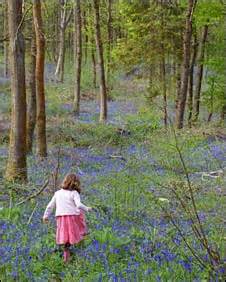
Regression

Fear drives me backwards, spinning
childhood tales, plunging into frigid
waters of isolation, desolation; falling

into the unknown; a mission to heal
the ruptures, out of season, past and
present colliding, frozen in time –

I am in need of extraction, need to
believe in flight of eagles – innocence’s
idol – need to initiate possibility; find

a match to melt icy deception – so
much betrayal – my sun is going down;
I stand at the water’s edge, ready to

launch; innocence and ignorance
co-conspirators of my youth; am
fighting an immature battle, out of

sync, hesitant, prefer avoidance to
combativeness, played one too many
addict’s game, felt the brunt of relapse

am powerless, emotionally responsible,
bear the burden of care, unable to release
control, swallowed by childhood’s chasm.

(Image from: www.egilpaulsen.com)

Dear Child

I know a little girl,
whose hair in ringlets
falls, unkempt from lack
of brushing; who stands
when she should be sitting;
who laughs with defiance when
challenged, her dark eyes gleaming
with mischief; who holds her chin up
high and stamps her feet, arms folded
in protest when she does not get her way.

I see that little girl,
have watched her play,
with a wild imagination,
and a fearless temperament;
have watched her climb a tree,
scrap with any bully, and dare to
venture on her own; have witnessed
her alone times, hidden and obscured,
watched as she cried unheeded, buried
herself in books, drawing, and future dreams.

I feel that little girl,
who wears such a brave
exterior to mask her inner
fears; who bears a burden of
responsibility to carry the weight
of those around her;  who believes
she has the power to make her mother
cry, to cause her father’s violence, to save
her sisters from pain; who feels the punishment
of her situation and ascribes it to unworthiness.

I love that little girl,
whose mind is always
churning, who prays to a
god she’s never seen, and
makes wishes on rainbows;
who longs to make a difference,
and refuses to believe that suffering
is all there is; who devotes herself to
being a better person, and hopes one day
that she’ll finally feel at peace in the world.

I hold that little girl,
warm within my heart,
listen to her fears, hear
her heart’s longing;  praise
her courageous efforts, appease
her doubts, offer condolences for
losses, encouragement for change,
forgive her of her burdens; allay her
misperceptions, reassure her worth,
promise to never let her go: she is me.

Driving Passion

Warnings of attitude –
a fiery-tempered miss
with whom I’ll be working,
tweaks a memory – intrigued,
I promise to familiarize myself.

Perfectly parted raven tresses
cascade over stiff, slender shoulders,
porcelain features suggesting purity,
pierced by autumn sky eyes – once
menacingly brooding, then clear as a
summer’s day – she perches proudly

Rumours echo in my mind –
tales of truancy, back talk, and
lashing out – a trail of intimidation.
Where are her parents? I wonder.
Absent, distracted, in avoidance
of this wayward youth – I hurt for her.

Smirking at my attempts to sympathize,
her eyes accusations: It doesn’t matter what
I do – they don’t care; nobody cares. So what?
Don’t you care, I want to shake her, don’t you
worry about your future, see the damage you
are causing – I maintain composure – she is,
after all, an A student – gifted survivor.

I drive her to a party of her peers,
watch her slice through the crowd –
her smile a sharp-edged weapon –
she settles in a corner, smolders,
then tiring of the meaningless, signals
an exit, stragglers in tow – boys entranced
by her mystery – she does not shrug them off.

She leads us to a bar – an adult space –
where despite her underage, I watch her
morph into Lilith, claws wielded, lips dripping
bloody, black venom, she turns on me,
I recoil, regroup, strike back, calling her
Genevieve, we both withdraw, retreat.

Complete with entourage – she silent
in the passenger seat, I exhausted,
feeling used – no guidance from self –
absorbed teens – craving cooperation,
careen through back country, attempt
direction, miscalculate, aim again.

I deliver my charges without incident,
note with dismay the consensus of
detached parenting – alarmed that
fresh-out-of-childhooders have no rein –
finally find the words to ask my protegé:
Do you think you might be hurting yourself?

Angst responds, without speaking:
What is the point, it asks, when the world
is self-occupied; when rules extinguish
expression; when apathy has replaced
concern; and conformity has no definition,
outside of construed norms: unattainable
at best – we are materialistically baited
robots, mechanically jumping to fulfill what?
One-upmanship?  Social redemption – hardly.

Why should I strive for excellence when
excellence does not acknowledge me –
maybe doesn’t exist at all – I have ideas,
I have passion, and compassion, and all
I see is misogyny – a schizophrenic view
of womanhood that disallows  perfection
while simultaneously demanding it.  How
am I supposed to find myself in all that?

Memory floods back – hopes and dreams
stifled by dysfunction, onscreen beauties
defiled then rescued by oddly aloof males,
women with voices slammed as unfeminine –
mixed messages of my youth rush back
with new clarity – this child is me – violated
and unprotected – her inner screams masked
by an outwardly defiant persona – duplicitous.

We work together, she and I, a co-joint
adventure to reveal truths, liberate souls
and serve, as is our calling.  She, young,
idealistic; me, old and sometimes wizened –
we fight for the under-bitch – the not fully
realized potential of all women – oppressed
by commercialism and sexism, negated by
culture and patriarchal driven standards.

Warnings of attitude –
a fiery -tempered miss
with whom I’ll be working –
and I give thanks that she’s still
residing within me – a familiar.

Day 216 “Living with the Unknown”

“We don’t know what causes this illness, and there is no cure or course of treatment other than management, and that is mostly trial and error.” It is the standard answer from all healthcare providers when it comes to ME/CFS.

“I am flat out frustrated,” I tell my therapist. “I can’t seem to find a regime that works. I can have one or two good days and then, wham, I am knocked down for no apparent reason.”

“That seems to be the way with this disease. How are you managing emotionally?”

“Okay, mostly, but on the worst days I find myself always on the edge of tears.”

“There is a grieving process that accompanies a diagnosis of chronic illness, you know. It has to do with the loss of your normal life, and all the things that go with being healthy.”

“This feels more like fear. I know it’s irrational, but this feels very much like fear.”

“Are you afraid you’ll never get well again.”

“Nnnoo…….I know I can do that – I’ve gotten through worse before. It’s just….it feels almost as if it’s coming from an old place – a younger me, if that makes sense.”

“It does actually. Whenever we are hurt or vulnerable, we often respond from a wounded part of ourselves, and that usually relates back to childhood. How old does this make you feel?”

“Nine!” I respond immediately. “I can see me, sitting in the corner of my childhood bedroom. It was my favourite hiding place. I spent hours and hours there as a kid.” Wishing someone would come find, but they never did, I remember to myself.

“Can you talk to her?”

Little Me sits with her knees drawn up tight, arms hugging them to her, eyes wide open and hyper-alert.

“What is it?” I ask.

No one will want us, her fear says.

The emotion hits me violently. She was told over and over again that she was an unwanted burden. “Unwanted” is the key word. We can handle any other pain than that.

“We have a burden complex,” I tell both her and my therapist.

Both nod, but Little Me’s terror and tension doesn’t ease.

“Go on,” urges my therapist.

“A burden is something, not someone,” I explain. “You are not a burden. You are a child, and by that fact alone, you have certain rights – birthrights – among them the right to have your needs met, the right to be looked after and cared for, and the right to be loved. NOT: You have to earn these rights! NOT: You are unworthy and therefore undeserving! You exist, you are born, those are your rights!”

My therapist nods throughout, and more importantly, I see Little Me is listening, and her shoulders have dropped a bit.

But Mom says…., she begins.

“I know what your Mother tells you: Don’t wear out your welcome. All she means is be polite and stay a reasonable amount of time when visiting your friends. She is not commenting on your likeability.”

Really? What is a reasonable amount of time?

“Discreetly leave before supper is ready unless you are invited.”

“Yes, yes,” the therapist nods.

Little Me considers this. Then why does she rush us off to bed at night as soon as Dad gets home? Isn’t it because we’re a burden and she doesn’t want to remind him?

“NO! It has nothing to do with that! I cannot emphasize this enough! It is something you will understand as an adult, but for now, know that you being sent to bed is your parents’ issue, not yours!”

What about Thor? Won’t he find us a burden and leave us?

“Ahh!” says my therapist warmly.

I feel my throat catch and sigh. “Some things in life are uncertain.” It’s not like I haven’t thought about it. How do I begin to address this? “We have many things that Thor is looking for,” I offer. “Last year, we looked after him. We are patient, loving, and good listeners. These are important to him. He is wounded too, you know. He needs reassurances. Our insecurities will push him away more than anything, especially if we pretend not to have any.”

The truth of this last statement hits me. Little Me loosens her posture and now looks at me quizzically. Confession time.

“One of the things I have done in my life – right or wrong- is to develop a tough exterior. It hasn’t always served us well. Much like our Mother sending us off to bed early, I did it as a form of protection.” I pause to feel the weight of the revelation. “It doesn’t work anymore.”

The silence from within and without encourages me to go on. “Part of my healing process – our healing process (I add for Little’s sake)- is to replace that characteristic with a healthier one.”

What will that look like? Little Me echoes my therapists thoughts.

“Not entirely sure, but I know how it will feel: safe enough for you to come out of the corner and engage with life. You, we, have a lot to share, and we can’t do it when we hide ourselves away.”

I am strangely comforted by this conversation: lighter. “I have my homework cut out for me,” I tell my therapist.

“You do! But this is a good start.”

“Life is full of uncertainties,” I tell Little Me, on our way home. “Some good, some bad; it’s just the way it is.”

Kinda like an adventure?

“Yeah, it kinda is!”

Choosing Self Love

The day was sickly hot, and my allergies were bugging me.  I just wanted to hunker down in the corner of my room and lose myself in a good book, but when I tried the back door, it was locked.  I knocked.  No response.  I knocked harder and longer.

The door swung open angrily, and my oldest sister yelled for me to get lost, slamming it in my face.

I knocked again, more persistently.

She opened again hissing at me:  “Seriously, V.J.!  You need to stay away, or Mom will kill herself.”

“But it’s hot and I don’t feel well.  Please let me come in.”

“No way!  Mom can’t handle anything else.”  She slammed the door again.  I heard the lock slide into place.  I slumped down on the step, thinking over what she had said.  Was it really possible for me to be the cause of my mother’s suicide?  The rest of the family, save for my Dad, were inside.  I was the only one locked out.  Was I really that bad of a kid?

That was the day I learned that I could be responsible for another person’s well-being.  I wasn’t yet eight years of age.

* * *

“I am not a very good daughter,”  I explained to the therapist I had been seeing.  I was thirty-seven and having difficulty with my own daughter, so I sought help.

“What makes you say that?”

“Well, I upset my mother and she hasn’t spoken to me for a week.”

“You think you are that powerful?”

“Pardon me?”

“You actually believe that you can influence how someone feels?”

I hadn’t thought of it that way.  “You mean, my mother’s reaction is out of my control?”

“Exactly.”

* * *

“My husband tends not to look after himself when I am away.”

“And how does that make you feel?”

Eighteen years later and I am back in therapy again.  Situational anxiety and depression is the diagnosis.  I feel like I have regressed.

“Guilty.”

“Why is that?”

“Well, if I was home I know he would be cared for.”

“So you are responsible for his choices?”

“No….well…..I guess that is what I am saying.  Shit!  How do I let this go?!”

“You will not always agree with the choices that your husband makes, but you can at least let him have responsibility for them.”

“That makes sense, so why is it so difficult for me?”

“It’s really about control.  Somehow you believe that if you can control the other person’s behaviour, then everything will be all right.  It never works, of course, but it’s a product of growing up in an out-of-control family environment.  It’s part of being a people pleaser.”

I thought I had dealt with all this years ago, and said so.

“The subconscious tries to heal those parts of self that are still wounded, so it repeats patterns.  The secret is in re-parenting yourself.  This need for control is a reflection of a childhood need that wasn’t met.”

“Like the part of me that thought she was responsible for my mother’s suffering?”

“Yes.  As an adult now, you need to offer that little person a different perspective.  What would you tell that little girl now?”

“Well, I would sit down on that porch step with her and explain that whatever her mother was going through was not her fault.  I would tell her that her sister was coping with a bad situation, and that it was not related to her behaviour.  None of it was her fault.”

“That is a good start.  Can you see anything else that the child might be missing in this scenario?”

“Caring for.  I was hot and tired and needed shelter.  I probably needed some comfort too.”

“So how will you give that to her?”

I think this over.  Am I good at looking after myself?  Occasionally, but not always.  “Why is looking after myself so difficult?”

“You tell me.”

I look back at the little girl locked out of her house, and I suddenly know.

“She doesn’t think she deserves to have her needs met,”  I realize.  “I still don’t think my needs matter.  Others are always more important.”

“So who should you be responsible for?” the therapist asks gently.

“Me.  And her.  She needs me to take care of us.”

“Can you do that?”

“It’s the only choice that makes sense.”

(Image: hdimagelib.com)

Mickey Mouse Meets Gestalt

Looking out from under the big white wooden chair, I can see Mickey Mouse approaching with a kettle of boiling water.  He’s going to pour the water on me, and even though my family are all around, and I am screaming, no one notices. 

“I had this dream repeatedly as a child, from about the age of five.”

“What is the significance of the white chair?”

“My father used that chair to teach us how to skate.  We had to push it around the rink until we learned to stay up on our own.  I remember being very frightened, because my father wasn’t a patient man and I didn’t want to upset him.”

“What would happen if you upset him?”

“He would yell, call us names, tell us how stupid and incompetent we were.”

“Why Mickey Mouse?”

“I don’t know.  I’ve often wondered about that.  Mickey Mouse would have been the prominent cartoon character back then, and I loved watching the Mickey Mouse Club on TV.  I really wanted to be a Mouseketeer.”

“In Gestalt therapy, the belief is that each aspect of the dream represents a part of you.  Would you be willing to try something with me?”

I nod.

“I want you to put yourself back in the dream and let me guide you.  Imagine you are five years old again, and let me know when you can picture the scene.”

I close my eyes and remember.  “Okay.”

“How are you feeling?”

“Frightened, very frightened.”

“Tell me what’s happening. Talk it out.”

“Mickey Mouse has a kettle of boiling water and he’s going to pour it on me.  I scream, but no one is paying attention.  I can see my Dad and my sister Joanne, but they are not looking my way.”

“What do you want to say to them?”

“Help me!  Help me!  Can’t you see I’m in trouble?  Somebody stop this from happening!”

“Tell them what’s happening.”

“He’s going to hurt me.  That man is going to hurt me.  Please, somebody stop it!  Listen to me!”

“Tell them what you need.”

“I need you to hear me.  I need you to see what’s happening. I need you to see me.  Nobody sees me….”  I break off crying.

“Tell me why you are crying.”

“My childhood home was very chaotic.  There was always lots of fighting going on, and although I don’t remember much of the early years, my mother says I was always tossed over the fence to the neighbour’s house, so they could look after me. ”

“Why do you think this dream has stayed with you?”

“I never felt like I mattered in my family growing up.  There was so much going on that I felt insignificant.”

“In every family there is a rivalry for attention.  How did that play out for you?”

“Well my oldest sister was always sick, so she got most of the attention, and my next sister withdrew into herself, and later we found out she was schizophrenic.  My youngest sister was a handful, throwing tantrums and being difficult to get along with.  I tried to stay out of the way, and not cause any more trouble.”

“So what did you try to do to get noticed?”

“Achieve.  I tried to be the smartest and the most successful?”

“How did that work for you?”

“It didn’t.  I never felt like I could be good enough, and when I did do something worthwhile I got shot down for bragging about it.”

“Do you still feel that way?”

“Not so much.  I’ve struggled with not feeling good enough, but I don’t need the glory anymore.”

“Why do you think that is?”

“Maturity.  Life experience.  When I first learned how to do Therapeutic Touch I did a lot of volunteer work, and I soon realized that there were many people whose lives were worse off than mine, and that by giving a little bit of my time, I could make a difference.  It felt so amazingly rewarding to help another, that I realized how unimportant everything else was.”

“So what would you tell that little girl today?”

“Well, first of all, I’d reach in under that chair and offer her my hand; then I’d pull her to me and give her a great big hug and tell her that I love her.”

“Tell her as if she is here.”

Come on, Sweetheart, lets walk away from all this commotion.  You are okay now.  I am here, and I can see you, and I’m not going to let that man hurt you. 

Why doesn’t anyone see me?

Because they can’t right now, Honey.  They can only see their own pain, but that doesn’t mean you’re not important.  You matter very much. 

Are things going to get better?

Eventually, but not for a long time.  But I want you know that you will be okay.  You will be better than okay. 

Why are you here?

Because I think it’s important that you know you are perfect just the way you are. 

“Do you feel better?”

“I feel like I have had a breakthrough.”

“How so?”

“I understand now that the little girl in me sought attention for a long, long time, and I don’t need to do that anymore.  It feels lighter.  Achievement is good in and of itself.  The need for glory only taints it.”

“And Mickey Mouse?”

“Well that’s just what we become when we seek out fame and fortune, I guess.  Burned.”