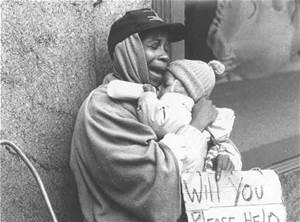
These are Warriors

Younger women than I
are giving birth, unaware
of indifference; joyous
expectancy blotting out
smells of disinfectant,
and decay – I am invisible
to them, my daughters.

Babies they are, bringing
forth life, unripened souls,
hopeful, ignorant, unaware
that I know what violations
have planted the seeds, am
no stranger to the cruelties
of humanity, my sisters.

I may be unknown here,
but neglect is universal –
it’s brutality unremarkable –
am praying for miracles,
while the world spins, lives
losing control, and all I can
do is stand witness, Mother.

(Photo credit:  Huffington Post)

Residential Horrors

This place is both school and residence,
where I have come to live and work –

‘Live’ is a stretch – these old walls hold
secrets, tension dissuading recreation.

The work is meant to be education, but
survival seems to be what we are learning,

the students and I, shivering in the isolation
of this cold setting – fields of rolling green

within our view torment us – the open air
as inaccessible as the homes we long for.

Inside, the heat is stifling and the constant
clatter of keys and rustle of gowns, starched

and unforgiving, remind us of the permanency
of our stay – perhaps, I am just too young,

too fresh to be a teacher here – have visited
this place before in the dream time, known

it’s horrors, am all too awake now, certain
that the hidden places exist, that evil lives

within these walls, is watching us, waiting –
have seen movement behind shutters, where

none was warranted, heard breathing at the
grates in the baseboard, am skin-crawling

paranoid, everywhere eyes, ears, but no voices.
All too afraid to speak – two children are missing.

The authorities have investigated; say the girl
ran off with some fellow, and that the boy went

home, but I know this not true – runners are brought
back and punished into submissions, and home is

not an option – something sinister is at work – my
heart aches.  She was such a bright child, optimistic,

despite oppression, a light in our days, I cannot imagine
where she would have run to other than her own demise,

uncharacteristic really.  And he, tall and strong – a silent
oak among us, gentle and peaceful – he endured much;

why is he suddenly gone?  I cannot stand by, and let this
happen, must investigate – will myself to pry the grate

loose, peer beyond into the murky space below – spy
concrete, a warehouse like cellar – a single light bulb

burning in a corner, interrogation style. I shudder, am
compelled to learn more, search for an entrance,

encounter locked doors, my paranoia peaking – there
is movement – a man emerging from the horrid depths

an authority figure;  I sigh with relief – I am not alone
in my suspicions – those in charge are on the case.

(photo from globalnews.ca)

Three Sides To A Story

My first impression of Sherry was “Stepford Wife”.  A tall, thin, blonde, Sherry appeared to be the perfect wife and mother.  The stones in her garden coordinated with the ruffled awning above her front door, and accented her meticulously manicured lawn and flower bed.  Inside was no different:  her floors shone spotlessly, despite the presence of three children; and a smell of fresh baking wafted through the air.  Even though my visit was impromptu, Sherry was dressed stylishly in a crisp white blouse, and form-fitting skirt, complete with heels, and suitable accessories.  I was immediately intimidated.

My next visit to her home, this time invited, revealed much the same.

Sherry’s husband, Rob, was equally as impressive.  Also tall and thin, Rob was a quiet intellectual, who stayed fit by running marathons, and coaching his boys’ soccer teams.  He seemed to take his wife’s efficiencies into stride, and like her, was unruffled by his rambunctious young family.

Sherry and Rob soon became part of a social circle:  a group of ten couples that met once a month for dinners, cards, and sometimes, social outings.  They fit right in.  Once a year, we would all gather with our children for a large barbeque and fireworks.   Life was good.

Then, one day, I got a phone call from a mutual friend.  “Sherry is in a bad way,”  she said.  “Can you help?”

I knew something was wrong the minute I stepped in the door by the state of disarray in the house.  Sherry’s six-year-old daughter let me in.  She appeared frightened and withdrawn.

“Where’s your Mom, Sweetheart?”

She led me through the house to the kitchen, where Sherry sat crumpled in a chair, head down on the table, hair matted, and smudges of makeup streaking her face.

“Sherry?”

“He left me.”  She didn’t even look up.  Her voice, flat and lifeless, spoke volumes.

I spotted her two boys in the adjacent room, watching television.  I could see them glancing our way anxiously.  Please help!  their eyes pleaded.

I reached for the kettle.  “Have you eaten yet today?”  Telltale signs of kids preparing their own food and abandoning the dishes suggested she hadn’t.

Sherry was slow to respond.  “What?……um….I’m not hungry.”

I made her tea and toast and put it before her, and encouraged the children to go out and play.  Relieved, they complied.    “Tell me what’s going on.”

“He left me for another woman.”

I was stunned.  “Honey, try to eat something, and let me help you.”

She sat up, staring at the offering before her with complete disinterest.  She pushed the plate away, and cradling the cup, took one tiny sip, then pushed that away too.  Her normally thin frame appeared gaunt.

“Back up,”  I suggested.  “Tell me what happened.”

Rob had had an affair three years earlier with a woman from work.  When Sherry found out about it, Rob ended the affair and he and Sherry entered marriage counselling.  She had tried really hard to be the perfect wife and mother, so that he would love her again, and thought everything was going well, but out of the blue, he left.  He was now living with his mistress.

Sherry’s heartbreak was so intense, it threatened her life. Within weeks she was hospitalized because of severe malnutrition.

It was hard not to sympathize with her situation and write Rob off as a total jerk, but as always, there is another side to every story.

“I reached the end of my rope,”  Rob explained.  I love my wife, and I adore my children, but living in a constant state of perfection is exhausting.  Sherry has to be the best at everything, have the best house, wear the best clothes, everything is about impressing others.  There is nothing genuine about her, about us.  She is incapable of authenticity.  I tried to stay for the children’s sake, but I just couldn’t do it anymore.  I am dying inside.”

“So you left for another woman.”  I couldn’t keep the edge out of my voice.  I am, after all, a woman.

“If you met her, you would understand.  She’s so real! “

I wanted to understand.  I wanted to know what would drive one person to put his/ her family through so much pain.

“When two people divorce,”  a colleague told me, “there are always three truths:  his, hers, and a truth that lies beyond their stories.”

I tried to stay impartial, but supportive, and as I did, I began to realize the wisdom in my colleague’s words.  Once released from the hospital, Sherry became a woman obsessed.  She stalked her husband and his new lover, both at their home, and their places of work.  She was determined to get Rob back, and refused to see the folly of her actions.

On his part, Rob became more and more enraged, and retaliated with acts of violence against Sherry.

The scene was escalating out of control, until Rob’s therapist broke the pledge of confidentiality and advised Sherry her life was in danger if she didn’t back off.

Sherry did eventually let go of Rob, but only to rush head long into a tempestuous affair, with no regard for her children.  Rob withdrew from his former life, avoiding his friends, and maintaining minimal contact with his children.

Who was right, and who was wrong in this tale?  Like many conflicts, there are too many grey areas to tell for certain. Both his and her story made compelling arguments, but the real truth laid somewhere beyond all our comprehension.

One thing was certain, though:  the real victims here were the children.
 

Soul’s Guardian

“Mom, I don’t know how to say this, but…”  I was tucking my ten-year-old son into bed.

“Go ahead.”

“Well, I don’t want to hurt your feelings, but you know how if there is a sale on at Eaton’s, you want to get there early.”

“Yes?”  I wasn’t sure where this conversation was going.

“You want to get there early because the best stuff gets picked over first, right?”

“I suppose so.”

“Well, no offense, but you’re not getting any younger.”

“What are you on about?”

“Maybe you need to get out there before all the good ones are picked over.”

“Are you saying I should start dating?”

He nodded solemnly.

“Well, I’ll give it some thought.”  It had been over six months since his father and I had separated, and dating was the furthest thing from my mind, but there was wisdom in those words.  Still shattered from the unexpected end of a seventeen year relationship, I coped by going to bed early every night, and staying away from people.  My son was probably right – avoiding life was not the answer – life was passing me by.

‘Obi-Wan Kenobe’, one of my friends called my son.  From an early age, he has had an uncanny wisdom, well beyond his years.  He’s my soul’s guardian.

(Image from: www.kidscreativechaos.com)

Children As Mirrors

When I think of my grandchildren – one now six months, and one on the way – my heart swells and tears fill my eyes; I love them so much.  I hope that I have extolled upon my daughters that children are a blessing to be cherished.

One thing I can tell them is that children will be their greatest teachers.  Honest, straightforward, and ever curious, children will tell it like it is, question inequities, and challenge everything.  Like little parrots, children repeat what they hear, and mimic gestures and behaviours.  They will also reflect the good, the bad, and the ugly.

My moment of revelation about how intrinsically linked mothers and children are came when performing therapeutic touch on the mother of a boy with severe autism.  His constant spinning and screaming was a source of anxiety for the young mother seeking my help.  She had hoped I could calm him, however; he was not receptive to staying still, so I offered her a treatment instead.  Amazingly, as soon as the mother began to relax, so too did her son.

All the way home, I thought of my own children, and questioned how many times their anxiety or distress was merely a reflection of my own emotional imbalance.  Over time, I had to admit there was a definite link.  If I would return home tired and distraught, that would be the time my children were acting up.  If I was feeling happy and positive, the children would reflect that back.

In therapeutic touch we have an analogy that the therapist is like a tuning fork:  when s/he is centered and grounded then the client can follow suit.  The same goes for children.

Another way of looking at this, is that children are mirrors for their parents.  When my oldest, Marie, is being impulsive, she is reflecting my own tendencies.  When Ester is feeling anxious, or John is burdened by being overly introspective, they are exhibiting the very traits I myself struggle with.  The challenge for me, as parent, is to a) take ownership of my shortcomings, and b) work to heal them so that my children can do the same.

Children are teachers because they offer us the opportunity and the incentive to become better people.

Grandchildren teach us how to fall in love all over again.

I’m so glad I enrolled in the school of parenting!

Gift of Communication

It was a Friday afternoon and I was picking up my three children from school.  Within five minutes of climbing on board, the oldest had her younger brother in tears.  I felt my ire rising.

By the time we got home, she was lacing into me.  My first instinct was to let her know who was boss, but I was the adult, so I walked out of the room, and took a deep breath, willing myself to gain some perspective.

Calmly, I rejoined my daughter, gently placing my hand on her shoulder.  “What’s wrong?” I asked.  “Your brother and I weren’t around you long enough to get you this upset.  What’s bothering you?”

My eleven year-old daughter’s anger melted into tears.  “The kids at school are pressuring me to smoke,”  she sobbed.  “I told them I don’t want to, but they keep bugging me.”

I sighed with relief.  Thank goodness I had not met her aggression with more aggression, shutting down any communication between us.  This child needed someone to confide in, and I was so grateful I could be there for her.

That was the day my daughter taught me never to take another person’s moods personally, because when you do, you miss the possibility of greater intimacy.

(Image: www.nhs.uk)