Simplicity: A Noble Quest

At thirty-one, I had to learn to change my approach to life, because the old way wasn’t working.

th-2The old way put me at the center of the family (even though I was fifth born), listening to and attempting to resolve every family issue:   Do you think your younger sister is okay living out there in isolation?  Your older sisters are not talking to each other.  I can’t talk to Mom, will you?  Why do men always leave me?  Your brother thinks I abandoned him as a child.  I can’t talk to Dad; he’ll listen to you. Your brother is coming to stay, and well, you know about his wife.   I can’t live with your Father.  And on and on.

The old way was me constantly trying to run from my problems, striving to be better, to do better, and to get ahead.  I was invested in the belief that if I could just do the right thing, my life would be perfect.  I beat myself up trying to reach some magical destination where peace would prevail, and all would be well with the world.

Attachments, chaos, interference, and desires were destroying me.  I lived in a perpetual state of strife and discontentment.

And then the blessing came:  my mind snapped.

As I picked up the pieces of my life, I had to learn to simplify.

th-3I was gifted with new objectivity.  I realized that even though my own life had come to a screaming stop,  everyone else’s went on without me.  The chaos and drama of my family continued, and for the first time in my life, I recognized that I had no ability to control it.  Never had.  My need to feel important and responsible in the midst of that whirlwind was my own sick way of coping.  Nothing I said, did, or sweat over was going to change the outcomes.  I learned to detach and stop interfering.

Mom and Dad are trying to run my life.

“You are strong and have supports.  I trust that you can deal with this.”

Find out what’s wrong with your sister.

“I have my own relationship with my sister, and would prefer that you do the same.  Let’s not get them confused.”

It was the first step to learning to breathe again.

Losing my mind also put a stop to all that rushing around.  I was forced to stand still, which meant everything I had been running from caught up to me.  Egads!  I went into therapy.

th-4My family, I came to understand, dealt with dilemma’s by creating more distractions: new problems.  Our momentum came from the next crisis and there was never any shortage of those.  The problem with this way of living is that the underlying message is that there is something so wrong, so unmentionable, that it is not safe to relax, and so we hang on until the next cliff hanger.  The only control I had in all of this was to no longer choose to be part of it.  Peace, I discovered, was an inner journey and not an outer destination.  Boy, had I been on the wrong track!

“What is it that you really desire?”  the therapist asked me one day.

“I don’t know,” came the response, and it was true.  I had been driving myself so hard, I had forgotten what it was that I was aiming for in the first place.

Life, I concluded, is not a game in which the person with the best ideas, and the most responsibility wins.  It is a journey of moments, and discoveries, and connections, which if we’re not careful, we will miss.  Simplicity, my heart’s actual desire, is being able to minimize the attachments, resist the need to interfere, and be the calm at the center of the storm.

I’m still working on it, but at least now, I am more aware.

Choosing Self Love

The day was sickly hot, and my allergies were bugging me.  I just wanted to hunker down in the corner of my room and lose myself in a good book, but when I tried the back door, it was locked.  I knocked.  No response.  I knocked harder and longer.

The door swung open angrily, and my oldest sister yelled for me to get lost, slamming it in my face.

I knocked again, more persistently.

She opened again hissing at me:  “Seriously, V.J.!  You need to stay away, or Mom will kill herself.”

“But it’s hot and I don’t feel well.  Please let me come in.”

“No way!  Mom can’t handle anything else.”  She slammed the door again.  I heard the lock slide into place.  I slumped down on the step, thinking over what she had said.  Was it really possible for me to be the cause of my mother’s suicide?  The rest of the family, save for my Dad, were inside.  I was the only one locked out.  Was I really that bad of a kid?

That was the day I learned that I could be responsible for another person’s well-being.  I wasn’t yet eight years of age.

* * *

“I am not a very good daughter,”  I explained to the therapist I had been seeing.  I was thirty-seven and having difficulty with my own daughter, so I sought help.

“What makes you say that?”

“Well, I upset my mother and she hasn’t spoken to me for a week.”

“You think you are that powerful?”

“Pardon me?”

“You actually believe that you can influence how someone feels?”

I hadn’t thought of it that way.  “You mean, my mother’s reaction is out of my control?”

“Exactly.”

* * *

“My husband tends not to look after himself when I am away.”

“And how does that make you feel?”

Eighteen years later and I am back in therapy again.  Situational anxiety and depression is the diagnosis.  I feel like I have regressed.

“Guilty.”

“Why is that?”

“Well, if I was home I know he would be cared for.”

“So you are responsible for his choices?”

“No….well…..I guess that is what I am saying.  Shit!  How do I let this go?!”

“You will not always agree with the choices that your husband makes, but you can at least let him have responsibility for them.”

“That makes sense, so why is it so difficult for me?”

“It’s really about control.  Somehow you believe that if you can control the other person’s behaviour, then everything will be all right.  It never works, of course, but it’s a product of growing up in an out-of-control family environment.  It’s part of being a people pleaser.”

I thought I had dealt with all this years ago, and said so.

“The subconscious tries to heal those parts of self that are still wounded, so it repeats patterns.  The secret is in re-parenting yourself.  This need for control is a reflection of a childhood need that wasn’t met.”

“Like the part of me that thought she was responsible for my mother’s suffering?”

“Yes.  As an adult now, you need to offer that little person a different perspective.  What would you tell that little girl now?”

“Well, I would sit down on that porch step with her and explain that whatever her mother was going through was not her fault.  I would tell her that her sister was coping with a bad situation, and that it was not related to her behaviour.  None of it was her fault.”

“That is a good start.  Can you see anything else that the child might be missing in this scenario?”

“Caring for.  I was hot and tired and needed shelter.  I probably needed some comfort too.”

“So how will you give that to her?”

I think this over.  Am I good at looking after myself?  Occasionally, but not always.  “Why is looking after myself so difficult?”

“You tell me.”

I look back at the little girl locked out of her house, and I suddenly know.

“She doesn’t think she deserves to have her needs met,”  I realize.  “I still don’t think my needs matter.  Others are always more important.”

“So who should you be responsible for?” the therapist asks gently.

“Me.  And her.  She needs me to take care of us.”

“Can you do that?”

“It’s the only choice that makes sense.”

(Image: hdimagelib.com)

Distinguishing Past from Present

My father had a habit of tilting his glass in such a way as to indicate that it needed refilling.  He would perform this ritual without saying a word, but the accompanying look would speak volumes:  I am the Master here, and you are to do my bidding.

I hated it, and I fought against him, but the reality was that he did hold all the power.

When my husband was laid up, I took on the role of caregiver.  One morning, he tipped his coffee cup and gave me a look of appeal.  I felt myself cringe.  He is just like my father! my mind screamed.  I felt the weight of years of oppression and depression hovering over me.  Have I married my father?  Is there no hope for me?  Is my joy always to be squashed?

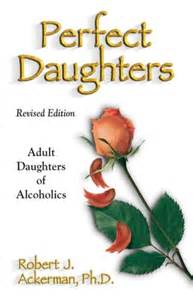
th-1My therapist recommended Perfect Daughters, by Robert Ackerman.  It reveals the struggles, characteristics, and patterns associated with adult daughters of alcoholics.  I learned that women of alcoholic fathers will often enter into relationships where they see an opportunity to heal the original father/daughter rift, and that this attempt is seldom successful.

What I have gleaned from experience is that I often tolerate behaviours for a long time, and that instead of seeing fault in the other, I will be quick to blame myself.  I know that I do not like confrontation, and that I feel like my complaints are trivial in the light of the bigger picture.  I have also learned that I often project unresolved feelings about my father into my current relationships, and  I recognized immediately that the gush of emotion over Ric’s innocent gesture was just that.

Many feelings related to childhood have bubbled up as a result of the stress of the past years.  I have been feeling the despair of never seeing an end to the hurt.  Ric, tired of his predicament became more defiant, pushing his limits, and striving to regain control over his life.  My response was accelerated anxiety and as much as I understand that he is an adult and makes his own choices, I find it hard not to react, spiraling into a dysfunctional dance of feeling like a child again, caught in a cycle of chaotic impossibilities, destined to be crushed.

Then I had a dream.  I don’t remember what it was, but I awoke with sudden understanding.  The panic I had been feeling is a product of my child’s need to finally feel in control.  Somehow, she believes that if she could just control my father /Ric’s behavior, then everything will be okay.  Her desire to control stems from a need to know that there is consistency in life, and that the process can be trusted.  She needs to feel secure and know that she is loved no matter what, not only if she behaves herself, or manages not to upset anyone.

The adult me knows that none of this is possible.  People will always behave and make choices outside of our control.  It is not a reflection of their love for us, but a product of their own inner workings.  Ric’s struggles and his attempts to resolve them are not about me, in reaction to me, or more importantly, because of me.  If his actions have consequences that affect me, then it is up to me to look after myself and make sure I have taken appropriate protective measures.

I am reminded of something one of my university profs once said.  It went something like this:  Where there is power over, love cannot exist.  Where there is power for all, love exists.   My father behaved as if he was the only one with power in the family.  I did not feel loved.  My marriage to Ric is a partnership and a sharing of power.  I feel his love for me.


Criticism Be Gone!

I was forty before I could finally ask my mother about her constant criticism of me growing up.   We were alone together, in the car, driving out of town.  I had her undivided attention.

th-4“Help me to understand, something,” I prefaced the conversation.  “When I was young, you always told me no one would ever love me.  What was that about?”

“I didn’t say it to be mean,”  she explained and I believed her.  My mother was not typically a malicious person.  “It’s just that you were so different from your sisters, and I was afraid for you.  I thought I was helping you by preparing you for the inevitable.”

“But why, Mom?  What was it about me that you thought was unloveable?”

“You were just so smart, and independent minded……”  she trailed off.  “I guess I thought that men don’t like smart women.”

“Do you understand that I heard what you said to mean that I was impossible to love?”

“Oh my God, that is not what I intended at all!  Of course you are loveable.  You are compassionate and kind, and you deserve to be loved.  I thought I was preparing you, that’s all.  You were just so different,  and I thought I had to protect you.  I never meant for you to think you weren’t loveable.”

She paused in reflection.

“When the school came to us and told us they had done some testing and wanted to send you to a special school for the gifted, I was scared.  I didn’t know how to handle it.  Your father was all for it, but all I could think about was how would you fit in, and who would ever love you.  I guess I thought I was helping.  You were an enigma to me.”

Mother’s criticism of me was born out of fear and ignorance;  my acceptance of her harsh words was a reflection of my need for her approval. 

I understood.  Within the context of my mother’s upbringing and beliefs, I did not fit the mold.  She was merely expressing fear related to her own limitations.  Unfortunately, for the first forty years of my life, I lived out my mother’s legacy, choosing partners who were incapable of loving me.

My mother was not the only one to be critical of my intellectual abilities.  “Everyone hated you,”  a drunken cousin once confessed to me, then added, “but I don’t know why – you’re so nice.”  Classmates called me Browner, implying that I only got good grades because I ‘kissed up’ to the teachers.   Even close friends have commented that I’m not really that smart.

By listening to the criticism, I began to devalue myself.  Driven by a need to be accepted, I started to act dumb.  Better to deny self than to be criticized, right?

Wrong!

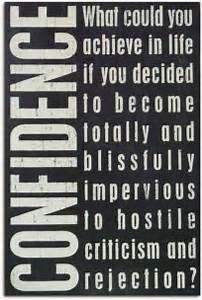
Embracing criticism and taking it to heart is ultimately a sin against the self.  We are each uniquely created, and destined, and it is only through accepting our differences, and nurturing them, that we can truly be fulfilled.

th-3Rejecting criticism is the first step to living authentically, and the only hope for living purposefully and to full potential.

Armed with this new understanding, I will stop apologizing for who I am.  I will let go of the need for praise from others, and recognize that their criticism is more about their process than mine, and let it be.  I will celebrate who I am by committing to my own process, and focusing on my goals and gifts.

I will finally start living.


Dragon Energy

Referred by her priest, a young woman made an appointment to see me.

“It’s urgent!”

She arrived the next day, and I could see by her movements that she was in distress.   No more than thirty, the woman looked tired, and something else – afraid?

In keeping with my preferred practice, I had requested that she not reveal any details of her situation to me in advance.  I prefer to start with a clean slate, no expectations or assumptions to confuse me.

I asked her if she had ever had energy work done before.  She had not.

“I’ll explain as I go along,”  I suggested.  “First, make yourself comfortable.”

She chose to lay face down on the treatment table, and I began my preliminary assessment.  There was clearly a barrier of some sort in the field.  If you meet with resistance, it is usually yours, Delores Krieger’s words echoed in my mind.  I started again, this time moving my hands further from the surface of her body.  No change. Maybe I am too forceful, I thought.  Intentionally, I focused on being whisper gentle.  The energy bounced back at me.

“I’m sorry,”  I said.  “But this does not seem to be working.  Are you open to trying a different approach?”  I had just studied third degree Reiki, and while my experiences with it were limited, I didn’t know what else to do.

I moved her to a chair, and explained that whatever was happening was between herself and whatever she deemed God to be.  “The process which I am about to do, will help you make that connection, so that you can ask for what you need.   Are you okay with this?”

She nodded ‘yes’ and I instructed her further as to how we would proceed.  I invited her to close her eyes and breathe deeply as she concentrated on what she needed.  Then I began.

The ritual doesn’t take longer than fifteen minutes, and when I indicated that we were finished, she opened her eyes clearly revealing that she wasn’t convinced.

I didn’t know what else to say.

Two weeks later, she called again.  “That thing that you did, how often can you do it?  Is it too soon to have another?”

When she arrived this time, she was animated, almost excited.  With no preliminaries needed, we moved right into the treatment.  This time she had tears in her eyes at the end.

“I felt it!” she said quietly.  She asked to come back in two weeks.

“I can feel it wearing off days before I come,”  she told me on her next arrival.

“How does it feel?”  I was curious.  This was fairly new to me too.

“It’s hard to describe, but I somehow feel more vital, alive, and then I feel myself becoming tired again just before I’m due to come back.”

Then she really caught my attention.

“I was supposed to be dead by now.”

The woman explained that she had been diagnosed with a rare terminal ailment, and given two weeks to live.  A single mother and business owner, she wasn’t ready to give up, so she visited her priest, who then referred her to me as a last resort.

“The treatment for my disorder takes a month to work, and I was too far gone, so I needed a miracle.”

Reiki employs symbols that access different forces, one of which is the dragon.  I have never really been able to define what this energy is other than to note that is often connected to breakthroughs.

Last time I saw her, my client continues to run her business and enjoys watching her own daughter blossom into a young lady.

The Thief Within

It’s time to call a meeting of the troops.

“Gather around, everyone.  We need to talk.”

The air is cool in the cave, sheltered from the hot August sun.  A small fire provides light and a focus for our gathering.  I, Self, am seated where everyone can see me clearly.  I want to make my point.

“I have called you here, because there is a thief amongst us, and I am angry.”

“Oh!”  the exclamation echoes around the circle, then a mumble of agreement – this is serious.

“I woke up this morning, full of anticipation and plans for a wonderful day – the kids are coming for dinner, and my granddaughter is staying overnight.  I planned to make goodies, and soup, and a special dinner.  As I made my shopping list, Thor added to my excitement booking a flight for our next big excursion abroad.  I couldn’t have been happier, then…..”  I paused for effect, “….one of you came in and stole my joy, leaving me in this state of raw anger.”

The nervous shuffle of feet was accompanied by a shifting of eyes and lowering of heads.  No one wanted to fess up, I could see.

“We see that you are upset,”  a kind old woman stepped forward,  “and in the interest of inner harmony, we would like to get to the root of the problem, but we’ll need more information.”

Heads bobbed in agreement.

“When did you first notice that your mood had changed?”

“When I was baking.  I noticed that my happy thoughts were missing, and I was ranting inside my head.”

“Just like that, all of a sudden?”

I thought about it.  “Well, I did start to feel really tired just before it happened.”

“What do you suppose made you tired?”

“I was up early this morning, getting work done so I could enjoy my family, so I was thinking that was catching up with me, but then I realized I was probably hungry,  which……”

“Would effect your mood,”  she finished my sentence.

“Well, true.  So, that is no one’s fault.  But then I started to eat things that weren’t good for me, and I knew I only do that when I’m trying to bury unwanted emotions, so I started to think about that, and then I realized my happy thoughts were gone, and that’s when I got angry and decided to call this meeting.”

“Was anyone else present when all this was happening?”

“I was,”  a little voice piped up.  “I was excited that we would get to play with the granddaughter.  She’s so cute and fun and makes me happy.  But then Mae called, and she called again, and again, and someone started pushing me out of the way.”

“Really?”  The women turned towards the others.  “Does someone have a problem with Mae?”

“No!  Well, yes,”  said a shadowy figure huddled in the back.  “She can’t help it that she is mentally ill, I know, but she stirs me up.”

“How does she stir you up?”

“She reminds me of all the times I was pushed aside for the others.”  I recognize her now; it’s my twelve-year-old self.  “My parents only had time for those who were broken, never for me.  They never helped her;  they encouraged her to be that way.  They liked their children to be victims so that they could rescue them over and over again.  It makes me angry.”

“So you stole my joy?”

My question seemed to jolt her out of her self-indulgence.  “No!  I mean, I had to protect you.  You’ll just get hurt again.  You should know better.  Just when it seems that everything is good, and going our way, someone will destroy it.  You know it!  That’s how it always is.”

“Oh dear,”  the little one plopped down, head on her hands.  “Here we go again.”

“What!  Why are you all looking at me that way.  You all know it’s true.  Why won’t you admit it!”  Twelve was getting hostile, almost hysterical.  “I hate it that life is unfair.  I hate it that we work hard, and try hard and always get the short end of the deal!  I hate that other people don’t have to work hard and life just gets handed to them and everyone caters to them.  I hate it that my sister wasn’t strong enough to fight them, like we did.”

“Amen to that,” said a large, blob of a character, who didn’t look very bright, but was happily stuffing his face.  Ah, I thought, you’re the one I feed when I feeling emotional.  If I’m not careful, I’ll start looking like you.  

“Can I say something,”  a slighter older teen spoke up. I recognized my independent self.  “I don’t mean to sound cold and radical here, but if you keep venting over what you can’t change, you are going to die an unhappy soul.”

“What do you know about it?”  Twelve was on the defensive.

“I know that life is full of many opportunities beyond the limitations you experienced in your home life, and I believe that while we can’t change where we’ve come from, we can make new choices for the present and the future.  Do you want to be unhappy all your life?”

“Well….no, but don’t I have the right to be heard?  Don’t I deserve justice?”

“We all deserve to be heard, and while we’d all like justice, it doesn’t always work out that way.  I’m just suggesting that you are robbing yourself of the joy of life.”

I could see Twelve wrestling with herself.

“Twelve,”  I offered, as kindly as I could.  “You say you hate victims, right?”

“Yeah.”

“Well, you are kind of acting like a victim yourself, no offence.”

“What do you mean?”  her fists balled up instinctively.

“I just mean that while you rage and wait for someone else to deliver justice, you are like a victim – giving the power to someone else.”

“What do you suggest I do?”

The Wise Woman stepped up, putting her hand on Twelve’s shoulder.  “Express your feelings, certainly, because we all care.  Can I ask you something Twelve?”

“Fire away.”

“What would help ease your rage?  What do you need?”

Twelve fell silent.  I don’t think she’d ever thought of that.  She shrugged.

“What could anyone possibly do to make you feel better?”  the young woman asked. “Do you think everyone is suddenly going stop being themselves, see the predicament, and apologize?”

“Maybe they’ll stop being nice to your sisters and spoil you!” the little one chirped in.

“That’s absurd!”  Twelve scolded.

“Is it?  Isn’t that what you want?”

Twelve thought about this.  We all thought about it.  Then one of us started to giggle.  I’m not sure who, but soon the whole room felt the relief.  It was a ludicrous thought.

“I feel like a fool,”  said Twelve.

“No hard feelings – you’re only a kid!” said the slightly older one.

“And you always look out for me,”  said Little.

“None of us blame you,”  another added.  “We all went through it, you’re just the one who held out for justice.”

“Is there never any justice, then?”  Twelve asked, confused.

“Oh there is justice:  but you need to look for it in other ways,”  Wise Woman offered.

“Like embracing life’s blessings despite the strains of the past,”  Independent Self offered.

“What she’s trying to say, I think,”  I added, “Is that if you continually refuse to be happy because you don’t like what happened long ago, then you rob all of us of the joy of the present.  Can you see that?”

“I can, but I just feel so angry sometimes.”

“I know, I know, so do I, obviously.  That’s why I called this meeting.  And Twelve, I suspect you’ve been hanging out with someone else, who is the real thief here.”

I could tell by the look on her face, that Twelve knew exactly who I was talking about.

“Jealousy is not a friend to any of us,” I addressed the crowd.  “I suggest we do our best to keep her out of our circle.”

“Here!  Here!” came the cry of approval.

“What about me?” said Emotional Eater, pausing mid-bite.

“Wouldn’t hurt you to eat a little less” came the unanimous response.

“You should try therapy,”  added Little.  Everyone laughed.

“Thanks for talking this through,”  I concluded the meeting.  “I hope we all feel better.  Little, Twelve, we got some things to get ready, our guests will be here soon!”

(Image: dymir.org)


Setbacks

Today is where your book begins; the rest is still unwritten.  These song lyrics have run through my mind all night, keeping me from sleeping.  A perfect lead in to today’s topic.

I am old enough to know that setbacks are not the end of life; they are usually just a transition point.  If you have been reading along, you know that it is the stuff of my writing.

When I experienced what we used to call a mental breakdown, at the age of thirty-one, I recognized that it was a wake up call to make some changes in my life.  Obviously, the way I had been living was not working for me, so I needed to learn a new way.

Losing my mind was like falling into a black hole.  I felt as if I was at the bottom of a deep abyss, with no visible means of escape.  Four things saved me:  my faith, my children, my writing, and my friends.

I knew that if I was to survive the experience, I would have to build my own stairway out.  I began with my beliefs.

Step one.  I believed that God never gave us anything we couldn’t handle, so therefore, I had it within me to heal.

Step two.  I believed that what happened, happened for a reason, so that there was a purpose for my suffering.

Step three.  I believed that God gives us what we need, so that help would be there for me.

Don’t get me wrong, losing one’s mind is a horrible thing.  In the beginning, I shook uncontrollably for most of the days, lying in a fetal position on my bed. But I knew if I was ever to get better, I had learn to “walk” again.

I set baby step goals for myself.  As my children were still considerably young, I made them a priority.  The first goal was to spend fifteen minutes a day of quality time with my children, without the trembling and tears.  I found I was able to control the anxiety for short periods of time, when I focused on them, instead of me.

The second goal was to get out of the house everyday, even if I was only able to walk to the end of the street (driving was out of the question). This was difficult, but I knew it was important not to give into the fear and become housebound.

In between times, I wrote and wrote, processing every thought, fear, and emotion, until I reached some aha moments.  I used my dreams as a guide.

When I grew a little bit stronger, I called upon trusted friends, who put together a healing circle that met once a week in support of my healing.

I learned many things from that time of darkness.  Mostly, I learned that if something is not life or death, then it is not worth worrying about.  I let go of my need for perfection.  I learned that nothing is as precious as the relationships that sustain us.  And I realized the depth of my own inner strength.

None of us would ever choose setbacks, but in retrospect, would we ever grow without them?

Accepting Success

My husband always tells me that I am failing my way through life with an A+.

It started when I returned to university to upgrade my degree.  I would sweat over every assignment, proclaiming uncertainty about the expectations and certainty that my efforts would fall short.  I would get the paper back with a mark in the nineties.

Despite my high marks, the insecurity persisted.  When I graduated from the Faculty of Education, I didn’t even notice that it was with distinction until my stepdaughter asked me what that meant.  Surprised, I responded:  “It probably means that I was the oldest.”

The assumption behind all this angst is that I am not capable, and that every task is designed to trip me up.  Of course, this is nonsense, and when I spell it out like that, my rational mind can see that it is.  Yet, somewhere inside me is an insecurity that my success is phony; that I am a fraud.

I am working on moving towards an easier approach to life.  I am trying to be consciously aware of how I complicate things with insecurity, and replace those thoughts with simplicity. I’m trying to take a step back before responding.  Reassessing a situation usually does reveal a simpler solution.


Emptiness

Sue Bender, in her book Everyday Sacred, uses the symbolism of the bowl to depict the spiritual life.   She relates this image to Tibetan monks, who as part of their training must survive with begging bowls:  they must ask for what they need and make use of what they are given before they can beg for more.

Everyday Sacred literally fell off the shelf and into my arms one day, as I was reaching for a novel in the library.  It could not have appeared at a better time.  I was mesmerized by Bender’s words, and loved her analogy.  I could relate to the idea that we are bowls, or vessels for Spirit, and that whatever comes into our life must be consumed and processed before we can ask for more.  In this way, we make life sacred.

Shortly after discovering the works of Sue Bender, my marriage ended, leaving me shattered and scarred.  I prayed for a sign that everything would be okay.  Signs and omens surrounded me, and I felt comforted.  Then I got my new phone number.  I was disappointed that it had no obvious pattern to remember: 2695 were the last digits.  One day as I sat musing over how I was going to remember the number, I had a thought:  what did the numbers spell?- b-o-w-l.  Bowl!

Life had served me up a full helping of misery, and it would be a long time before I could empty it, but I came to understand that emptiness is what I needed before anything good could come my way.  As long as I hung on to anger, grief, or resentment, my bowl did not have room for anything else.  Empty was the goal.


(Image: www.hungrysouls.org)

Risking Excellence

I am with my son’s friend, and we are headed to meet John downtown where he will be competing in a skateboard competition.  John is a very gifted skater and the odds are good that he will win, but he is nowhere to be found.  As time passes, I feel more and more anxious that something has happened to him, and begin to search in closets and corners, anticipating I am going to find him dead.  Suddenly, a car pulls up, dumps a body, and squeals away.  A crowd gathers, and as I make way through, I know it is John.  He is not dead, but severely beaten, enough to stop him from competing.

I wake up,  immediately afraid for my son, but once I am conscious enough to remember the focus of today’s writing, I realize the dream is about me.

I was eight-years-old when school officials began to pull me out of class and subject me to a series of tests.  “She is gifted,” they told my parents,” and we would like to accelerate her one grade and enroll her in a special class with her peers.  She will have to attend school across town, and transportation is not provided.”

My mother didn’t know what to think.  I was a girl, and according to her, girl’s who were smart did not do well in life. (Doing well, in my mother’s eyes, was being a stay-at-home mom with a husband who made a lot of money.)  My father supported the decision.

Gifted children often feel like an anomaly, and I was no exception.  I knew I didn’t fit in at the regular school, but I somehow always felt like they made a mistake with me and I didn’t belong in the gifted class either:  these kids were so smart and, well, geeky.  I didn’t think I fit the mold.  Academically, however, I thrived.  The self-contained classroom was far more engaging and intellectually stimulating.  I loved school!

After school was another matter.  While I was driven across town each morning, I had to take two city buses home each afternoon, arriving long after my old classmates had been dismissed for the day.  The bullies waited for me, and I soon became game for their taunting, and physical abuse.    When we moved out of town in the middle of grade eight, I was thrown in with the regular population and the rift was apparent.  A town thug was hired to beat me up one day after school.

I learned to hide my abilities, and refrained from competing with others.  I developed the expectation of being beaten, both literally and figuratively.

As I’ve mentioned before, John shares my introspective side – that part of me that doubts, questions, and turns things over and over.  The friend that accompanied me in the dream suffers from depression and delusions.  I have that side to myself also.  Combine the introspection with the inability to see beyond negative thinking and there is an expectation of futility:  why try?

John is a gifted skateboarder, and if the dream was real, I would encourage him to hire a bodyguard and go for it.  By objectifying the issue, is the dream telling me the same?  While you may have been beaten at times, you still hold the same bright potential, so don’t give up.  Just let go of the expectations.