
Daughters ride
emotional escalators –
while sons prefer
a higher ground –
more attic than sound,
motivations vague
Parents observe,
bite tongues
wish they had a key
to disengage lethargy,
ignite reason –
and turn the volume
down on drama.
Daughters ride
emotional escalators –
while sons prefer
a higher ground –
more attic than sound,
motivations vague
Parents observe,
bite tongues
wish they had a key
to disengage lethargy,
ignite reason –
and turn the volume
down on drama.
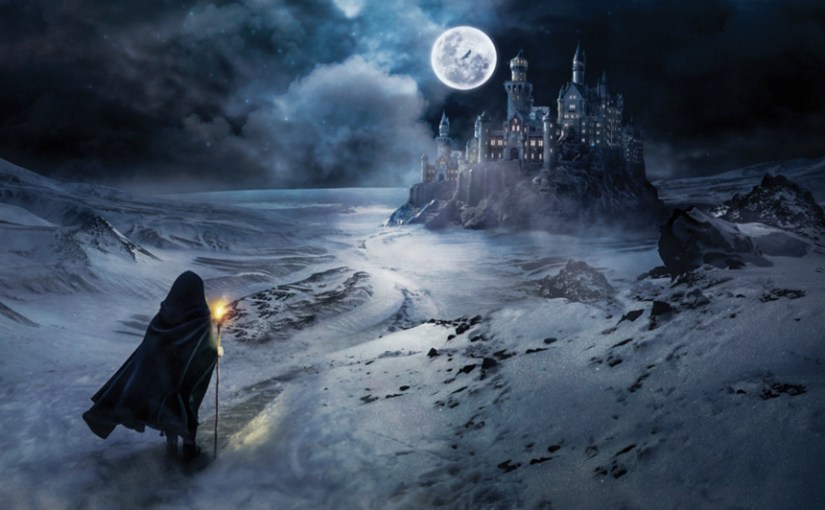
This exile –
self-imposed, I confess –
wears thin with age.
Too many winters
braving the cold –
heart’s frozen rebellion
against Father’s tireless raving,
Mother’s queenly submission.
So many moons
engaged in a crusade –
armed with but a hollow sword –
the chill of time lapsed,
irretrievable.
Castle lights are waning,
death lingers in the air,
and only now, on this fateful
periphery, do I wonder –
measure the rage against costs –
blame’s righteousness builds
only walls – faults corpses
rotting either side.
Empty-handed, I approach,
cowed by the enormity of task –
bearing no gifts, no legacy –
only a paltry offering
of forgiveness – pray
I am not too late.
(Image provided by Willow Poetry as her weekly challenge: What Do You See? Also linking up with Frank at the dVerse pub, whose theme tonight is blame and forgiveness. Ragtag Community’s prompt is fault.)
Have you seen her –
the child we lost,
the one who lost herself?
born to a sister
breasts not yet ripe
for motherhood’s call
a passenger
on a perilous ride,
sweetness eclipsed
by a cacophony
of raised voices
the wails of women
helplessly trapped
a smothering drama;
how easily she escaped
slipped from our clutches
found comfort in the streets
preferred coldness of strangers
to the raging fires at home;
lost her to the lure of parties,
an elixir for the empty places,
found her once amongst
the debris of discarded needles
and the haze of sexual reek
the golden halo of youth
now matted clumps of shame
her beauty sunken in shadows
we’d taught her well, it seems –
the art of submission, how to
betray the self, embrace defeat
tried to pick her up, create
a milieu of normalcy, establish
homelike roots, but shams
do not last and she ran again
the echo of her absence a hole
ringing in our hearts, we are
guilt-ridden, apologetic, fear
the power of our inadequacy;
try to forget, justify, cringe
for the child we lost,
the one that got away,
the one that lost herself.
(Submitting this for Ragtag Community’s daily prompt: needle. Computer is going into the shop so I may be MIA for bit. Missing was first penned in October of 2017.
What’s her name?
Simple question
from mother to son –
recognizing the love-lifted
joy of his countenance.
I cannot tell, said he,
you’ll ask too many questions.
Do I know her?
No, Mom, she’s Somali.
And Muslim.
I felt my whiteness
and all its privilege
slap me, stumbled
Of course she is welcome,
of course it does not matter.
Had no sense of the depth
of my ignorance, how heads
would turn, and vile strangers
attack, and his father shun them.
And how her own mother
would advise her to take his name
when the day of their nuptials came
so that finding work would be easier.
Had no sense of the depth
of my ignorance, how
everyday matters suffer
unfair scrutiny –
hold them in my heart
and pray, knowing my shield
of whiteness holds no sway
to protect them..
(Written for dVerse pub, where Anmol challenges us to address the topic of privilege.)
Did you know that life would come to this?
Flattened memories pressed between wax,
the essence of our efforts forgotten, the dreams,
so carefully construed, lost. You leaned toward
the conventional, and I was ever the sentimentalist
and yet we ended up in the same place – shadow
selves standing at the banks of our disheveled lives,
survivors, nonetheless, tokens of a past riddled
with so many lies, so much heartbreak, we are
ghost sisters, haunted, hunting, unable to step
away – drawn in, pulling apart – all that remains.
When Scarsdale failed,
she resorted to corsets,
and girdles – trussed up
like a teabag –
sucked in her bits,
hair a touch too red,
nails forever chipping –
Dad’s disapproval a sour note –
watched as Mom steeped
in resentment, waited
for the boiling point.
(This quadrille is written for dVerse, hosted tonight by Mish, with the topic of steep. I am also linking up to Ragtag Community – note; and Fandango’s – resort.)
We wait at the station, Mother and I,
one final stop for her – painless she prays;
I linger at bedside – prolonged goodbye –
memories and regrets filling our days.
“We live too long,” she wearily proclaims,
“Why must suffering linger till the end?”
I plea and bargain, call angelic names,
yet the will to survive refuses to bend.
The urgency builds as my time dwindles;
must I leave her in this compromised state?
She rallies and stands on wobbly spindles
dismisses fears – has accepted her fate.
Some destinations are clearly defined –
death is a train whose schedule’s unkind.
(Penned for dVerse’s poetry forms – the sonnet.)
As Mother counts her last days, and I open my heart to forgiveness, a daughter calls, reaming me out for wrong-doings – January is not cold enough to freeze tempers – family coals burn and shatter, and all we can pray for is metamorphosis. Soon, I will return to warmer temperatures, attempting to elude this frigid climate, save the scorching for the sun.
Hearts have seasons too –
I lumber through chilled air,
crave a touch of warmth.
(A haibun for dVerse, hosted by Kim tonight. I am also submitting this for Ragtag Community’s lumber, Fandango’s metamorphosis, and Manic Mondays 3 Way Prompt, shattered.)
Daddy yelled
and Mommy cried
and new dresses appeared.
A pattern
my young heart
vowed to break.
Chose a man,
reticent in nature,
pursued a career.
Then babies came
and I stayed home
and he withheld cash.
Pendulum swings
left to right – money
holds the key to powers.
Patterns, it seems,
twist and morph,
leave me impoverished.
“My children have come home to watch me die,”
she tells her doctor, repeats to me, #5, when I arrive.
“You leave the world the same you came in,” Doc said,
as if that makes sense, as if that offers comfort.
“We don’t want to see you suffer anymore,” I offer.
She agrees, tired of the pain. 92 and nothing but pain.
It’s not death that she fears – she’s ready –
it’s the dying – not knowing how it will happen.
“Will you be with me? When the time comes.”
I will. Just as I did with a sister, two cousins,
father, an aunt, and countless others.
“Angel of Death,” a nurse called me once.
I shrugged: “Would you want to die alone?”
Death, I do know, is like birth,
in that the timing is unpredictable.
So, together, we’ll wait –
biding our time, talking about the present,
reflecting on the past, wondering what lies ahead.
Not all transitions, I’ve learned, are alike.
(I’ve returned home to be at my mother’s side, although, as the poem indicates, she may survive the current setback. I’m linking this up to Manic Mondays 3 way prompt: reflection, and my own weekly challenge: transition.)




 One Woman's Quest