Losing My Sister’s Daughter

I was nineteen, and just newly married, when my sister
was diagnosed with cancer – and given one month to live.
She had a daughter, then eleven, that she’d dragged around
from man to man, sleeping on couches, never knowing where
tomorrow’s meal would come from or if they’d be on the run.

Take care of her, my sister asked, I know I can count on you.
I’ll take care of her, I promised, but then my sister survived,
fought the cancer, defied the ravaging effects of chemotherapy
and found more men to carry her through, became mistress,
housewife, and continued her legacy of heart-break drama.

I brought her daughter into my home, loved her, as best I could –
a long way from being a mother myself – ineffectually addressing
the needs of a child born into misfortune, destined for worse.
She rebelled, pulled away from the inadequacy of the adults
around her, and sought chemicals as her parent of choice.

Her father took her in, a man whose short-lived existence
in her life spanned only two years, and who had moved on,
married, secured a pension, and had a wife and more children.
She delighted in the discovery of sisters, idolized this sudden
father-figure and projected suppressed rage at the stepmom.

By fifteen, the streets became her home, and when intervention
threatened, she ran, took up residence in the big city,  where
she met a man with money, and a penchant for young woman
and cocaine, and when his seed took hold, he married her,
and she had hopes for a brighter tomorrow, made promises

neither would keep – she returned home in a blizzard,
bought a ticket with borrowed money, arrived with no shoes,
no coat, and a body full of bruises – he’d beaten her in a drug –
induced furor – she was six months pregnant.  We cried,
held her to us, and delighted in the birth of her baby girl.

My sister’s health slipped again, and I, now a mother myself,
reached out to the young woman, my niece, and her child,
but she kept me at arm’s length – You are not my mother,
she’d say, and reluctantly let me in to her run-down rented
shack littered with over-sized dogs and burnt out men.

While her mother lay dying, she found a man willing,  loving,
and she returned to school, and finished her high school
and went on to gain further job worthy skills, and we all
breathed a sigh of relief and celebrated the future and
forgot – perhaps too quickly – her ravaged past;  believed.

I’ll look after her, my final words to my sister’s final breath;
a vow I could not keep.  My niece stopped answering my calls,
and by the time her man saviour threw up his arms, declared
he was done, my own house was burning, and I had no
ladder that would save us all, and so we lost one another.

When Children’s Aid found me, I was trying to rebuild,
mothering six teenagers – three of my own, three his –
she’d told them I’d help; take in her child, now adolescent,
and give her a good home.  This great-niece arrived,
underweight, malnourished, with big doe eyes
reminiscent of her mother’s and her mother before her.

The fragility of my family structure crumbled under the weight
of yet another, frequently abandoned, now distraught child,
and while our foundation shattered, she was swept up
by the capable arms of another mother, and adopted,
and my sister’s daughter – the one I let get away –

she lives on the streets, exchanges flesh for heroine.
has been rescued twice, but always returns, her sanity
tarnished, paranoia replacing common sense, she
exists between highs, no longer reaches out – she’s
robbed us of her trust – forever we are broken.

If I could do it again, would I bind her to me,
take her in my arms and not let go, until she understood
the truth of her existence, the neglect at the arms of her
mother – never emotionally stable – and the failure
of her aunt, ignorant and judgmental, a pretender?

Could I have saved her from herself, from temptation,
educated her about poor choices when it’s all she’d
ever known – all I’ve ever known – women as victims.
Our life was a carnival ride; we the side-show freaks,
captivated by the lights, drawn in by the crowds

and the smell of cotton candy – how we longed
for the sweetness of caramel, the taste of sugar
on our tongues to erase the bitter that lingered
from all the lies, deceptions that entombed us,
smothered good intentions, buried us alive.

There is no going back, rationality tells me
and yet the past thrives within, and I, sometimes
functional, oft times paralyzed, stumble through
the guilt wrought memories, crying with impotence
for a life lost at my own hands – an oath broken.
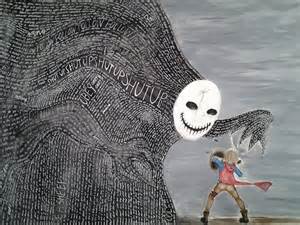
 

Day 247 “Multiple Perspectives”

Anti-establishment
and flower-power
formed the background of my youth.
Women burning their bras,
Hippies holding sit-ins,
War in Vietnam.

Beatles and Rolling Stones
were household names,
and school children took
the Pepsi vs Coke challenge.
Twiggy and Mary Quaint
and Piccadilly Circus
set the fashion stage.

A flower-toting leader
dating well below his years,
wooed his lovers and his nation
with a french accent
and a sense for current trends,
and called in the army when
the FLQ threatened peace.

My school was open-concept
and learning free-style.
We had a Wong and a Suzuki,
and watched the Black Panthers
uprising in the South
and learned we were WASPS.

Homosexuality was debated hotly-
criminal or mental instability –
and transgender was not even a word.
While the world around us struggled
with equality and human rights
my family hid behind our walls
while my father dressed in drag.

Times have changed,
and perspectives altered
and sexes can now marry same.
There is sexual orientation
and gender identity,
male and female polarities de-mythed.

Human rights
on the forefront
of law-making and policies.
Universal Design for Learning
stressing accessibility.

How I wish you could see it, father,
from your resting place.
This world of ours is changing
and what was once disgrace
will someday be commonplace.

Inspired by: “Transgender Dysmorphia Blues” Against Me!

Day 245 Gain and Loss

The mistress, meticulously groomed
glows a sun-kissed bronze shimmery
invitation, promising seductive
sensations of pleasure and release.

The husband, tense, overworked,
emotionally overwrought
heeds the call like a sailor
following the lure of sirens.

The flirtation begins in innocence,
he sips from her splendour at a party,
tastes her bittersweetness and
feels himself losing all control.

She is a master, a pupeteer
mesmerizing him with her smooth,
easy ways – lulling him into compliance
and alone; for private indulgence.

The wife, tired, lies awake
the empty space beside her
echoing the hollow place within-
she no longer holds his desire.

Spent and reeking from his illicit encounter,
the husband stumbles into bed,
reassuringly reaching for his wife in the dark.
Unresponsive, she feigns sleep.

They’ll not speak of it tomorrow-
awake and re-engage in the routine they call life.
Not tonight, he’ll tell himself,
Not tonight, she’ll hope.

The mistress sits smugly in waiting,
a never ending supply of liquid gold,
bottled with a promise – subliminally
conditioned to bring personal gain.

Day 243 Violence and Peace

The rage within my father was tangible and made him larger than life, the potential for violence ever-present.

My mother’s attempts at peace-making were fueled by trepidation – always on the lookout, hoping against hope to maintain calm.

Both adopted the facade that ‘all was well’ and deeply denied the reality.

The result – an unnameable terror that gripped us children.  No logic explained the tension that surrounded us, however; we understood without doubt that a threat hovered over us in every living moment.

Mother’s attempts at peace were merely misguided acts of enablement; empowering, not disarming my Father.

Uncontested he reigned tyrannically; yet, what he really longed for was peace.

Peace, not peace-making.

Father longed for a sense of acceptance and acknowledgement that was beyond his grasp.  He was society’s outcast:  unwittingly born into an era where gender definitions were polarized – male or female.  He did not know – we did not know – about genetics and the sliding scale that defines gender identification and sexual orientation.  He was forced to conform and, therefore; denied basic human rights.

My mother, whose understanding of all things sexual came from watching the animals rut on the farm where she grew up, and pushing away unwanted advances from her father and siblings, was not equipped to understand the enigma presented to her by her husband.  She only knew that this tortured soul of a man was the provider for herself and her role was to be submissive and nurturing.  She found herself trapped between his ‘awful’ secret and trying to maintain an outer appearance of normalcy.

It was dysfunction at its finest.  Unable to resolve their own issues they looked outward, finding causes within their children’s lives to replace their compulsive need to fix.  There was never any shortage of broken, needy, helpless occurrences to satisfy their lust.

The answer to violence, and the threat of violence, at least in our home, was not peace-making.  In hindsight, it was a need for individualized peace – an understanding of differences, motivations, desires, and a stated acceptance that allowed us to come together in respect and honour for our diversity.

An atmosphere of open-mindedness would have allowed father to reveal his truth.

Assertiveness, on the part of my mother, would have allowed her to set healthy boundaries and limits defining her participation (or not) in my father’s reveal.

Trust in the basic nature of our love for one another might have prevented the constant need for self-preservation, which only turned us away, one from the other.

Inner peace offers a strength that fortifies against fear and outrageousness.  It believes in a wisdom that transcends time and space; offering the possibility of order and compassion in the midst of chaos.

The concept of peace – real peace- was not part of my growing up.

Without peace, violence – physical, mental, psychological, emotional or spiritual – reigns.

Day 178 “The Tao of Money”

We are in the bank and I am waiting as Thor does his banking and stops to visit with the employees.  He hugs one teller and another near me looks at me with a sorrowful expression.  I don’t clue in until this happens three times, and then I realize the embrace is more intimate than I had thought.  I run into the nearest washroom.  Two women from the bank are present.  “Did you know about this?”  I ask.  They indicate that they did and look at me with pity.  “Is there more”, I ask?  “Yes”, comes the reply.  “He is doing drugs too.”  “How do you know?”  Panic grips at my heart.  “He asked us if we knew anyone who deals in codeine.” I have no choice, I will have to leave him.  Where will I go?

I awake from the dream in sobbing anguish, and then relief as I come to my senses.  The dream had seemed so real, at least the emotional part.  I know that feeling all too well.

Thor has an easier relationship with money than I do.   He sees it simply as a tool, a means to an end.  He seldom worries about it.  “Feed the cat another canary” he will casually say before spending.

My experience is completely different.  Money, I have learned is an instrument of power, and that power is abusive.

My mother’s first husband packed all their possessions into a moving van and left her with an empty house and even emptier pocketbook.  She had four children to care for and no means of doing so.  She married the first man who showed a willingness to take on her plight, and remained forever indebted to him, unable to free herself from the abuse that would follow.  The power that he exerted over us was justified by the fact that he provided for us; he was the breadwinner.  Money made him king.

I was sickened by how my father used money to control my mother.  Until I was fifteen, he would not allow her to work outside the home.  Just when she reached a breaking point, threatening to leave, he would buy her expensive clothes and take her on exotic trips.  Her weakness angered me as much as his ploys.  I hated that money reduced them to such ugliness.  I vowed to live my life differently.

But of course, I didn’t.

When I married and had children, I chose to stay home, putting myself in a position of dependence.  My husband reminded me of that frequently, never allowing me to spend money on myself or the children.  If I wanted something, he would tell me, I had to earn it.  I was trapped between my need to parent my children, and my desire to provide the better things in life for them.  In the end, he moved me out, and abandoned us financially.  Money was the weapon he always used against me.

My daughter now fights a similar battle.  The father of her child, unwilling to take on responsibility, flaunts his new possessions in her face while she struggles to support the two of them.  Money, again, is the root of this evil.

“(C)onsider formulating a new concept of money as a neutral quantity,”  Derek Lin writes in The Tao of Joy Every Day.  I would love to perceive money in a different way, free of the emotional charge it carries for me, but there have been too many painful associations for me to view it lightly.

I confess, when it comes to money, I still feel afraid.

Abuse and Money

I arrived home from school one day to find my mother sitting in a corner trembling, her face face blotched red and swollen from crying.  “Mom?”

The eyes that stared back at me were distant.  This was not my mother.  I took stock of the situation.  It was 3:15.  My little sister would be home from school in half an hour.   Dad would be home at 4:30 and expect dinner on the table.  Nothing had been started yet.  I dropped my books and got down to business.

“Mom.  You need to talk to me.  D is going to be home soon, and we have to get dinner on.  What’s going on?”

She nodded slightly.  “I can’t do it anymore.  Your father……..”  Her voice trailed off, but she didn’t need to say anything.  I knew how brutal my father could be.  I heard daily how stupid she was, and how she never cooked anything properly, even though that was her only job.  I wanted her to leave him, too.

“I’ll do whatever I can, Mom.  In two years, I can quit school, and get a job.  I’ll support us.”

Was that a faint smile?

“We’ll make it work, Mom.  We’ve got each other.”

Reaching for the pots and pans, I added, “Now what can we get started for dinner?”  There would be hell to pay if dinner wasn’t on the table the moment my dad walked in.

* * *

At twelve  years of age, I learned that money was what kept my mother in an abusive relationship.  It never occurred to me that she had the option of getting a job; she was a stay at home mom.  Five years later, we would go through a similar scenario, only then I was already living on my own, and had enough sense to get her to a lawyer.  In the end, my father convinced her to stay.

Years later, I would find myself a stay at home mom, with a husband who controlled the purse strings.  Like my mother, I felt powerless, and inferior.  Unlike my mother, I left anyway.  I braved poverty in order to find my worth.  Nevertheless,  I struggled, seldom able to give my children the material things they craved.  I felt guilty, worthless, inadequate.  After six years, I had a serious talk with God.

“God,” I said, “I want to make a difference in the world, but I can’t do it if I don’t even know where the next meal is coming from.”

I tried affirmations:  All my needs are always met; there is enough for everyone.

Eventually, things turned around. Yet, my relationship with money has not yet healed.  I want to be able to say the money’s the money, the way my new husband does.  I want to be able to see money as a means to an end, and not the end of my means.

My attitude towards money still needs work, but I am ready for change.

(Image:  empoweringparents.com)