A Case for Moderation

“Before illness,”  I tell my therapist, “I had things I was working on – I was engaged with life.  Now I can’t do any of that.  I feel useless.”

She nods.  “Yes, that is what illness does.”

I’d had two days of feeling better.  Two days of being able to sit up and actually do a bit of housework.  “I felt so good that I actually started to allow myself to make plans,”  I tell her, choking up.

“That is the trouble with this disease,”  she explains.  “Patients have good days, and they do things, and it sets them back.  You need to learn to enjoy the days you are feeling better, without increasing your activity.  Your body needs rest; rest is what is going to get you well again.”

I look away.  How can I tell her about the messages that have been haunting me these past days?

“I feel stripped of all purpose,”  I manage to confess.

“Ah,” she says knowingly.  “One of the things that we are able to do when we are well is avoid the voices in our head; without all that busyness we are alone with our demons.”

“Exactly!”  I love this woman!  “It sounds crazy, but I keep hearing my father’s voice.”

“What is he saying?”  She leans forward.

You don’t have any problems!  You don’t even know what problems are! ”  There were more too:  Time is money.  Waste not, want not.    I tell her about how he never allowed us to sleep in, made us get up and do drills on Saturday morning before cleaning the house.

th-1.jpeg“Your father wanted you to be strong, able to face whatever life threw at you.  What is missing from that picture is the message that home is the soft place to land.”

Her words strike a chord.  “That concept was foreign to me for most of my life,” I tell her.  “I never even conceived of it until I met Ric.  Isn’t that awful?”

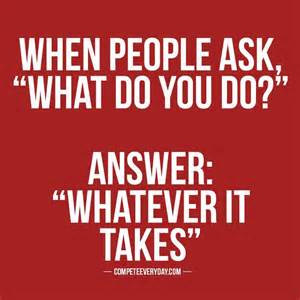
She gives me a sad smile.  “The trouble with growing up in a family where work ethic is everything is that you are always living up to someone else’s expectations.  Your father set the bar high and to get there, you had negate all natural instincts.  You weren’t allowed to feel tired, sad, angry, etc.  All that would be pushed aside in order not to disappoint him.”

Even as she speaks, I see myself going to my room, disheartened by my feelings, wanting to hide – out of sorts.  Emotions were not welcome in our house; weakness was abhorred.

“Then you found yourself alone as a single mom with three kids.  There was no time for your needs.  No time to be sick, or rest, so you carried on out of necessity.”

“And I had my own business,”  I add to the list in my head.  “No possibility of taking time off there.”   To my therapist, I add:  “I don’t know how to banish the guilt.”

“Journal the messages when they pop up,”  she suggests.  “That way you can get them out of your head and onto paper where you can see how useless they are.  Tell yourself that by resting you are doing exactly what you need to be doing.  Getting better is all about listening to your body.”

“And when others ask me what I’ve done with my day…….?”

“Their questions are triggering you childhood demons.  You are hearing your father’s voice behind them.  Tell them you are doing exactly what you need to be doing to get well.  Leave it at that.”

I sigh.  For months now, I have felt like I have to justify my existence to everyone.  I have felt like such a failure.

“I have done the same thing to my children,”  I blurt out.

“Likely,”  she smiles.  “It’s all you’ve known.”

“Oh God,”  I moan.

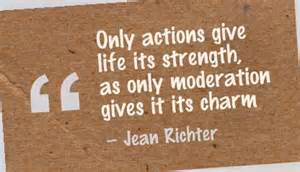
“There is nothing wrong with a good work ethic as long as it’s balanced with proper rest.  It’s all about moderation.”

I have missed the moderation piece of life’s puzzle.

Will I ever learn?


Day 236 “True Merit”

Trudy rises well before dawn, throws on her sweats, grabs the dog leash, and the dog, and rushes out the door for a quick jog around the block, stopping only to allow Mitzy time to do her business.  Her husband, Frank, rolls over at the sound of her movements and absentmindedly reaches for her across the bed.  He moans with the realization that she is already gone.

“You didn’t get enough sleep!”  he chides her when she reappears, readying herself for the  morning ritual.

“Sleep is for the weak!”  comes her perky answer.

Frank rolls back over and resumes sleeping.  It will be an hour or so before his wife emerges from the bathroom, so he knows he has time.

Trudy’s morning ritual includes showering, styling her hair just right, applying just the right amount of makeup (including false eyelashes) and making sure her manicure is presentable.  As she coifs she runs down the day’s schedule:  meeting with parents at 8:00 am, report due to the Board by noon, meeting with Principal at 1:00, and a meeting of her staff at 2:30.  She has a class to teach in between, but there is just no time today, so she’ll have to ask Dorothy.  Trudy sighs.  Dorothy would not have been her first pick for her department, and she had tried to reject her, but the Principal insisted.  “Oh well,” she told herself, “I’ll just have to make the most of it – more work for me!”

The idea of more work never fazed Trudy.  She was a champion, and with her brains and capability, she was headed straight to the top.  She’d have to make sure Dorothy was clear about her expectations.

Black and white was the colour palette Trudy chose for this day.  She wanted to look and feel powerful and in charge.  Knee high black leather boots with stilletoes finished off the effect.  She was ready to go.  Slipping on her watch, she noticed that she was running behind.  “Oh well,”  she thought, “they can wait.”  She wouldn’t forgo her morning stop at Starbucks.

Dorothy arrived at school, early as usual, her salt and pepper hair barely dry yet.  She opened the doors, turned on all the lights and checked the agenda for the day.  Trudy, she noted, would be booked up, so that meant she would be taking on the task of her class.  “No problem,” she thought.  Dorothy co-taught most days with Trudy anyway, and to be honest, she preferred it when Trudy was busy, it gave her more autonomy with the class.

When Trudy’s 8:00 am appointment arrived, Dorothy ushered the parents into the meeting room, with apologies and assurances that Trudy would be along shortly.

Students started to arrive and her day began.  Questions, requests, complaints – Dorothy patiently dealt with each, and hurried the students along to their first class.  First period was always the quietest in their room, and Dorothy cherished this time to get organized for what typically turned out to be a challenging day.

Logging onto the computer, Dorothy intended to catch up with some of the paperwork that her position required.  She pulled out the overflowing file of  “to do”s” and started to search through for the most urgent, but stopped when she heard the distinct click, click of Trudy’s heels.

“Your eight o’clock is in the meeting room,”  she advised Trudy who was now fifteen minutes late.

“Can you hold them off a minute?” Trudy asked.  “I have to speak to the office first. Oh, and Dorothy, I will need you to take the class today – my notes are in the file.  They can just work on yesterday’s assignment, so you don’t have teach them anything new – I’d prefer to do that myself.  Can you also pull up the files I’ll need for the report I need to get done today.  Just leave them on my desk.  I will not want to be disturbed until it is finished.”

Obediently, Dorothy again advised the parents that Trudy would be along shortly, and offered tea or coffee as a peace offering.  “These parents have taken time out of their own busy schedule,”  she thought, shaking her head at her superior’s lack of courtesy.  Then she proceeded to complete the other tasks Trudy had given her, sending a quick message home to let her husband know she’d be late again today – no time to get to her own work.

Glancing up at the clock, she noted that there were ten more minutes before the changing of classes.  Dorothy would have test-takers, and some independent workers for period two, and she might be able to get through a few files.

She’d no sooner thought it, when a tall, slightly stooped boy appeared in her doorway.   His footwear caught her attention first – work boots, caked with mud – they appeared much too big for the gangly thin body they belonged to.  The boy wore a baseball cap and a t-shirt and jeans that hung loosely about him and reeked of dirt and sweat.  He was clutching a handful of crumpled papers and well-worn paperback.

“Hi Jack!  What’s up?”

“Miss P kicked me out of class,”  he said with a shy grin.  “She told me to come here.”

Dorothy pulled a chair up beside her.  “Let me have a look at what you’re working on,”  she invited.

Flattening out the papers, Dorothy noted that the pages lacked visible work.  “Are you supposed to complete each of these?”  she asked.

“Yep.”     Jack’s shoulders slouch a little more.  He doesn’t look at her.

“Jack, when was this work due?”

“Two weeks ago.  Miss P said I do it today or get zero.”

Dorothy tries to recollect any previous conversations with Miss P. about Jack.  How had this missed her?  She tries to keep on top of all her special needs children, and while Jack usually manages to stay under the radar, she had neglected to check.

“I apologize, Jack.  I had no idea you were having trouble.  Let’s see what we can do. Have you read the book yet?”

“No,”  Jack’s voice was tired – he’d been down this road before.  “You know I hate to read!”

Dorothy took the paperback from Jack.  “I know this book,”  she said enthusiastically.  “It’s actually not that bad.”

“Yea,”  Jack agreed.  “I read a bit of it.  It seems okay.”

The report Jack needed to complete was his final project for the class.  It would be worth twenty percent of his final grade.  Jack needed it to pass the class.  Dorothy looked at the pile of incomplete work.

“Pick one worksheet, and lets get started at lunch,” she advised Jack.  “I’ll read and you can answer the questions.”  Meantime, she’d talk to Jack’s teacher.  Jack was just one of the many students Dorothy saw in a day – students who ran the risk of falling through the cracks.

As the bell rang, Trudy came rushing through the room headed for her office.  “That was a waste of time!”  she remarked in passing, “I’ll be in my office.”

Dorothy stared at the closed door and wondered if anything important had been discussed that she should know about, however; the room quickly filled with students and her attention was dragged elsewhere.

Lunch came, and Dorothy and Jack settled into the back room with his book and papers.

“This question asks you to link a personal experience to something you read about in the book,”  she explained to Jack.  “Is there any part in the chapter we just read that you can relate to?”

“Totally,”  Jack’s response surprised her.  “You know the part where she talks about how she doesn’t know how she’ll ever learn to deal with the abuse at home?  I can relate to that!  Not abuse at home, but I’ve seen things that I wonder if I’ll ever get over.”

“Okay,”  Dorothy answers trying to hide her surprise.  “Let’s write about it.”

Jack, it turns out, was a volunteer fire fighter for the small community he lived in.  “I remember the first time I got called out to a car accident,”  he told Dorothy.  “The guy was dead.  To see at that blood and guts really shook me up.  We got some counselling, but I can’t ever get used to it.”

“You still volunteer?”

“Oh yeah.  It’s an important job.  Not everybody can do it.”

“I’m sure they can’t,”  Dorothy thought, seeing Jack in a whole new light.

“Can I see you in my office, now!” Trudy’s voice startled her.  “What are you doing in there?”

“Working with Jack.  Miss P sent him.”

“She also sent explicit instructions that we are not to do his work for him!”  Trudy scolded.  She showed Dorothy the email she’d received that very morning.

“Jack continues to be a problem in class, arriving late, not completing his work, and failing to demonstrate a willingness to comply.  I am sending him to you as one last chance.  It is important that Jack complete this work on his own to demonstrate his capability.  Please let him work in your room, but do not coach him in anyway.”

Dorothy’s heart sank.  “I just think that Jack is misunderstood,”  she started.

“Dorothy, you must be careful not to overstep your boundaries.  Jack has had plenty of chances, I don’t want you doing any more.”

“Well,”  Dorothy, who usually complied with Trudy’s wishes, was not willing to bend when it came to her students best interests.  “We are getting somewhere.  I’ll talk to his teacher myself.”

Another teacher popped his head before Trudy could reply and Dorothy took the opportunity to slink out.

“Jack,”  she said returning to the back room.  “We are on a roll and I want this to continue.  As long as you are working, you can stay here.  I will speak to your teachers for you.”

“Thanks Miss D!”  Jack looked hopeful.  “My friend Lisa said she would help me read on her breaks.”

Dorothy gave him a thumbs up as she headed towards his teacher’s classroom.

“She’s a useless piece of meat!”  Trudy’s voice boomed from her office.  Dorothy stopped in her tracks.  “Well, for one thing, she’s over fifty.  And she gives the student’s one on one attention, who’s got time for that!  I’m running out of patience here.”

Dorothy felt her own shoulders slouch.  Trudy’s phone conversation was disheartening.  It didn’t matter what Dorothy did, Trudy seemed to to disapprove.  She pushed on.  She and Jack had made a connection today, and Jack was making progress.  She refused to turn away now.

Just as she headed out the door, Miss P appeared.

“I’ve come to collect Jack’s work,”  she announced.  “You haven’t been helping him have you?”

“Hi P!”  Trudy emerged from her office.  “Come on in.  We were just talking about Jack.”

“I am so frustrated with that boy!”  Miss P exclaimed.  “He’s useless.”

Useless!  There was that word again.  Dorothy looked at her colleagues – young, smart, stylish – and the rage began to build up in her.

“I’m sorry,” she blurted, “but he is not useless! Do you know that young boy volunteers to save lives.”

“That’s nice, Dorothy, but it doesn’t get his school work done.”

“We are getting his school work done!”  Dorothy continued.  “Jack and I are making progress.  He needs help.  Jack has a legitimate learning disability and he has the right to help.  And if you don’t like that take it to the Board!”

Trudy and Miss P, shocked at this outburst, were momentarily speechless.

“Furthermore, that boy has witnessed more than all of us put together, and he may not like reading, but his heart is in the right place.  And that dear ladies, is what I would call true merit.  Jack not only deserves, but will get my help.”

Dorothy turned on her heels and walked out before she said more.

“Fine!”  Miss P yelled after her, “But I’m docking him marks for lateness.”


Day 235 “Conflict Resolution”

“It’s not rape if the girl is a prostitute, is it?”  one of my students asked me recently.

“It is without consent,”  I answered sternly, but the question left me unsettled.  As a high school teacher, I am immersed in the attitudes of the young, and it is worrisome.

The prevalence of sexual assault and the reluctance to report these crimes is a conflict that currently plagues Canadian society, and one that hits me at my core.  When I was abducted and assaulted in the early 1970’s, the police informed me that reporting it would be futile, as “I had asked for it”given what I was wearing that night, so, I let it drop, and have been haunted ever since.  The authorities knew all about the man who’d done this to me, and maybe the girls after me weren’t lucky enough to escape with their lives.  Every woman who doesn’t tell carries that burden of guilt.

“I was told that it was my fault,”  my mother told me referring to the multiple times she was assaulted by male relatives starting at the age of six.  “Boys will be boys,”  her mother told her.

I had thought that our society had progressed, but apparently that is not true.  In a recent court case, the victim – who had awaken in the night with her assailant on top of her – was dragged through three days on the witness stand, and questioned about all of her lifestyle habits, even though there was DNA evidence clearly convicting the accused.  “She asked for it” remains to be a viable legal argument.

Yes, there are cases in which men are wrongly accused – it happened to someone I know.  The “victim” came forward to confess her lies just prior to the trial, but when told she would be charged with contempt, she backed down sticking with her initial story.

The countless arguments that have appeared in the media recently look to our legal system as the culprit of this ongoing imbalance of justice.  Yet, as a woman and a schoolteacher, I cannot help but feel that there is a larger problem here not being addressed.

I think of my student’s question.   He asked it in all honesty, and was surprised by my response.  This is a young man that associates with the criminal element; his role models are drug dealers and gang members.  Having grown up in a household where domestic violence was the norm, he is conflicted about male/female relations.  He is not alone.

When I taught in a rural school, many of the families had “shacks” on their farms, which the children converted for their own purposes.  The parties they hosted included under-age drinking and a disturbing number of sexual activities.  A female student (grade 10) reported to me that there was a stripper pole installed in one of the cabins.  Visions of music videos flashed through my mind.  Were these children emulating their celebrity idols?

Another student of mine, female, was recently assaulted at one of these parties.  Her assailant grabbed her by the hair and forced her into a sex act.  She was hesitant to report the incident for fear of backlash from her peers.  Suicide seemed a better option.  Fortunately, she was not successful, but she continues to be tormented.

“If you were male, and he used physical force on you, that would be assault and there would be no question of a charge,”  I tried to reason with her.  So why do gender differences cloud the issue?

I do not know the answer to this conflict, but I do believe that we all have an obligation to find a solution.  Educators, parents, law enforcers, and the media all play a part in how we view issues relating to sexuality.  Someone needs to counter the messages of inequality with a reverence for human rights and humanity itself.

Personal responsibility and accountability should never be overshadowed by “She asked for it” bullshit!


Life Currently on Pause

Yesterday, I decided to pretend that the disease I suffer is not present.  Just for one night I wanted to take a break, be normal, live life. I am not talking big risks here people!  I am just talking a night of t.v. watching like in the old days, before I got sick.

“I’m still lying down, right?”  I convinced myself, hunkering in under the sheets.  “What can it hurt?”  That was 7:00 p.m.  At 11:00, I turned off the noise and distraction and retreated into sleep.

3:00 am the first repercussion hit me – constricted airways, choking for breath.  I staggered to the bathroom and my inhaler, then tried to go back to sleep.

No deal.  My overstimulated brain was locked on wired – replaying the details of the shows I’d watched over and over, like an ongoing, unsolvable debate.

I got up and made myself tea, and noticing a pronounced weakness, allowed my walker to support me.  I had overdone it.

I eventually fell back to sleep just after dawn, and now just coming up to noon, I have managed to get myself dressed.

Why is it so hard for me to learn this lesson?  My body/ mind/ emotions/ spirit have, through the vessel of this disorder (ME/CFS), sent me a clear and profound message:

P..A..U..S..E..!

So life, forgive me for opting out of participation right now – I am taking a sabbatical.

Day 233 “The Tao of Giving”

My sister, Mae, is obsessed with yard sales and thrift shops, always looking for the buried treasure amongst other people’s discards.

“I found a beautiful bracelet for Mom,”  she’ll tell me.  “Really, you should see it! Would one of your girls like a purse.  I bet they could use it.  It’s really stylish and only fifty cents!”

Mae is sixty-three years-old and further removed from what is “stylish” than I am, but I don’t tell her so.  Instead, I graciously suggest that they likely have more purses than they know what to do with, being working girls and all.

Mae’s generosity is never without a catch, so recipient beware.  She is so persistent that caught in a weak moment I will relent and accept a gift on behalf of myself or others.  This immediately triggers a flurry of phone calls as to when I will come pick up the illustrious item – as many as six a day.   Once retrieved, she will never ever let you forget the gesture.

“Remember that owl plaque I gave you once?”  you said recently.  “Do you still have that?”

The object in question was a small wooden plaque with an owl engraved into it and some words of “wisdom”.  “I hung it in my first classroom,”  I tell her.  “I thought the message was appropriate there.

“Oh yeah, what did it say?”

I really can’t remember.

“I don’t have room for anything else,”  my Mom will complain, “but I can’t throw anything out because  she looks for it when she visits.”

Perhaps this is a good place to interject that my sister Mae is mentally ill, suffering from schizophrenia.  Giving is her way of connecting to the world.  I have never understood this relentless need of hers, and am equally stymied by the fact that she outright refuses to receive anything from anyone.

“Why would you give me that?  It’s too expensive,” she might say.  Birthday, Christmas, or just because gifts are handed back belligerently or quickly passed on to someone else.  She will not have the stain of taking on her hands.

What has caused this imbalance in Mae? I often wonder.  Yet, if I am honest, I too have never been totally comfortable with the whole giving and receiving concept.   Social etiquette is somehow lost in our family.

Children learn from the example set.   In our family, there was always something sinister lurking behind the act of giving.  Our father, for example, would lavish my mother with new, expensive clothing, but the fact that it usually occurred when she was at the end of her rope and threatening to leave him, was never lost on us.  I clearly remember questioning how he could afford it all at a time when Mom didn’t have enough household money to pay for the basics.  Father’s gifts were clearly a ploy to control her.  I swore never to fall into that trap.

Gifts from my mother similarly conveyed a message.  She would favour one child over another, and excuse it by saying that the child in question had greater need than the others.  Her logic was confusing, if not outright cruel.

Mae’s inability to escape the cycle of unhealthy giving is a symptom of the dysfunction we lived.  She cannot escape.

Escaping and experiencing something different is what I strive for.  Yet, years of guilt for not having given enough to my children, or embarrassment for having missed an opportunity to give to another when everyone else has risen to the occasion, continue to plague me.

“Unattached giving” is the lesson to learn according to today’s reflection in The Tao of Joy Every Day, by Derek Lin (my inspiration for this blog).  To give only what you can spare, and without expectation of return.

“Give a small amount every day…” Lin advises.

Now confined to home with illness, this challenge requires a real shift in perspective on my part.  What is giving?  What does it involve?  If I begin with the assumption that anyone, despite their present circumstances, is capable of giving, then I have to redefine what that means.

I cannot offer to take someone out for lunch, or even get out to buy them a card, so how can I still fulfill this task? What do I have to offer?

Gifts, I decide, come in many forms, and are defined as much by the joy that they bring, as they are by the value they hold for the person giving.  So what do I value right now?  Well, I value my energy (as it is limited), and I value my writing.   I am a good listener, and I will share whatever I can to brighten someone’s day, but I am constantly learning the importance of boundaries, so to give more than I have, energy-wise, has  immediate and devastating repercussions on my health.   Reaching out, if that is the gift I can give, has to be sparing, and I somehow have to learn that this is good enough.

Boy, this “Tao of giving” stuff is not as easy as it sounds, and I surely, have lots left to learn.


Day 232 “Levels of Virtue”

“Good, better, best.  Never let them rest.  Until your good is better and your better best,” my father would make me recite often; a constant reminder that I was never good enough.

“Patience is a virtue…, ” my mother would wag her finger at me implying that I was somehow sinful.

I gave up being virtuous long ago.

I don’t know about you, but I’ve always been leery of “good” people.

I knew a woman once who was touted by others as a guru – saintly sweet, full of love and light – you know the kind.  She often rented space in the same office building where I was working at the time, and for some reason, I kept my distance.

Call it instinct.

Or maybe, it was because I didn’t want her judging my lack of virtue.

One day, as I approached the building, I heard a distinctly female voice raised in anger, coming from inside the lobby.  I hesitated, not wanting to walk into the middle of a fracas, and listened for distinguishable voices.  I caught the low, gruff tone of one of the landlords, and the higher, more nasal,  and still calm voice of his partner.  Whoever they were trying to discuss matters with was having none of it – her voice like piercing shards of glass was bouncing off the walls, and as it did not seem like it was going to subside, I had no choice but to push open the door and disturb the scene.

Red in the face, foaming from the mouth, was the “guru”.  Unforgiving of my untimely entrance, she turned her wrath on me:  “Could you not have waited?!  Does no one have any sense of boundaries around here?”  Then she stormed out the door, leaving three brow-beaten people in her wake.

“What was that?”  I asked looking at my befuddled landlords.

“Woke up on the wrong side of the bed, I think.”  chuckled one.

“Apparently we did something to disturb her,” stated the other.   “Nothing that would provoke that amount of anger, I should think, but there was no talking about it with her.”

I had no reasoned response.  After all, she was the purported paragon of virtue, certainly not me.


Intuition

The body has a voice –
not silent, nor harsh –
it is a knowing.

When ego drives hard –
Screaming ambition,
demanding to be heard

Block it out!

Let your body speak –
waves of understanding,
gut feelings; truth.

Logic has no place here –
book learning seldom serves
the needs of the soul.

Set it aside.

Listen to your body –
that pounding in the chest,
that sudden surge of vertigo.

Reason is cellular –
ancient, ancestral instinct.
Trust the wisdom within.

(Image: www.huffingtonpost.com)

Embrace your intuition.

Sufficiency

My living room has beautiful big picture windows facing two directions, allotting me a full view of the neighbour’s front gardens to the north, and the constant comings and goings  on the  street in front of the house.  Lying on the couch with my morning cup of tea is how I like to greet the day.

On Sunday mornings, the rush of traffic is replaced by clusters of runners, with their long, sleek bodies, puffed out reddened faces, and self-satisfied grimaces.

“My wife had CFS,”  a man once told me, “but now she runs marathons.”

It is hard for me to believe.  The distance between my own physical capabilities and these weekend athletes far exceeds any race they might run, the copper-coloured legs of my sidekick walker remind me.

Maybe wheelchair races, I chuckle to myself.

Now that my life is confined to the four tiny rooms on the main floor of our home, I have new perspective.

I cannot remember a time when I did not feel lacking in my life – not enough hours in the day, not enough help, not enough money – but the truth is, in retrospect, I always had exactly what I needed.

Today, I do not have the legs to carry me swiftly on my way, nor do I have the energy to aspire to such feats, but I do have a home that I can easily navigate, surrounded by the endless beauty of Nature, and friends and family that truly care.

Abundance, I am discovering, is an attitude, not a state of material wealth.  It comes with the recognition that life is sufficiency, not lack.


The River

There’s a river runs between us,
you and I.
Our thoughts, like tears, are liquid
carried effortlessly by the current.

But you and I,
we stand on the banks, oblivious;
ignoring the connection,
proudly touting our individualism.

Still the river flows,
and all you’ve suffered,
and all I’ve suffered,
or dreamed, or imagined, or hoped,
flows with it.

Step into the water with me,
feel our connection,
do not be afraid.
for it is sacred.

Wade deeper and know
you are not alone
for I am here
in this river
that runs between us.

( Image:  ldsmag.com)

War is Hell

The battlefield still smolders,
oppressive gray smog hovering
The landscape is scarred,
ravaged reminders of war.

Origins borne of uncertainty,
fear spurred by righteousness
and a disgust of imperfection,
prolong the futile fight.

Subtly, imperceptibly,
defenses strengthen,
confidence renews
but the opposition
will not be silenced.

War is hell.
Unfair, biased,
blinded, deceitful.
Sacrificing the innocent,
destroying potential.

War is hell –
especially when….
the battleground
is the Self.

(Image: www.smithsonianmag.com)