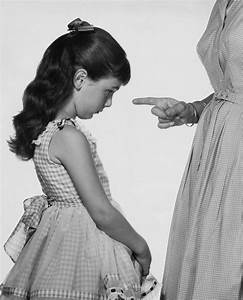
She sprinkles her commentary
with spikes of criticism
like a bee intent on finding honey
but stinging instead
strikes hard at the heart of the matter
manages to counter my aspirations
all attempts to swat away her words
are weak – she is my mother
and my sentiments are clouded
her jabs bite, inflame
and despite my apparent maturity
reduce me to childish panic.
Tag: parenting

I am Listening, Child
Child of mine,
what rage is this
that sets you against
a younger brother?
What discontent stirs
so deeply within that
you would lash out
at me, your mother?
Let us sit a moment,
and let me, with tenderness
listen, for your anger masks
pain, and I am not so far
removed from childhood
to recognize that tone.
If I have wronged you,
speak, I need to hear it;
if peers are pressuring,
or bullying, or you feel
betrayed, lay it here
in my hands, and I will
comfort you, and offer
what wisdom I have.
Your well-being is sacred
to me; let me hold you –
you’re not too old; linger
here in my embrace until
the tears come, and the storm
passes; I will hear your fears,
frustrations, and disappointments,
and together we will figure it out.
Child of mine,
I am here for you,
no matter the reason,
your pain is my pain,
talk to me; I am listening.
(Image: confessionsofanadoptiveparent.com)
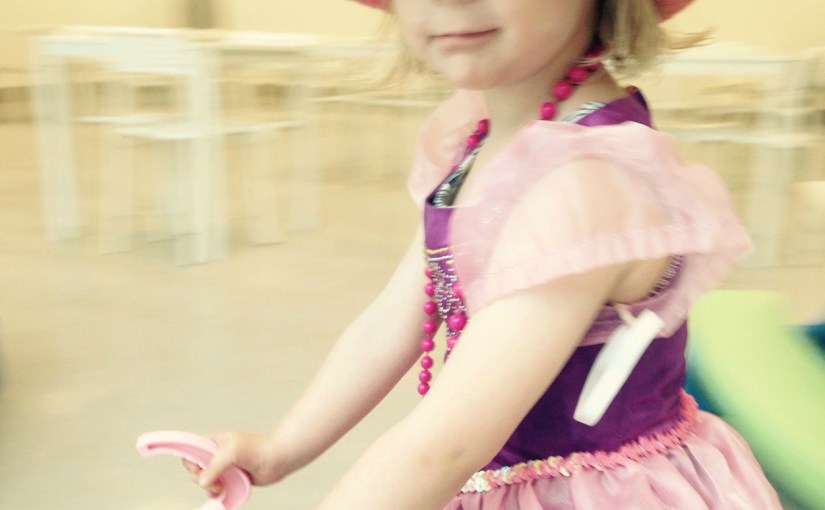
Mothers and Daughters
A child hides
tricks her mother
into believing she is lost;
This is not a game, Mother says,
panic still coursing through veins,
visions of abduction blinding reason.
Mother knows
what six-year-olds cannot:
that simple outings can turn –
unexpected loitering around corners,
the certainty of menace; she is wide-awake
cautious, protective of innocence in her charge.
Where was my mother,
she wonders, when I wandered away,
younger even than this one, when unattended
I roamed the neighbourhood, left to my own devices,
did she not know about danger, about shadows lurking,
and how did she not feel the tug of fear for a child’s loss?
Cannot remember
a time when she felt anything
but mature, responsible, forgot
she was a child, seldom felt alone
and yet was she too not vulnerable –
ponders the conditions of parental love
She’s a grandmother now
watches as another generation
of mother and daughter negotiate
the parameters of independence,
feels the same lurch of terror for
the precariousness of youth
eyes the preciousness
of childlike wonder with appreciation,
recognizes that one cannot bear responsiblity
for the endurance of such an elusive quality
that in all things, loss gives over to rebirth
and in the end, reverence settles back in.
(Photographer: Sylvie Salewski)

This Is Not Abandonment
I see it in their eyes –
the fear for my safety –
have not been able to paddle
my own boat for some time,
and here I am contemplating
going against the current,
taking a leap, seeking out
new sheltered places.
Survival is risky, they say –
risk is necessary if we’re ever
going to shake this malaise –
no explanation will appease them,
cannot understand the empowerment
that comes from discovering other realities –
promise to stay away from danger –
there are waterways, lands, mountains
to explore – this is not betrayal.
It is moving on, effective collaboration,
we will get along, disclose our differences,
have found willing transport, please
understand, children, we will work
this out, need to create a new reality –
one that allows for relaxation,
celebration – there is nothing left here
but a legacy of suffering, our absence
doesn’t mean our hearts are missing –
our love will be forever present.
(Image: artimagesfrom.com)

Freak Show’s In Town
Come one! Come all!
Step right up folks!
See the amazing,
one-of-a-kind,
baby-juggling
woman!
Come see this matron
turned tigress!
Witness how the weaker sex
transforms into a powerhouse
of resourcefulness –
a magnificent multitasker!
You will not believe your eyes!
These are no ordinary
babies, Ladies and Gentleman!
See the menacing three-year-old
who looks like an angel but
has the mind of a devil!
Look upon the smallest child
only months old, but with lungs
that will shatter glass…
be awed by the gigantic
boy baby, youngest of them all
with an insatiable appetite.
Step right up folks!
Watch as this extra-
ordinary woman
breast-feeds two babies
and prepares supplemental formula
all whilst reading to the third!
Behold how she balances
two baby carriers
while strapping
a toddler into
her car seat!
Marvel over how
she shops for groceries –
a magnificent feat,
Ladies and Gentlemen!
Tremble as she maneuvers
her two-carted entourage
through people-ridden aisles,
list firmly gripped between
her teeth, while she emits
a constant stream of baby talk
keeping the trying toddler
on a verbal leash.
Sigh with relief
as silence settles
over the household
and our heroine falls
into a deep, exhausted sleep.
Be terrified as she awakens
with a start, suddenly realizing
she has abandoned her boy-child,
in her vehicle, overnight!
You will be amazed!
You will be inspired!
You will be horrified!
Step right up,
Ladies and Gentleman!
This is a one-of-a-kind,
never-seen-anything-like-it
attraction, guaranteed
to entertain!
Catch it here, live!
Twenty-four/ seven,
Ladies and Gentlemen!
No two shows are alike!
Step right up folks!
Admission is free!

Birthing The Heroic
If the Ninja Turtles had a mother,
I’d be her – an overly pure-hearted
woman with a penchant for rescuing
victims and conquering evil.
I’d prod them to stand up to injustice,
teach them the difference between hiding
and protecting themselves, encourage them
to reveal their soft-underbellies with pride.
I’d teach them the importance of humility,
(thus the masks), to never back down in
the face of danger, and above all to treat
women as equals, defend friends.
If I birthed the Ninja Turtles, I would
expect their undying loyalty, be certain
that I could call them at any moment,
feel safe and secure in my aging.
Should they ever let me down, ignore
my cries for help, I would know they
were in trouble, would brace myself
to fight the evil that plagued them.
Become a superwoman, a christ-like
figure, casting out demons, saving
the world, demonstrating that I am
worthy of my place as matriarch.
Take myself so seriously, I would not
notice that others are disinterested,
self-absorbed, or asleep, unaware of
our super-powers, worship their own.
Did I say worship? Am I somehow
delusional, so well-intentioned,
idealistic, that I cannot see the
impossibilities here – have ignored
that these are mutants, not children
been so focused on the heroic –
believed in the power of fiction –
blinded to the caricature I’ve become?
Of course the Ninja Turtles do not
have a mother, are the brainchild
of their illustrator, whose creative
blood enliven them, scripts them.
Seems I need to find a project of
my own, address my biological
ravings in a more productive, less
fictionalized manner – get real.
Day 208 “Undivided Attention”
Undivided attention.
Two words that brought me hope as a parent and caused me a deep sense of guilt.
I just had to talk on the phone in the presence of my children to know that it was my attention they wanted, without any distractions, and I knew if I could deliver that, they would behave. It gave me hope.
In reality, I had three children, four and under, and a house to run, and a job on the side, and a husband that was never present, and a family who perpetuated drama – not to mention a desire for a life of my own- so giving the children my undivided attention seemed like an impossible task and caused me enormous guilt.
I was never good enough in those years. (Is this every mother’s lot?)
Then, as a teacher, I realized that my students, like my children, were starved to be seen and heard, and I strived to give each one my full attention, if only for moments at a time, but it was never enough and I felt inadequate.
Now, challenged with this illness and unable to give much of anything to anybody, I realize that it is I – my body/mind/spirit – that needs me to be fully present and aware.
It is no longer okay to feel not good enough.
Guilt, you have no place here.
I am learning all over again about the benefits of undivided attention.

Day 173 “Diligence”
“Children like Ester don’t typically succeed in regular school settings,” the doctor advised me. “Most don’t function well in social settings at all.”
I tried to visualize the alternative. “What are you suggesting?”
“Montessori, perhaps, or home-schooling. She may not be very successful in school.”
I shook my head. I’d been seeking answers to Ester’s problems for two years, but this wasn’t the solution I was looking for.
“Thank you, Doctor,” I shook his hand. “Where do we go next?”
The doctor prescribed medication which would retrain Ester’s brain, allowing her to sleep. The poor child had not slept more than an hour and a half at a time since her birth three years earlier. She and I were both exhausted, and equally distraught. This specialist was the first to offer a diagnosis. I suffered from toxemia during my pregnancy and he explained that toxins seeped into Ester’s brain causing this disorder. In layman’s terms, he called it “short-fuse syndrome”. Apparently, whenever Ester reached the stage of sleep where deep relaxation occurs, her brain would release the wrong message, causing her muscles to tighten up, waking her up in pain. Ester woke up screaming frequently during the night, so the diagnosis made sense to me. She was also “short-fused” as he described it, giving up easily and given to fits of temper. Could this really hinder her social development?
From the moment Ester was born she started to scream, and I often tease her that she didn’t stop screaming for three years. In the beginning, I just thought she was colicky, but when it continued, I suspected something else was happening. When her baby brother was born, and sleeping through the night, I knew there was a problem. Ester’s screams and temper tantrums interfered with her development of speech. Although she was physically advanced, she hadn’t spoken her first word at eighteen months, whereas her sister was forming sentences at a year. Discipline was futile and heartbreaking. It just didn’t seem fair to punish a child who was in a constant state of anguish.
In our search for answers, we were shuffled from doctor to doctor, and given advice from everyone we met, whether solicited or not. Well-meaning relatives told us we were overindulgent, strangers also suggested it was our parenting skills that were lacking. No one, not even Ester’s father, offered to give me respite. She was too hard to handle.
“She is not bad,” the doctor explained. “She is reacting to her physical discomfort and the stress she is experiencing due to lack of sleep. Just as you and I would. Unfortunately, these are the formative years. Ester’s condition will effect her self-confidence and esteem. Children like her are not risk-takers and will not respond well to change.”
The diagnosis I could accept. The prognosis, I could not. Ester and I had our work cut out for us.
It took six months of drug therapy before Ester started to sleep through the night and the screaming fits diminished. What was left was a highly anxious, impatient child, who clung to me. By the time she went to nursery school, I was ready for a break.
And I was nervous. What if what the doctor said was true? What if Ester couldn’t adapt to school? I wouldn’t allow myself to go there.
Nursery school was great. Ester received lots of one on one attention and the reports back were always glowing. Things changed when she started school full-time.
“Ester cries all day, Mom.” her older sister informed me a week after school started. “I go by her classroom everyday and she is always crying.”
I was furious. Why hadn’t her teacher called me? Turns out her teacher didn’t notice. Quiet, shy, Ester, was weeping silently, afraid of getting in trouble. I went back to the doctor. He gave me the name of a play therapist.
Ester spent the rest of the year in therapy, and she and I worked out strategies to help her cope. We practiced breathing and visualization and set achievable goals. I soothed her through endless stomach aches and more sleepless nights. By grade five, I convinced her to set a goal of raising her hand once a day to answer a question. At the end of grade eight, she and two friends sang at their graduation. Ester survived public school.
High school brought new challenges and greater stress. Ester, who always feels the pressure more than others, could not relax into the teenage social scene and chose to be a loner. She spent long hours in her room, pouring over her homework, never willing to give up. She became a perfectionist about herself and her grades and the tension grew. Her self-esteem plummeted, and she withdrew into herself. But she never gave up.
When Ester graduated from college, I could not have been more proud. As she walked across the stage to receive her diploma, I remembered the words the doctor had spoken on that day so many years before, and thanked God I hadn’t listened.
Yesterday, just minutes before she walked down the aisle to take her wedding vows, Ester and I spent a moment, hands clasped together, eyes locked. There was so much we wanted to say, and no words to express it. Then I pulled her to me and we embraced.
I hope she heard the admiration in my voice as I told her I love her. I hope she felt the absolute pride and respect I have for the woman that she has become.
I don’t know anyone who has worked harder to get to where she is in life.
That is diligence.

Birthday Weeds
“Can I have a bike for my birthday this year?” A typical, impatient eight-year-old, I must have asked my parents this question a million times. I was excited for my upcoming birthday, and really wanted a bike with a big banana seat, and raised handle-bars.
“You’ll have to wait and see,” was the constant reply, but my birthday falls in the middle of the summer, and so many perfect bike-riding days were passing me by.
As my big day approached, my father teased me that I was getting bubblegum for my birthday. I was confident he was kidding and that I would soon be soaring through the streets on my new, longed for wheels.
Birthday morning came, and no present. “You have to wait till your party,” Mom informed me. The hours just didn’t pass fast enough. My friends arrived in the afternoon, and we swam for awhile before my father barbequed burgers and hot dogs, and then it was time for gifts. After opening all the gifts from my friends, the moment I had anticipated finally arrived.
“There is one more gift,” my father announced, disappearing into the garage.
And there it was! A shiny, new, all-mine, bicycle. “Here’s your bubblegum,” Dad beamed. I beamed back. It was exactly what I wanted.
“Thanks so much!” I gushed, and was about to say more when I noticed my mother following with something else. Another new bike……for my little sister.
What? It wasn’t her birthday until November. “Me too, me too,” she started to squeal.
I didn’t say anything. I didn’t know what to say. I got what I wanted, so why was this bothering me so?
It was a question that would fester inside me for a long time. That year would mark the end of birthday excitement for me. It was the start of a legacy of disappointment that I never addressed, and therefore; allowed to grow out of control.
For my ninth birthday, I got a new bike, but I also gained the realization that life is not always fair. I knew without asking why my sister got a present on my birthday – it was so she wouldn’t throw a temper tantrum – but I also knew with certainty that I wouldn’t get a present on her birthday, and somehow that didn’t seem right. I wasn’t given to temper tantrums, but did that mean that I also had to forgo being special for one day?
In the years that followed, my birthdays were celebrated on family vacations, usually in public places with just a cake to mark the occasion. I told myself it didn’t matter.
I lied.
Truth is, I allowed that initial seed of disappointment to ferment inside me. I didn’t confront the issue because I thought I was being oversensitive. I didn’t want to hurt my parents feelings, and I certainly didn’t want them to think I was ungrateful. But the more I pushed the hurt down, the bigger it grew. In my own mind, I compounded the issue. My parents didn’t love me as much as they did the other children; there was something wrong with me. Every time I felt left out or overlooked, my feelings were just confirmed. I came to dread my birthday month. By the time I reached adulthood, this dread was accompanied by depression.
The issue exploded on my 40th birthday. My mother, in her usual way, had been calling me leading up to my birthday, making comments such as: “You have everything you need, I don’t suppose there is anything I could get you anyway,” or “Don’t know if I’ll get you anything for your birthday this year,” and so on. When she showed up with a frozen turkey, I lost it.
“Mom! Why do you have such a problem with my birthday! If you don’t want to celebrate it, then don’t, but don’t taunt me with it!”
“Of course, I want to celebrate your birthday.” She was taken aback.
“You never have! You always make it sound like it’s such a hardship. I’d rather you didn’t acknowledge it at all!”
“What do you mean? I’m here with a gift aren’t I?”
“Yes, Mom, but all week longed you’d hinted that there might not be a gift, as if you really don’t want to give me anything.”
“Well, it’s just that you have everything.”
“It’s not about the gift, Mom. It’s about the acknowledgment.”
The conversation didn’t go well. My mother left feeling hurt, and I felt I had made a worse mess of things. I would like to say that things have improved, but they haven’t. For the second year in a row, my mother has completely forgotten my birthday. I asked for it, I guess.
When you allow things to fester, they grow roots, and like untended weeds, can get out of control.
I am fifty-four years old, and I still don’t know how to uproot the weed associated with my mother and my birthday.

Growing Wings
“Thank you for being here, Mom.” The exhaustion in my daughter’s voice was echoed in her face. The epidural had finally kicked in, and we were all feeling a sense of relief. It was 5 a.m. Her first contraction had hit at 1:20 the day before, as we were walking home from a lunch out.
I didn’t know what to say.
So many feelings were flooding me. It didn’t seem like that long ago that I had laboured with her, pacing the hospital hallways, seeking relief in any way that I could. Now my baby was having a baby. It was a miracle to behold.
So I was feeling sentimental, and at the same time, wishing I could do it for her – taking her pain away.
I was in awe of the strength and courage she was showing, this young woman who as a child feared everything. She cursed a few times, and moaned as the pain wrapped around her and squeezed relentlessly, but not once did she complain, or wish it away. From somewhere inside her she had harnessed a determination to see this trial through, and her focus was admirable. I could not be more proud.
I knew what awaited her at the end of this journey. I knew all about the indescribable bliss and wonder that fills you the moment that baby emerges and is placed in your arms. I understood how in that moment there is an instantaneous shift of realization that this new little being is totally dependent on you. I couldn’t tell her, but she would experience it soon enough.
And I couldn’t tell her that my presence on this sacred occasion was no burden to me, but an incredible gift. She could never know how grateful I was to her, and especially the baby’s father, that they had invited me here to witness this sacred event.
So, I smiled and squeezed her hand, and stroked her face, and reassured her that it would all be over soon, and bit the inside of my cheek to stop my own flood of emotion from pouring forth.
Somewhere along the way, my baby had become a woman, and as I bore witness, she grew wings and took on her mission with grace and dignity: ascending to motherhood without looking back.
 One Woman's Quest
