Saying Goodbye To Father

My father fought against death at the end, even though he was wracked with pain,  had difficulty breathing, and spent many of his nights in hospital.

“At what point do we stop all this intervention, Dad, and talk about keeping you comfortable?”

It was the early hours of the morning after another night spent in emergency.

“Now,”  his voice cracked as he spoke.  Dad was so clearly in distress it was alarming.  Involuntary spasms of pain kept him from resting, and the strain was telling on his ashen face.

I took his hand in mine.  “Dad, all I want for you is peace,”  I hesitated.  “To be honest with you, Dad, I have never known you to have peace in your life.”

He squeezed my hand.   “Not a lot.”

“Do you believe that there is something for you on the other side, Dad?”

“I don’t know, Honey.  I don’t have the faith that you do.  I don’t know what to believe.”

“Some say that our feeling about God is related to our relationship with our own father.”

“How so?”

“When you were a boy, huddled in the coat closet, hiding from your father, what were your thoughts?  Did you ever think about God in those moments?”

“All the time.”  My father closed his eyes and laid back.  “I remember asking God over and over, what I did wrong to deserve the beatings.  I thought  God was punishing me.”

“Exactly, Dad.  Maybe your fear of death is because the little boy in you thinks God will reject you, or inflict more pain.”

He opened his eyes and looked at me.  “You could be right.  I know I’m afraid.”

“God didn’t punish you, Dad.  Your father did.  I have to believe there is something better awaiting you.”

He closed his eyes again, processing what I suggested.  “You were a child, Dad.  It wasn’t your fault.  You need to forgive yourself.”   A tear trickled down his cheek.

We didn’t talk about it further, but we did speak to the doctor on duty about changing Dad’s care.  Plans were made to transfer my father to palliative care.  The day he was to be moved, my father announced that he didn’t want any visitors.  He said he needed time to settle in.  They moved him mid-morning.  He died within hours.  I rushed to his side, but it was too late.

“Good for you, Dad,” I cried.  “You finally made it.”


Path Rights

Born underweight, and with a hole in her heart, my oldest sister seemed doomed from the start.   By the time I was born, her condition had deteriorated, and she spent most of her time in hospital.  My parents were told to expect the worst.  Open-heart surgery was the great new procedure that saved her life at thirteen.  She got better.

Two years behind her peers at school, she was hell-bent on catching up.  Years of being pampered had not helped her emotional development, and she was not afraid of acting out.  She loved being the center of attention, and didn’t care if it was for being good or bad.

Eleven years her junior, I found my sister’s volatility scary.  It was almost a relief when she would lock me out of the house, or ignore me for long periods of time.  Our relationship didn’t really develop until she gave birth to her own daughter, then she needed me.  I was a built-in babysitter.

I watched my sister jump from one bad relationship to another.  I witnessed my parents rescuing her time after time, and I was dumbfounded at her disrespect and lack of gratitude in return.

She could be sweet as anything when she wanted something, but if she wasn’t interested, or changed her mind, look out.

When she got sick again, I decided to explore ways to help her.  The more I learned about the body-mind connection, the more I was sure I could save her.  She laughed in my face.  You are so naive, she would say.  Or, You are playing with the Devil.  Personally, I’d always thought she was the devil.

One day, I decided that I would just let her be, and stop trying to change her.  I told her as much.  She tried to fight with me.  I stood my ground.  She cried.  Then finally, we talked.

“Everything I’ve been studying and doing is to help you,”  I explained.  “But it’s not working, so, I’m not going to push anymore.  You are sick, it is your life, and you have to do what is right for you.”

“You don’t understand,” she said.  She was right, I didn’t.  “I don’t know how to be any different.”

“What do you mean?”

“If I did what you say, and got better, then what?   Being sick gives me power.  It lets me get away with whatever I want.  How could I do that if I got better.”

She had a point.  Being sick gave her enormous power.  How could I argue with that.

In all the years that I had judged, and fought with my sister about her life, I had not appreciated that it was working just fine for her purposes.  We all have the right to our own paths.

On Wisdom

The difference between knowledge and wisdom is experience.

A young man once asked me if he could shadow me for a summer, so that he could learn from me.  I asked him to tell me about his life.

“It’s good,”  he replied.

“Tell me about a hardship that you have overcome.”

“None that I can think of.  My life has been easy.”

“Are your parents together?”

“Well, no,” he explained.  “They separated when I was fifteen.”

“That must have been hard.”

He shrugged.  “That was about them.  It wasn’t about me.”

He was a nice young man, and I believed him to be very sincere.  “What will you do with your summer, if I say no.?”

“I was thinking I’d try to get a job at a resort up north.”

“That’s what I would recommend!”

His disappointment was visible.  “But I want to help people;  I want to do what you do.”

“Let’s look at this hypothetically.  If someone came to you suffering from deep depression, how would you help them?”

“I would meditate on it and look for answers.”

“I see.  And if none came?”

He had no response.

“Let me explain something,”  I was starting to feel a little bit like David Carradine talking to Grasshopper.  “Much of my ability to help another comes from life experience.  In the case of depression, who do you think would be in a better position, someone who has lived through it and come out the other side, or someone who has meditated on the possibility?”

He didn’t need to answer.

“The best thing you can do for yourself right now is gather experience.  Learn all that you can, too, but when your intellectual knowledge, meets your experienced knowing, then you will be ready.”

“How long will that take.”

I had to suppress a smile.  I was impatient once too.  “That depends on you.  From where I stand, you have a ways to go.”

“Why’s that?”  He looked offended.

“You haven’t even recognized the pain of your parents’ divorce.  How can you help another deal with their wounds, when you haven’t looked at your own?”

“There is time for everything,”  I said more gently.  “Now is a time for gathering.  Go North.  You’ll learn much more there than I can ever teach you now.”

Focused Intent

For years a padded treatment table doubled as our dining room table.  The height was right, but the width was too narrow, and it felt awkward to sit guests around it in the center of our large dining area.  Replacing it was not a priority, but I knew if I didn’t move it out, I’d never get a proper dining set.  So, one Sunday morning, I packed it away and started to polish the hardware floors.

“What are you doing?”

“Getting ready for our new dining room set.”

“Is there something I don’t know?”

“No, but it’s never going to happen if I don’t make room for it.”

“So, we’re not going to eat in here anymore?”

“Not until the new table comes.”

In the midst of this exchange, my parents arrived unexpectedly.  “Guess what we did today?”

I had no idea.

“We bought ourselves a new table and chairs.  Would you like our dining room set?”

* * * * *

I shared this story with a friend.  I had learned about it in a workshop.  Set your intent by specifically asking for what you want, and clear any blocks that might stop your wish from manifesting.  Then let it go, and let God.

She and her husband were struggling to get by, with one income, and three children; the youngest having a lot of special needs.  Their old car was on its last legs, and they couldn’t afford the vehicle that would make their life easier.

“Believe me,”  she said.  “If that worked, I would have done it long ago.”

When she called me the next time, her tune had changed.  “I thought about what you said,” she explained, “and I realized that my block was my attitude.  So I asked for a van in which we could transport our family, and I set aside my disbelief.    The very next day, I was walking to work and ran into an old friend I hadn’t seen since high school.  We talked over old times, and then you won’t believe what happened.  She said she had heard about our daughter, and she wanted to help.  She said she had come into some money and she would like to either buy us a new vehicle or give us the money to pay down on our mortgage.  We pick up the van next week!”

* * * * *

The system does not always work so well.  One friend asked for abundance for years, but nothing happened.  She even tried to get specific, asking for a set amount of money, but somehow, it never manifested.

I do believe that we get what we ask for, and I also believe we have to be careful about what that is.  For years my sister “just wanted to be thinner”, but she didn’t do anything to make that happen.  Her wish came true, but the cost was not worth the prize:  cancer ensured she shed the pounds rapidly.

Picture what you want, then be open to receiving it.  Anything can happen, but you have to be able to picture it first.


Mapping Life

If you could make a map of your life, what would it look like?  Have you walked one path, or several?  Has the terrain been flat or rocky?  What would the road ahead look like?

Let’s see if I can describe the map of my life.

My beginnings were in the east, at the edge of residential land, bordering on industrial.  The path I was born on was bordered by rosebushes, but despite the flowery hope, the thorns were painfully evident.  Not yet able to carve my own path, I was often passed over fences and imposed upon others.

At four, we moved west as a family and the path seemed to open up, and brought the fertile promise of new topsoil.  It was here that I began to picture a direction of my own, and dreamed of writing, teaching, and fighting for children’s rights.   But the richness of the soil proved superficial, and the foundation started to crack, and suddenly,  we veered off course.

The new road took us out of town, away from the familiar, and on the edge of an escarpment.  The way was marked by rocky crevices, and treacherous footings.  As strong and independent as I tried to be, there were too many dark places here, and my confidence was shaken.

By the time we ventured back to my hometown, I had already disengaged myself from my parents’ path, and began to carve my own.  The beginnings were not auspicious.  I was headed into a dark, overgrown forest, which would trip me up many times over the next couple of years, causing me to grasp at any beam of light, desperately looking for a way out.

I came to clearings from time to time, and if  you look closely, you will see the areas that I clear cut myself, out of sheer determination to make that time of my life count.

Then there are the moments where the path lifted me out of the woods and onto the sunny, green hilltops, and life was good again.  And I resumed my dreams, and pursued my studies, and became a mother.

Until the earth opened up and swallowed me momentarily, but I climbed out of that, and for awhile I walked along the beaten path, not really sure if I belonged, but not wanting to miss out either.  See my footprints there, hesitant, beside the road?

And see where I started to carve out yet another new route?  There, where the trees are not so dense, and the wood is new, and spring green.  Notice how the path begins to develop, wobbly a bit, at first, then straightening out, making it’s way in a slow ascent along that mountainside.    There are the plateaus I have talked about, and look there, where I took a steep climb.  Those were good times.  I had purpose then, and felt so alive.

The path goes underground for awhile.  You can’t see it, but it winds its way through the caves.  I can tell you, I tried a few different trails while I was under there, but eventually settled on the one I’m on now.  You can see it emerging, there at the top of the map, where the mountain opens up to a green valley.  I’ll be resting here awhile, but the journey is not over yet.

Just over that next hill there is a village, and beyond that village, on the horizon, an ocean.  Looks like there will be a few more peaks to master, and that the road might double back once or twice, but I am hoping for a beautiful landscape ahead, and a lot more ease of travel.

Try it yourself.  Draw a map of your own life.

(Image: yourlifemapping.com)

A Witness To Death

My mother told me that when she was a child, she would wake up in the middle of the night to find her mother slaving over the woodstove.  Grandma was a midwife.  Mom said Grandma’s dreams would tell her when a baby was coming, and she would get up and cook for her family, knowing she would be away.

Grandma’s gift passed on to me, with a slight variation.

I first learned about it the night my four cousins perished in a fire.  I awoke in the middle of the night with an awful chill.  When my mother told me the news, I realized that I’d already known about their passing.

Walking home from school one day, at the age of eleven, something unseen stopped me in my tracks.  The image of my paternal Grandmother filled my mind along with the sensation of her love, and a farewell.  I arrived home to find my family gathered around.  “I know,” I said, before anyone could speak.  “She told me.”

Lying beside my ailing sister one night, I had a vision of a spirit.  He told me to listen for the howling of the wolves, and that my sister would pass through the fire on her way to the other side.  I was with her the night an unexpected storm came in.  The wind it brought sounded like a pack of wolves howling outside the window.  I had been holding her hand, but the heat from her body was so intense, I had to let go.  The nurse said her temperature was higher than her thermometer could measure.  She passed away ten minutes later.

Do I believe in life after death?  Yes.  Does that lessen the grief of losing a loved one?  No.

Grief is the natural response to loss.  Life may go on, but the relationship has been permanently altered, and that is loss.

When Dee found out she was dying, she made me promise I would be there to hold her hand.  Death, like birth, I told her, is not something we have control over, but I would do my best.  The call came at 6:30 one morning.

“Dee says it’s time,”  her mother told me.  “Can you come?”

I had children to get off to school, and so it was two hours before I arrived at Dee’s bedside.  She was already well on her way.   With one hand I grasped hers, then placed my other over her heart as I leaned in to whisper: “I’m here.”

Dee’s eyes opened and she took one last gasping breath and died.  Her spirit, like a breeze, flowed through the house, flickering all the candles her mother and sister had lit to mark the occasion.  She was free!

I witnessed the miracle, and then I grieved.


Humility

Good, better, best.   Never let them rest.  Till your good is better and your better best.

Dad made us recite this whenever he thought that we were giving less than our best effort.  Like the time I came home with a 96% in OAC Relations and Functions.  If I could get 96, I could get a hundred; I just wasn’t trying hard enough.

The message I heard was that if wasn’t the best, I wasn’t good enough.  I told myself that there was no point in trying, but under it all, I just wanted his approval.  Of course, I couldn’t be the best, so I learned to act like I was better by putting others down.  As a young woman, I was constantly angry and intolerant of stupidity or lack of common sense.  I had no patience for weakness, and though I hate to admit it, I found fault with anyone who I thought was better than me.

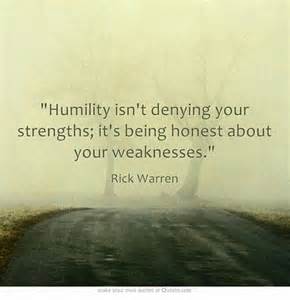
Lucky for me, I learned the importance of humility.  Not all at once, but over a progression of events.

The idea of humility was first introduced to me by my Religious Studies teacher, in university.  He said the humble man was the happiest man, because he could just be and appreciate life.  I didn’t quite understand, but the idea intrigued me.

My second child added to the learning.  Baby number one was a calm and very manageable baby: a testimony, I thought, to my excellent parenting skills.  Other people clearly didn’t know how to parent, I told myself when I would see a screaming child.  Then Ester came along, and shattered that illusion, humbling me in the process.

Perhaps the greatest lesson came at the age of thirty-one, when my mind snapped.  A mother of three, I was working full-time to support the family, taking courses at the university to improve my qualifications, caring for my dying sister, and trying to find time to work out and diet so I would be more appealing to my husband.  I thought I could do it all.  I couldn’t it.  The walls of my carefully constructed existence came tumbling down, and I was lost in a black abyss of nothingness, unable to function.

It was the best thing that ever happened to me.

Clawing my way out of the pit of despair, I came upon this quote (author unknown):

I turned to God when my foundation was shaking, only to find that God was shaking my foundation.

“Get off your high horse, and come down to earth where you can be more useful!”  Not God’s words, but my interpretation.

Do you know what I discovered?  Letting go of having to be the best meant I could start to celebrate the successes of others rather than try to bring them down – a much more rewarding use of my energy.

Oh, and I let go of the fear of not being good enough.

In fact, I decided that I am good enough.

No, scratch that.  I am good.

Wait, even that is overstated.

I am!


First Glimpse Of ME/CFS

Hesitantly, I turned the key in the lock and pushed the door ajar.  A waft of warm, stale air accosted me.

“Hello?”  I’d been told there might not be a response.

Something was resting against the door, so I pushed harder to let myself in.  The beam from the light of the open doorway was thick with dust and it took a moment for my eyes to adjust to the darkness.  I was walking into a little foyer, with stairs ascending to the main level.  The walls on either side of the entrance were stacked high with boxes, and laundry baskets full of stuff.  Something lay on the floor at my feet – a coat, or a blanket, I couldn’t tell – the object of resistance.  I stepped over it and closed the door behind me.  The smell of the place accosted me then, a smothering aroma of dust, and cigarettes, and cat fur.  I wondered what I had gotten myself into.

“Hello?”  I called again, more desperate for a response.  None came.

She’ll be in the bedroom, at the end of the hallway, her mother had told me.  She likely won’t awaken.

It was the middle of the day, but dark blankets covered the windows, allowing for minimal light.  I waited for my eyes to adjust before climbing the steps to the kitchen.  The rows of boxes and debris continued and flowed into the kitchen, where dirty dishes and takeout containers littered the counters and floors.  Who could live like this?

I felt my way along the hall, carefully stepping through the hordes of items stashed there, until I reached the last bedroom.

Politeness made me knock again.  Again no response.

The situation was worse than I thought, and I seriously doubted my ability to be of help.  It all started when she was seventeen, her mother told me.  She had a terrible case of the flu, followed by encephalitis, and then one thing after the other.  She rarely gets up, and has trouble putting a sentence together.  The doctor’s have given up on her.  She hasn’t been out of the house for ten years, and we can’t get anyone to go in.  We’d really appreciate if you’d go see her.

Two tabby cats greeted me as I opened the bedroom door, as did the fetid odour of a litter box.  Shooing them aside, I approached the bed.  Rumpled bedding was tangled up in the middle of full size bed, but no sign of any thirty-three year-old woman.  Now what?

I decided she had to be somewhere within the mess of sheets and bedding, so centering myself, I began.  I ran my hands just above the bed, hoping for some sense of heat, or thickness, that might indicate there was a body inside.  Instead, I just felt foolish.  So, I stood at the foot of the bed and took some deep breaths, re-centering in hopes of some divine inspiration.

“Well?”  A thin, croaky voice emerged from under the covers.

“Hello,”  I said again, beginning to feel like a parrot.

A thin, waif-like hand appeared, followed by a matted head of hair.  She was tiny.  “Any hope?”  her voice sounded as if it was coming from under water: slurred and thick.

I was at a loss for words.  Here was this wisp of a woman, holed up this house with no daylight, and no fresh air, locked away from humanity, and all I could think of was how could she possibly survive.  I would have committed suicide long ago if it had been me.  What could I tell her about hope?

Then I remembered something both Joan Borysenko and Bernie Seigel had said during their workshops:  There is something to love about everyone.  Find it and you can help them. 

“Yes,”  I said.  “I believe there is.”

“Really?”   The word came out stretched and squeaky.

She had survived this long.  She had beaten odds, and continued to live.  It wasn’t much of an existence, but something kept her going.

“You have an incredible will.  Now, you just have to learn to channel that to get better.”

* * * * *

Patty’s story is for another day.  Meeting her taught me the importance of an idea that works.  There is something to love about everyone.  I use it everyday in my teaching practice.

(Image: www.experiencewellness.co.uk)

Plateaus

“I don’t know, Lynn;  I just feel flat, as if I’m stuck.”

“You’ve probably just reached a plateau.”

“What do you mean?”  Lynn, fifteen years my senior, was a beloved cousin and mentor.  When I was young, I knew her as a famous singer who traveled and performed with celebrities.  Poor health forced her off the road, and a failed marriage stripped her of all material wealth.  Yet, Lynn never lost her quiet dignity, and I found in her a gentle friend, who was always willing to listen.

“The spiritual journey has been compared to climbing a mountain:  sometimes the going is easy and exhilarating; sometimes it is steep and difficult; and sometimes you reach a plateau.”

“That feels about right.”

“Have patience, and when the time is right, you will move again.”

I always pictured Lynn as a pillar in my life.  Her strength and presence often held me up.  Since she died fifteen years ago, no one else has taken her place.

* * * * *

My quest for spiritual enlightenment started as a little girl.  I distinctly remember being five and having a strong sense of purpose, as if God put me here on this earth to do something.  I felt it was important to keep the door open for God, so that I would be ready when the time came.  My faith was pure, innocent, and wholehearted.

Fifteen was when I started to have doubts and  turned my back on God.  I also fell into a depression that would not break for many years.

At twenty-eight, I felt like I suddenly woke up from a deep sleep, and the quest was on again.  These were the years when Lynn and I bonded, and I tackled that mountain with fervour.  I had never felt so alive.  Even through hardship and pain, I never felt alone.  I knew that God was with me.

Then I turned my back again.  It was nine years ago, but now I’m backing, asking questions again; wondering.

I guess I just hit another plateau, Lynn.


Excuse Me While I Unload

Excuse me, but it seems I have been carrying around an extraordinary amount of baggage for some time now and I’m thinking it’s time to unload, so pardon me but I’m going to dump them out here, and do inventory.

Wow, what a pile of stuff!  I don’t know where to begin.

Black lace catches my eye.  I pull it out of the pile.  It’s a woman’s hat, with a black face veil.  I know this one.  It is the veil of self-loathing.  While I try not to wear it in public, I take it everywhere with me.  It keeps me humble.  The veil whispers:  Don’t believe what other people say about you; they’re just being kind; they really don’t know you like I do.  Boy, looks like I should have done this sooner;  I think I’ll just set that aside.

Ah, there’s my graduation cap; my teacher’s cap.  It’s a keeper.  And my mother’s apron.  That can stay too.  My reading glasses, my writing pen, my friendship necklace.  All those parts I want to keep.  Oh, and that teddy bear – all Grandmas need teddy bears – definitely carrying that around with me.

What’s this big, woolly, grey thing?  It’s heavy, and to be honest, it stinks like cigarette smoke, stale alcohol, and mildew.  It reeks of shame.  I’m not sure this is mine, but I’ve been carrying this around forever.  Wouldn’t be surprised if it stunk everything else up.  This needs to go.  I might even have to get a new suitcase to start fresh.  I’ll just put that one out in the trash can.

Better make sure the smell hasn’t lingered.  Sure enough, the lining of the case has absorbed the stench.  I’d better air it out also.  Wait a minute, what’s that in the lining?  Something is sticking out.  It’s silver and pointed.  Looks like a brooch.  It’ a very delicate piece:  silver leaves swirling around a peridot stone.  Is this mine?  It’s beautiful, but I don’t recognize it.  Just my taste though, I’m more silver than gold, and I love the peridot green.  I wonder how long it’s been here?  I should try it on, and see how it looks.  No, I’m not ready for this.  I don’t have anything to go with it.  I’ll tuck it back away for another day.

Will you look at that!  A pile of mismatched socks.  So like me, to carry around odds and sods hoping to make sense of them sooner or later.  Thing is, young people don’t wear socks or stockings anymore, so all these do is date me; they don’t serve any other purpose.  I think it’s time to let them go.

Wow, look at that!  It’s a rusty old paintbrush.  I used to love art – even won the award in grade eight – but I was advised against pursuing it – not intellectual enough – so I set it aside.  Could this still be in me?  I’d like to know.

Oh!  A feather.  I know why it’s here.  I tucked it in here to remind me of my spirituality.  I’ll keep that too.

My cookbooks can stay.  Here’s an old ship in a bottle.   It’s pretty dusty, and the vessel inside is covered in cobwebs.  I’m thinking whatever dream that was has long past; no point carrying that around anymore.  Time for new dreams.

This is kind of fun.  Can’t remember the last time I took inventory of what I’ve been carrying around.  Here’s some comfy yoga pants.  Those need to come out more often.  I can just hear my body screaming yes, please.

Hope you don’t mind if I carry on without you.  I can see a few more things I’d rather deal with in private.

What have you been carrying around?

(Image: ok-woman.com)