Humility

Good, better, best.   Never let them rest.  Till your good is better and your better best.

Dad made us recite this whenever he thought that we were giving less than our best effort.  Like the time I came home with a 96% in OAC Relations and Functions.  If I could get 96, I could get a hundred; I just wasn’t trying hard enough.

The message I heard was that if wasn’t the best, I wasn’t good enough.  I told myself that there was no point in trying, but under it all, I just wanted his approval.  Of course, I couldn’t be the best, so I learned to act like I was better by putting others down.  As a young woman, I was constantly angry and intolerant of stupidity or lack of common sense.  I had no patience for weakness, and though I hate to admit it, I found fault with anyone who I thought was better than me.

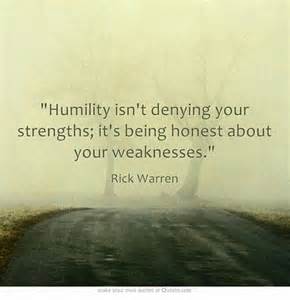
Lucky for me, I learned the importance of humility.  Not all at once, but over a progression of events.

The idea of humility was first introduced to me by my Religious Studies teacher, in university.  He said the humble man was the happiest man, because he could just be and appreciate life.  I didn’t quite understand, but the idea intrigued me.

My second child added to the learning.  Baby number one was a calm and very manageable baby: a testimony, I thought, to my excellent parenting skills.  Other people clearly didn’t know how to parent, I told myself when I would see a screaming child.  Then Ester came along, and shattered that illusion, humbling me in the process.

Perhaps the greatest lesson came at the age of thirty-one, when my mind snapped.  A mother of three, I was working full-time to support the family, taking courses at the university to improve my qualifications, caring for my dying sister, and trying to find time to work out and diet so I would be more appealing to my husband.  I thought I could do it all.  I couldn’t it.  The walls of my carefully constructed existence came tumbling down, and I was lost in a black abyss of nothingness, unable to function.

It was the best thing that ever happened to me.

Clawing my way out of the pit of despair, I came upon this quote (author unknown):

I turned to God when my foundation was shaking, only to find that God was shaking my foundation.

“Get off your high horse, and come down to earth where you can be more useful!”  Not God’s words, but my interpretation.

Do you know what I discovered?  Letting go of having to be the best meant I could start to celebrate the successes of others rather than try to bring them down – a much more rewarding use of my energy.

Oh, and I let go of the fear of not being good enough.

In fact, I decided that I am good enough.

No, scratch that.  I am good.

Wait, even that is overstated.

I am!


First Glimpse Of ME/CFS

Hesitantly, I turned the key in the lock and pushed the door ajar.  A waft of warm, stale air accosted me.

“Hello?”  I’d been told there might not be a response.

Something was resting against the door, so I pushed harder to let myself in.  The beam from the light of the open doorway was thick with dust and it took a moment for my eyes to adjust to the darkness.  I was walking into a little foyer, with stairs ascending to the main level.  The walls on either side of the entrance were stacked high with boxes, and laundry baskets full of stuff.  Something lay on the floor at my feet – a coat, or a blanket, I couldn’t tell – the object of resistance.  I stepped over it and closed the door behind me.  The smell of the place accosted me then, a smothering aroma of dust, and cigarettes, and cat fur.  I wondered what I had gotten myself into.

“Hello?”  I called again, more desperate for a response.  None came.

She’ll be in the bedroom, at the end of the hallway, her mother had told me.  She likely won’t awaken.

It was the middle of the day, but dark blankets covered the windows, allowing for minimal light.  I waited for my eyes to adjust before climbing the steps to the kitchen.  The rows of boxes and debris continued and flowed into the kitchen, where dirty dishes and takeout containers littered the counters and floors.  Who could live like this?

I felt my way along the hall, carefully stepping through the hordes of items stashed there, until I reached the last bedroom.

Politeness made me knock again.  Again no response.

The situation was worse than I thought, and I seriously doubted my ability to be of help.  It all started when she was seventeen, her mother told me.  She had a terrible case of the flu, followed by encephalitis, and then one thing after the other.  She rarely gets up, and has trouble putting a sentence together.  The doctor’s have given up on her.  She hasn’t been out of the house for ten years, and we can’t get anyone to go in.  We’d really appreciate if you’d go see her.

Two tabby cats greeted me as I opened the bedroom door, as did the fetid odour of a litter box.  Shooing them aside, I approached the bed.  Rumpled bedding was tangled up in the middle of full size bed, but no sign of any thirty-three year-old woman.  Now what?

I decided she had to be somewhere within the mess of sheets and bedding, so centering myself, I began.  I ran my hands just above the bed, hoping for some sense of heat, or thickness, that might indicate there was a body inside.  Instead, I just felt foolish.  So, I stood at the foot of the bed and took some deep breaths, re-centering in hopes of some divine inspiration.

“Well?”  A thin, croaky voice emerged from under the covers.

“Hello,”  I said again, beginning to feel like a parrot.

A thin, waif-like hand appeared, followed by a matted head of hair.  She was tiny.  “Any hope?”  her voice sounded as if it was coming from under water: slurred and thick.

I was at a loss for words.  Here was this wisp of a woman, holed up this house with no daylight, and no fresh air, locked away from humanity, and all I could think of was how could she possibly survive.  I would have committed suicide long ago if it had been me.  What could I tell her about hope?

Then I remembered something both Joan Borysenko and Bernie Seigel had said during their workshops:  There is something to love about everyone.  Find it and you can help them. 

“Yes,”  I said.  “I believe there is.”

“Really?”   The word came out stretched and squeaky.

She had survived this long.  She had beaten odds, and continued to live.  It wasn’t much of an existence, but something kept her going.

“You have an incredible will.  Now, you just have to learn to channel that to get better.”

* * * * *

Patty’s story is for another day.  Meeting her taught me the importance of an idea that works.  There is something to love about everyone.  I use it everyday in my teaching practice.

(Image: www.experiencewellness.co.uk)

Abuse and Money

I arrived home from school one day to find my mother sitting in a corner trembling, her face face blotched red and swollen from crying.  “Mom?”

The eyes that stared back at me were distant.  This was not my mother.  I took stock of the situation.  It was 3:15.  My little sister would be home from school in half an hour.   Dad would be home at 4:30 and expect dinner on the table.  Nothing had been started yet.  I dropped my books and got down to business.

“Mom.  You need to talk to me.  D is going to be home soon, and we have to get dinner on.  What’s going on?”

She nodded slightly.  “I can’t do it anymore.  Your father……..”  Her voice trailed off, but she didn’t need to say anything.  I knew how brutal my father could be.  I heard daily how stupid she was, and how she never cooked anything properly, even though that was her only job.  I wanted her to leave him, too.

“I’ll do whatever I can, Mom.  In two years, I can quit school, and get a job.  I’ll support us.”

Was that a faint smile?

“We’ll make it work, Mom.  We’ve got each other.”

Reaching for the pots and pans, I added, “Now what can we get started for dinner?”  There would be hell to pay if dinner wasn’t on the table the moment my dad walked in.

* * *

At twelve  years of age, I learned that money was what kept my mother in an abusive relationship.  It never occurred to me that she had the option of getting a job; she was a stay at home mom.  Five years later, we would go through a similar scenario, only then I was already living on my own, and had enough sense to get her to a lawyer.  In the end, my father convinced her to stay.

Years later, I would find myself a stay at home mom, with a husband who controlled the purse strings.  Like my mother, I felt powerless, and inferior.  Unlike my mother, I left anyway.  I braved poverty in order to find my worth.  Nevertheless,  I struggled, seldom able to give my children the material things they craved.  I felt guilty, worthless, inadequate.  After six years, I had a serious talk with God.

“God,” I said, “I want to make a difference in the world, but I can’t do it if I don’t even know where the next meal is coming from.”

I tried affirmations:  All my needs are always met; there is enough for everyone.

Eventually, things turned around. Yet, my relationship with money has not yet healed.  I want to be able to say the money’s the money, the way my new husband does.  I want to be able to see money as a means to an end, and not the end of my means.

My attitude towards money still needs work, but I am ready for change.

(Image:  empoweringparents.com)


Relief

The verdict is in:  there is no cancer!

Relief is immediate.  I find myself breathing easier.  I feel lighter.

So, what was that about?   Months of uncertainty, unknowing, like a cloud hovering over each day.  Dare we plan….?  What if…..?  What about…..?  The questions were there, but unanswerable.  Just as quickly as it arrived, the cloud is gone.  The sky is clear again; life is back to normal.

But I am not the same.  I am more aware.  I more aware of how important my love ones are to me, and that I let them know.  I am more aware of how fortunate I am to be working at a job I love, but that my health and well-being comes first.  I must look after myself.  I am more aware that as I grow older my body is less forgiving, and it needs my care.  Health is not a given, nor a promise; it requires work and commitment.

I was lucky.  Not everyone is.  I have been given another chance.  I’ve got some personal work to do.


An Unexpected Lesson

On April 15, 1978, I married for the first time.  It was also the day my eldest sister was diagnosed with leukemia and given one month to live – a year, if she had any fight in her.  I was nineteen.

As a young woman, I viewed life’s issues as black and white, and was often intolerant and impatient of others.  Now, thrown into a world of uncertainty, I was ill-equipped to cope.  Jo was a single mother of one, and asked for my help and support.  I vowed to be there for her, but had no idea what that would entail.

Even though we were siblings, my sister and I could not be further apart.  Eleven years my senior, Jo was born with a hole in her heart, a condition that saw her constantly in and out of hospital as a child.  At thirteen, on the brink of death, a new procedure, open-heart surgery, saved her life.  Much of our family’s energy and attention centered around Jo’s well-being, which was always a difficult task.  Coddled as a child, and setback by illness, Jo was temperamental, self-centered, and high-spirited.  If there was a fight to be had, she would instigate it.  She was reckless, impulsive, and emotionally immature.  At nineteen, she was unwed and pregnant.  She insisted on marrying the child’s father, but it didn’t last.  A string of bad relationships followed, along with several moves, in and out of our family home.  It seemed, Jo had a knack for creating chaos.

In contrast, although fifth born, I played the role of the responsible, sensible child, often trying to mediate calm in our tumultuous lives.   It was the natural order of things for Jo to turn to me for help.   I signed on as legal guardian of my niece, and accompanied my sister to medical appointments.  She underwent intense chemotherapy, and many times we thought we were losing her, but Jo would rally round again.

I learned from my sister, that life is often grey –  that uncertainty, and change are givens – and this rattled my sense of self-righteousness.  I felt inadequate and overwhelmed.  Pursuing education in the medical field was never an option for me, as a I was a fainter.  Instead, I sought understanding of the psychological and spiritual aspects of illness.  It would lead me to years of study and a career.

I don’t know how much I actually ever helped my sister.  She was never open to any of the ideas or approaches that I studied, and she never became any easier to get along with.  Her survival, fourteen years beyond the initial diagnosis, can only be attributed to an incredible fighting spirit and will to live.  She never changed.  I, however, was forever altered because of her.

I was with my sister the night she died, holding her hand as promised.   She was one of my greatest teachers.

(Image from Pinterest)

Adjusting Focus

At thirty-one, I suffered from acute anxiety depression.  Translation:  the amount of stress in my life overloaded my ability to function.  My mind snapped, and I was reduced to a blathering blob of human jelly – trembling uncontrollably and  unable to perform even the simplest of tasks.  I lost all sense of self.

While incredibly frightening at the time, in retrospect this a time of breakthrough.  The black abyss into which I had fallen was a wake up call to re-examine my life.  Obviously, the way I had been progressing was not working for me.  I needed to regain equilibrium.

In desperation, I sought inspiration.  I found it in one particular quote, whose author I have long since forgotten:

I turned to God when my foundation was shaking, only to discover that God was shaking my foundation.

Prior to losing my grip on reality, my life had been externally focused.

My oldest sister was dying of cancer, and opted to die at home, which resulted in my mother and I becoming her primary caregivers. At the same time, I had returned to work full-time in order to allow my then husband the luxury of finding himself career-wise.   Ideally, the plan involved swapping roles, but his search led him to uncover an insatiable love for racing, and I found myself juggling work, childcare, and homemaking.

In response to the unhappiness I was feeling, I strove to better myself by enrolling in a fourth year French course at the university, and pushing myself to become more physically active.

In short, I had taken on way too much.  I like to think God pulled the plug.

Alone in the bottom of my black hole, I discovered something miraculous – my faith.   I hadn’t given it much thought before, yet, there is was, like a faint beacon of hope, drawing me out of my darkness.  I realized that I did believe in God, and more than that, that God believed in me.   My doctor offered long term drug therapy, but I preferred to take God’s challenge, and build a new foundation from within.  A spiritual dialogue began.

Twenty-three years later, with the threat of the c-word over my head, I find my equilibrium challenged once more.  I have not forgotten that God uses nudges as reminders.  I need to find balance again.  The dialogue continues.

(Image:

The Beginning

An image from my dreams has been haunting me for some time, mostly due to its oddity.  The image is of my chest, with nipples akimbo.  Why would I dream such a thing?  I could not fathom the answer, but I did become self conscious afterwards, always checking myself before going out.  I saw a woman once who had nipples so misaligned that it was hard not to notice.  I was afraid to ask, but judging by her general physique and character, I assumed it was a breast enhancement that went terribly wrong.  That would not apply to me.  I have no cosmetic surgery in my past, present, or future.

Then last night, after waking out a deep sleep with heart pounding and a burning thirst, I caught sight of myself in the mirror, and what should I see, but one nipple pointing north west and the other lost in orbit  – my dream image!  So was my dream a premonition?  If so, what was the message?

December 13th I had a lumpectomy.  In late June, my doctor sent me for a mammogram, after noticing it had been many years since the last one.  Not long after the routine examination,  I received a recall notice.

“Don’t worry”, the message said, “in 9 out of 10 women, it is nothing.”

I assumed it was related to the length of time since my last one.  No real borderline for comparison.  Re-examination day came.  They wanted to do two procedures: a spot screening and an ultrasound.  Unlike my first visit, which was in and out in a surprisingly short period of time, I found myself waiting and waiting after the initial procedure.

I asked if they had forgotten me.  A nurse assured me they had not.  Instead, she invited me into a private room and handed me a pamphlet.

“We would like to do a biopsy.”

There was something about calcification, but it was unexpected and so I didn’t ask any questions.  Never a fan of needles, the thought of having my breast punctured overwhelmed me.

One of my professed philosophies is don’t worry until there is something to worry about.   The threat of a sharp object invading my delicate area was real and immediate.   I worried about that.   The appointment was scheduled for two weeks down the road.

My daughter was due to give birth any moment.  I worried about not being there for her.

A cancellation four days later, saw me headed for biopsy without the time to fret.

“Your doctor will have the results in 10 days” I was told.

Two days later, my doctor advised me I needed to see a surgeon.  She said the finding were “suspicious” and the area needed to come out. I would be seeing the surgeon on October 31st.  Trick or treat.

I ran into a close friend who had been going through the same thing.  Her doctor said they would just monitor her more closely.  I liked that solution.  I decided I would be a “wait and see” also.

In the meantime, I had a beautiful new granddaughter to occupy my thoughts, and I had just started a new job, at a new school.

Then in mid October, my beloved mother-in-law suffered another in a long line of health setbacks, and did not recover.  She passed away on the 23rd of October, and we held a memorial “cocktail” party in her honour the following weekend.

By the time October 31st came along, I was physically exhausted, and emotionally spent.

My ‘wait and see’ approach was met with a chorus of “Absolutely not!” from both the surgeon and her resident.  Nor was I to be allowed to put it off till summer vacation.  December it would be.

“Any questions?”

I couldn’t think of one.  My mind was flooded with concerns for work, Christmas, and our annual trip to Mexico.  What would happen to all of those?

Try as I might, anxiety got the best of me.  I threw myself into planning for Christmas, finishing up work, and cooking for post-surgery.  I found myself becoming irrationally temperamental, losing patience easily, and tearing up without warning.

“It’s not like having a toothache,” my husband reassured me.  “With a toothache, you call the dentist, and know what will happen.  There is no certain outcome here.  It is fear of the unknown.”

I wear a sports bra now, 24/7.  It supports the area and helps with the healing.   Without adjustment, it also pushes my breasts into awkward positions and creates an image similar to my dream.

So what was that all about?  Did some part of me, with some warped sense of humour, try to warn me in advance?  Was the intended message that this would be the worse to fear?  Or that there are worse things to worry about than whether or not your breasts line up?