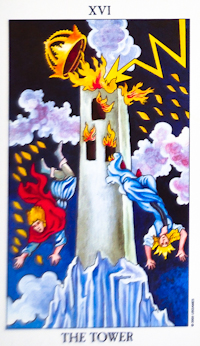
Life Challenges Continued

I started this blog four years ago while awaiting the results of a lumpectomy, facing the possibility of cancer and questioning life.   I ducked the bullet, but a year later my husband was not so lucky – he started treatment for Stage III prostate cancer.  Then, to complicate matters, he ruptured his quad tendon and needed reparative surgery, which had to be repeated ten weeks later when he re-injured.  The second surgery became infected and after a nightmare six months and five more operations, he was finally on the mend.  We thought the worse was behind us until I was struck down by a life altering debilitating illness that has confined me to home.  Roles in our house reversed and after a year of caring for my husband, he now has to look after me.  It is a reality that we have learned to accept, believing that the worst is behind us.

We have been naive.

A recent visit to the doctor for a routine physical has resulted in a barrage of further tests and Thor finds himself back in the care of the specialist who originally delivered the cancer diagnosis.  “There’s only a fifteen percent chance that this is cancer,” the doctor has told him, but we’ve both heard that before, and somehow, we are not as confident this time.

We are too familiar with all the signs.

So, as I write this, we are back to that awful place of waiting:  waiting for the tests that will confirm or allay our fears; waiting to know if life will be put on hold yet again; waiting to know when it is safe to plan again.

Are we being tested?  Is there opportunity in the midst of all this anguish, or is life just a random draw, and we have pulled the short straw?

In the end, we really have no control over what happens to us, and while we would not have chosen this path, there is not much we can do to change it.

We will put in our time these next few weeks, immersing ourselves in trivial distractions,
desperately trying to think about anything but the worse that can happen.  “One step at a time,” we tell ourselves.

Forgive us if we falter in our obligations, or if we appear distant or disinterested.  We have a lot on our minds.

Death Threat

“Viewers are cautioned that this next report contains images that may be disturbing to some.”

Naturally, I turn toward the television to see what all the fuss is about.  Photos of a crime scene where two women have been brutally stabbed to death are plastered across the screen along with images of the hotel they had been staying in and the victims themselves.

“Uh, Ric,” I manage to utter before sheer terror takes over me.  Not only are we staying in the same hotel, but the two women are occupying the same room we had originally been assigned.  When we’d arrived, just days before, and found there had been a double booking, we gracefully offered to move rooms.  What if we hadn’t?  Suddenly, I feel deadly cold.

“Maybe you should stay at the farm tonight instead,” Thor suggests.  The ‘farm’ is a small rural property we have purchased for our retirement.  As the house needs repairs, we decided to take a vacation at this nearby resort in the meantime.  Ric has to return home on business overnight, which means I will be on my own.

“No, the report says the police have a suspect in mind – a drifter who has been seen loitering in the nearby town.  The farm is too isolated.  I’ll be safer here with people around.”

Somehow, in the deep middle of the night, isolation feels more pronounced.  From where I lie I can see the outline of the door to our room and try to reassure myself that the deadbolt will hold.  I pray the double sliding doors in the adjacent room are secured enough to prevent an intruder.  I must fall asleep at some point, because when I awaken it is morning.

Relief floods me.  Daylight brings a return to normalcy, sanity.  All is well.

I have a quick wash and throw on some clothes, deciding to catch breakfast in the restaurant.  This suite we are staying in has two rooms – the bedroom, which is accessed from the outside, and a living/dining/kitchenette area, which is accessed by the pool area of the resort.  A short hallway with a bathroom separates the two living spaces.  It isn’t until I pass through into the kitchen area that I notice the intruder and I stop short.

Standing well over six feet tall, he is a giant of a man, with a disfigured face and scarred hands.  Like a rabbit, I freeze, assessing the situation.  In my mind, I picture the exits, both locked as far as I know.  How long has he been here?  Do I have time to unbolt the door before he’d catch me?

As if reading my mind, he flashes a pass key.  He works here, I realize.  Remain calm, I counsel myself.

“Am I going to die?”  I ask willing my voice to remain steady.  “Because if I am, do you mind if I have one more cup of tea.  Tea is my favourite thing?  Could you allow me that?” An element of surprise is my only hope of defense.  It worked for me once during an attempted mugging.  The would-be assailant stepped in front of me and demanded money and cigarettes.  In my nervousness, I laughed and said: “Do I look a smoker?”  The ruse worked long enough to let me dart away from the mugger and yell for help.

He doesn’t answer, just glares at me with that menacing expression, reminding me who’s in charge here.

“If it’s about sex, I’ll do anything you want, no need to get violent.”

“It might get rough.”  Do I detect a hint of bemusement in his voice.

“That’s okay, but I’d still really appreciate that cup of tea.  Can I make you one?”

“No, I don’t want any damn tea!”  but he doesn’t move to stop me and he’s dropped down onto the couch now, stretched across it, his legs splayed out over the end, his massive belly displaying one long scar carved into his side, and I realize he’s removed his shirt.

Cautiously, I make for the sink, feeling like I’m moving in slow motion.  His voice stops me.

“Why’d you have to put lanolin on the food tray?”  His voice is mournful, gravelly, and if I didn’t know that my life is in danger, I might l have laughed out loud.  My mind races:  He must work in food services.

“I didn’t,”  I stammer.  “I mean…I don’t use lanolin…don’t even have any.”  Then, sensing the opportunity:   “Somebody would do that?” I play the sympathy card.

“Makes my job damned near impossible,” he mumbles.  “Makes me angry enough kill!”

So we’re back to that.  Is that what happened to the two young women?  They greased the dinner tray?

“Hurry up with the tea already; I don’t have all day.”

He closes his eyes for a moment and I examine his face.  An unfortunate soul, really, I think.  Large, beefy jowls, and a bulbous nose that likely indicates years of alcohol abuse.  A scar covers one eye socket, and his lipless mouth seems to hang open unaware of itself.

Just as I turn again towards the kitchen, a light tapping on the door precedes the entrance of an entourage of people.

“Housekeeping, Miss.” A woman bustles in carrying freshly pressed and hung laundry.  “Where would like these?”  Behind her comes another housekeeper bearing clean towels, and a team poised to clean.  “Is this a good time?”

“A very good time!”  I turn to see that the hulk has gone.  Did he slide away?  I wonder.  Did anyone see him?  I direct the clothes to be hung in the bedroom closet and smile with genuine gratitude for the disruption, but keep my council.  He may still be hiding in the suite.

Two young teens then barge through the now open door and buzz around delighting at everything in the room.

“Excuse me,” I say to them.  “What are you doing?”

“This is our room!  We just checked in!”

“This is my room,”  I can feel the anger rising up in me.  I have had enough disruptions this morning already.  Things are beginning to feel surreal, and I just want some peace to recollect myself.  “There has been a mistake.  Leave!”

The doorway fills with what must be the rest of the family:  a man and woman and four more children.

“Check-in,” I tell them, ” is not until four o’clock.  The room is still mine.”  I had forgotten that today was check-out and the realization brings me new hope – I might get out of this alive yet.  I have work to do.

The family and housekeepers all leave with the exception of one little straggler.  I start to give him directions to the lobby, then realize he is too little to understand, so I walk him down the hall instead.  As we approach the reunion with his parents, I see that Ric has returned and is approaching the building.  The nightmare is finally coming to an end.

I turn back towards the room, anxious to get packed up.  I see him in my peripheral vision as he steps out of the shadows.  I stop.  Surely he won’t accost me here in the hallway, with people around.

“Did you see my scars?” he asks, eyes turned away.

“I did,” I respond unemotionally.  What can he possibly want me to say?  Like the wounds you left on those poor young women, I think.

I hear Ric’s approach and see the killer step away.  Should I tell my husband? I decide not.  Ric would react protectively, and could end up getting killed as well.  I greet my husband warmly, and turn our attention to the task at hand.

Car loaded, Ric pulls toward the exit just as a police vehicle drives in.

“Stop here.” I command, rolling down the window and catching the driver’s attention.  “The man you’re looking for works in the kitchen,” I tell him.

Then I signal for Ric to drive away and wake up.

It’s all been a dream.

A Trip to the ER

I have just returned from a record-breaking (in my history) trip to the emergency room and back, and as with all adventures in life, I learned something.

I experienced first hand the ignorance of the medical world concerning ME/CFS.  No wonder it took years to get a diagnosis.

Please understand that making the choice to go to the hospital is a big one for me – with an intolerance for sitting or standing, I could not bear the thought of sitting and waiting for hours on end – as is typical for our emergency rooms.  Imagine then, my surprise (and relief) when they took me right in and from the triage examination, rushed me into a bed.

A resident saw me within minutes, and before an hour had passed, I was hooked up to an IV and receiving fluids for dehydration and nausea.  Once vitals were confirmed stabilized, they had me on my way – all in under four hours.

The staff was charming, attentive, and I felt, really made an effort to understand what was going on with me, but they just did not know anything about ME, asking me to repeat what it stood for several times and even asking how I got such a diagnosis.  They didn’t appear skeptical, just genuinely interested, but considering this disease is more prevalent than breast cancer, it does beg the question:  How is it that no one knows?

Living with ME/CFS is an extreme act of faith.  The symptoms come and go, fluctuating between mild and severe and seldom amount to anything tangible in medical tests, creating frustration for everyone involved – especially my loved ones who wish so desperately for an end to this disease.

I saw four different cardiologists, for example, when I was trying to find the cause of my rapid heart rate.  The first told me I had a rare arrhythmia that I could treat with diet and exercise, the second told me that I did not have a heart problem and basically wasted his time, and the third that I am likely over-sensitive.  The fourth decided it was an intolerance for pain medication that was causing the problem, and to some extent, he was correct.  I now know that the increase in heart rate is related to orthostatic intolerance.  My pulse rate lying down is typically between 84-94 bpm, but increases to 116 or so when sitting, and 137 when standing.

I had a similar experience with continued respiratory problems.  In 2006,  I seemed to have a cold that would not go away.  It was the year I had returned to school, so I wrote it off as a side effect of working with children.  Then one day in March, I just could not catch a breath no matter what I did.  As I’d had casual bouts of asthma in the past, I was referred to the Asthma Clinic at a local hospital.  Testing reconfirmed a number of allergies, both environmental and food related and four years of visits to adjust medication followed.  On every visit, my doctor – a lovely man with a warm wit- would wonder aloud if this was really just asthma.  Now, I know it was a combination of asthma and ME.  Taking medications is not enough to ensure ease in breathing – pacing myself and avoiding over-exertion is key.

Today’s visit was for ongoing abdominal problems.  IBS was suggested after a colonoscopy four years ago, but the continued bloating and ongoing pain has become concerning.  A blocked bile duct was detected in another test, and an antacid prescribed.  Food sensitivities have been noted and I have adjusted my diet accordingly, but the difficulties persist.  “It’s likely just a virus,” they told me yesterday.  And, in part, they are probably right, but there is such a persistent, underlying wrongness to how my abdomen functions that I am not satisfied we have gotten to the bottom of this problem.  Apart from two forkfuls of rice and a couple of gluten-free crackers, I have had no solid  (or liquid) food in five days – the pain that follows is too intense.  There is no quality of life when the pleasure of a decent meal cannot even be savoured.

Living with chronic illness is discovering that much of medicine is still in the formative stages – uncertainty punctuated with educated guesses – so much yet to be learned.  And, if you’ll indulge this me this moment of feeling sorry for myself, I am a discontented guinea pig.

Dump Truck

Cumbersome and heavyweight,
determination driving,
I roll with a shudder,
ignoring limitations,
promising caution,
pretending control.

Road blocks, detours,
and bustle –
everywhere bustle!
Unavoidable confusion.

(Control, it seems, is illusory.
How had I not anticipated this?)

Rattled intentions-
delayed reactions –
slowed starts.
I am an abomination.

Children dart about,
heightening my angst.
Go-getters impatient,
rev at my sluggishness.

(Get out of the way!)

Compliance compels, but
the girth of my metal
inevitably obstructs –
Misfits are not welcome here.

My load is heavy –
grievances topped with
personal dramas, blended
with ingested toxins.

(Warning: compassion is low!)

My apologetic countenance
masks underlying menace –
Do not misread hesitation.
A beast is poised to strike.

(Control, remember, is illusory.)

Labyrinth

I am a tourist in this life.
Expectations of enlightenment,
education and entertainment,
spur me forward with excited anticipation.
Feed me discovery in ordered exhibits,
carefully construed facades of control,
garner me with a sense of security:
I am an eager explorer, readily engaged.

By the time wariness enter my consciousness,
I am too far in, committed to the direction,
unable to turn back – the folly of my naiveté
taking hold.  I feel the panic set in – forge ahead –
now driven by fear, not wonder – I see a light.
Relief! Temporarily. All is not as it seems.
Security is not solid. Boundaries are blurred.
I have ventured too deep into this maze of horror.

Injustice and lawlessness surround me –
relentless battery, unbridled savagery,
mummified memories claw at my soul.
I am not willing to die this way-
my screams powerless against a
raging reality, willing my demise.
Is there no sympathy to be had?
The nightmare continues.

I am a student of life,
reluctantly enrolled in a program
that I should have already mastered,
seeking enlightenment in the tucked
away crevices of existence,
crowding in with other lost souls –
expectant, dubious, involuntary –
arrogance and superiority my walls.

I sit amongst the delinquents.
Cynicism blocks flowery attempts
to win me over, nor am I swayed
by blatant appeals to primitive appetites.
I have grown callous, and calculated
hardened by my journey – and when
the lesson comes, delivered in an
unfamiliar tongue – I deflect.

But wait. Despite my hard-heartedness –
hard-headedness – truth seeps
into the corners of my mind and
with coinciding dismay and delight
I realize the folly of my ignorance:
In the struggle between survival
and striving, so much has been overlooked.
I am finding my way out of the maze.

Power and Virtue

Politicians are a breed of characters that I fail to understand – they have to be willing, on one hand, to ward off nonstop critical attack, and on the other, to subject themselves to constant pandering for favour.  If they are not driven by ideals, or even if they are, they will undoubtedly fall prey to persuasion by one power or another.  I am cynical to say the least, and disillusioned by the process for many reasons which I won’t discuss here.  In fact, politics is not usually a topic about which I am inclined to write.

Until my husband received an envelope in the mail bearing this quotation in place of the return address:

“Violent jihadism is not just a danger somewhere else.  It seeks to harm us here in Canada…. through horrific acts.  It is an act of war, and our government’s new legislation fully understands that difference.”

– Prime Minister Stephen Harper
January 30, 2015

“What is this?”

“The Conservative Party is looking for funding.”  Thor shrugged dismissively.

“Did you read this?  This is blatant fear-mongering!”

He took the envelope from me and perused it.  “Yes, it is,”  he replied dismissively as if to say:  And you’re surprised how?

I am more than surprised; I am gobsmacked!  The government’s tactic for raising money is to send out a war-tinged message?  Forgive me, but I always thought I lived in a peace based society, not a shoot-first-ask-questions-later regime.  This approach to fundraising is recklessly irresponsible on many levels, and as I am writing this while my mind and emotions are reeling, I fear I will not do them all justice.

First of all, there are a number of issues that plague Canadians today which deserve government attention:  justice for the missing (Aboriginal) women, under-serviced and impoverished communities, human trafficking, unemployment, aging population, threats to education, and so on, and so on.  Terrorism is one among many problems that need addressing.

Secondly, as I alluded to earlier, when did we become a warring country?   Historically, we have proven ourselves to be worthy allies and participants in war when called for, but I was raised to believe that peaceful resolution and humanitarian involvement was the Canadian way.    Has this changed?  Is the government hoping to sway opinion and spur war?  What possible positive motive can underlie the delivery of such a message?  Is this creating precedent for a new influx of money into our military resources?

Terrorism is not a new problem, by any means, and certainly a threat, but I do not think it is an issue that has been thoroughly examined and responsibly considered.  We just do not understands its mechanics.  Evidently, it is the product of hate and fanatical obsessions, and if viewed from that perspective, is not just the property of jihadism – it lurks beneath every so-called civilization.  Just yesterday, a young man sat amongst a group of parishioners in communal worship before turning his weapons on them.  This was an act of terrorism.

My eldest sister always told me I was naive, and perhaps I am, but I thought that we as a society were smarter than tactics like these.  Receiving this letter has just furthered my disappointment with a system that is severely flawed.

So, what might the Conservatives have offered instead?  How about something that demonstrates virtue, instead of appealing to our dark sides?  What about a message that reminds us how great our country is, and how important it is for us to continue to pursue avenues that support and build on our valued legacy?  Appeal to my sense of pride and my interest might be peaked, but threaten my intelligence and I am only incensed.

Having just read this to Thor, who is no longer affiliated with the Party, he asked if I read the letter enclosed.  I had not.  As expected, it includes more of the same propaganda, and a “Pledge of Commitment” asking a signed personal agreement, along with the requested $200 to help the Conservatives win the war on terrorism (my words).

Rant over, my conclusion is very clear – the mission has been successful.  I am now very afraid – not of ISIS and their “real threat to Canada” (quoted from the Pledge of Commitment).  I cannot even think about them at the moment.  No, this newly blossomed terror is for a menace much closer to home – the CPC (The Conservative Party of Canada).  If I doubted them before, I really fear them now!

(Image: wondergressive.com)

Accepting Self

Desiring reconnection with life,
a longing for purposeful normalcy,
I push forward, intentionally ignoring
advice to the contrary.

Original intention well-meaning
(but not thought through)
minimal exertion is what’s called for,
but I feel inspired to do more.

Former strength now lost,
new awareness on the periphery,
hindered only by this cloudy head-
executive functioning currently disabled.

Bottom line is I must come clean,
stop overstating my capacity,
accept the unpredictable,
and recognize my limitations.

Embrace the lesson of constraints
and stop sabotaging the journey.
I am what I am, not a former definition
based on a life now redundant.

Naked, I fear that someone will see me –
I fear that they will not see me –
desire for acknowledgment,
a very human condition.

I need to ignore the obstacles,
wholeheartedly, without compromise,
reveal myself – no longer hidden.
I am, after all, what I am.

Changing Direction

This path I walk is not my own;
it’s paved with genetic markers,
familial dysfunction, and ancestral angst.
Can you see them walking with me?
Those whose lives were cut too short –
the addicts, the tortured, the diseased-
none of us free- ensconced in blame.

If you walk with me,
I’ll help you carry your burden
and you can support me with mine.

I stand at the intersection
of broken dreams and hope for tomorrow
and in my altered state of awareness
see the commonality of our striving,
understand the patterns that divide,
and grasp the illusion of injustice
that denigrates our interconnectedness.

If you walk with me,
I’ll help you carry your burden
and you can support me with mine.

I stop and wait for an opening
to share this revelation
of underlying harmonious intent,
but the whir of societal traffic
complicates communication,
and I can find no voice to cut
through the din of the dead.

If you walk with me,
I’ll help you carry your burden
and you can support me with mine.

I turn the corner on my old life,
detach with loving sorrow
from a road that never served me,
a direction wrought only with pain.
Tiny arms await me on this open road,
eyes wide with wonder and possibility.
There is joy to be found along the way.

If you walk with me,
I’ll share this new adventure
and together, we’ll have much to gain.

This is ME/CFS

I don’t know if it is because Ric is away and I am feeling the entirety of my dependency, or if it is because it has been a year and there has been no discernible improvement, but I am struggling at present to keep depression at bay.

This disease, which is presently being re-named as SEID (Systemic Exertion Intolerance Disorder) presents a series of challenges that are seldom understood by the general public (or many medical practitioners).  In layman’s terms, I would like to describe them here:th-4

1.  While the cause of the disease is still in question, there is a consensus that there is a viral component.  The immune system, some believe, has exhausted itself in the fight against the unknown invader.   Antiviral treatment is recommended, however; many, such as myself, have an intolerance of chemicals, so have to carefully monitor the effects of anything we ingest.  While I have always suffered from food allergies and intolerance, I have found lately that this has increased – resulting in immediate skin or food sores.

T-cells, or friendly killer cells, are also compromised by this disease, as discovered by Dr. Klimas of the Institute for Neuro Immune Medicine in Miami.  Dr. Klimas’ clinic is currently the only one testing for and treating this aspect of the disease (that I know of).  The cost for a Canadian to visit the clinic is $10,000.  Please understand that this is for a consult, and commencement of a treatment protocol, not a cure.

2.  Widespread inflammation affecting the brain, spinal cord, and muscles.
Mentally, this means that cognitive functioning is affected.  Executive functioning – the ability to plan, organize ideas, or deal with complex thoughts – has become difficult (relative to my state of exhaustion), as has working memory – the ability to carry an idea or concept from one application to another.  Numbers, for example, are impossible to keep straight.  I might see the number 215, but when I try to relay it to another it will come out 415.  I constantly mix up dates, appointment times, etc, to the extent that Thor has to keep my personal calendar.  Reading and absorbing what I’ve read takes repetitive attempts, and writing is challenged by the loss of words, or recognition of words.

Inflammation of the spinal cord means my nervous system does not function properly.  Outside stimulus, such as smells, sounds, or movement, can be overly taxing.  My startle reflex, like a newborn baby’s, is on overdrive.  Emotions, whether positive or negative, send me into a spin, creating a “wired affect” which disturbs sleep and my ability to rest.

My muscles have become not only weak, but unreliable.  In the early stages, before diagnosis, I have would have weird cramping, like Charlie Horse’s, in my legs and feet.  Now, the sensations range from tautness and extreme weakness to a deep, relentless pain.  I will often stumble or fall, and drop things.  I can no longer count on my body to support me, so I walk with a walker for short distances and take a wheelchair otherwise.

3.  Orthostatic Intolerance is another factor in this disease.  Basically, my body can tolerate standing upright, or sitting, for short intervals only.  This makes cooking, showering, or even sitting in the car challenging.  I take most of my meals in bed, where I can have my feet raised, and recline the seat when in the car.  (Driving is not an option for me right now.)  Meals need to be simple and instant, unless someone else is preparing them – and I must say my husband has been a gem!

th-34.  Exercise (society’s answer to everything) is not so easy for the CFS/ME/Fibromyalgia patient.  While some strength training is recommended, aerobic exercise can severely set back any progress.  Trial and error is the protocol here, with a technique called ‘pacing’.  Pacing involves sandwiching activity with rest, keeping in mind that there is a limited amount of energy available for activities throughout the day.  For example, on the days that I wash my hair (now only once per week), I know I will have little energy left for anything else.  My doctor suggests setting a timer so as not to overdo anything, an idea I have yet to implement.

5.  Lack of restorative sleep.  I tend to suffer from insomnia, although this is improving.  Originally I would manage 3-5 hours of broken sleep per night, but lately 5 hours seems to be the norm.  Still not enough to feel recharged.  (I am not even sure if that is possible at this stage.)  Compensating with meditation seems to help, the key being to have solid chunks of time without disruption.  (No TV, radio, computer, phone calls, etc).  This is easier than it sounds.

6.  Grief/ depression:  naturally with the loss of mobility and normal functioning there is going to be reactive depression.  I am generally a happy, content person, but that only goes so far in the face of this challenge.  Unable to work, socialize, travel, or even tend to normal household routines, it is difficult to “keep the faith”.  Prior to becoming ill, I was passionately engaged with my work and my family, belonging to clubs, taking workshops, and so on.  I felt as if my life was going somewhere, and it was exciting.  Dropping out of sight means an automatic loss of the things that once brought sustenance:  relationships, goals/ planning, and a sense of purpose.  (Where is the purpose in being bed-ridden everyday?)  Grieving is not easy because it calls for resignation and acceptance, and my soul is not complying.  I keep telling myself that this is a big inconvenience that will one day just go away and I can get back to living.   Wrong!

th-57.  Exhaustion.  This is not your weary at the end of a full work day exhaustion.  It is system wide.  Talk on the phone too long, hoarseness signals my vocal chords are tired.  Spend too much time on the computer (writing this has been an all day adventure), headaches set in, as well as mental fog.  Stand or sit for too long, I feel both my spine give out, as well as swelling in my lymph nodes.  Overall exertion – going out for dinner – and I am flattened for a period of time with flu-like symptoms.  The more I attempt to live a normal life, the more my system complains.  I would like to say that progress out numbers setbacks, however; the reverse it true.

When I told a nurse friend of mine that this disease is more prevalent than breast cancer, her response was “No way!  How can that be?” (meaning, how can it be that so little is known about it.)

I have a few thoughts on that matter.  Patients suffering with ME/CFS/ Fibromyalgia are often homebound, and therefore, out of sight.  They do not have the energy to walk for a cure or rally together for any awareness.   This is the invisible disability.

As there does not seem to be one drug treatment that addresses the issues, there is no money to support research (much research is funded by the pharmaceutical companies).  In fact, I think this disease is like the proverbial canary in the coal mine – a warning about how toxic our environment and food has become.  Who wants to face that?

So, where is the hope?  How do I cope and carry on?  I follow a very simple regime of diet and treatments:

a.  I avoid dairy and gluten in my diet, and wherever possible, processed foods.  I did follow a vegetarian diet for four years prior to being diagnosed, but have had to add some meat back into my diet for convenience matters, however; digestion of heavy meats causes severe IBS symptoms.  I have minimized caffeine intake, avoid alcohol, and need to work on eliminating sugar.

b.  I see a Doctor of Chinese Medicine for acupuncture and herbal supplements.  These include a probiotic, an adrenal boost, digestive enzymes, and other supports as needed.

c.  I see a specialist to address my allergies and asthma, as this is exacerbated by the disease.  I do take prescribed medications, which is constantly monitored.

d.  Restorative yoga is a recent addition to my treatment schedule.  A private instructor comes to the house and works with me on the bed.  I can incorporate this into my twice daily meditation/ rest time.  The instructor also gives me homework to improve my breathing and muscle strength.

e. I see a  psychologist regularly to ensure that I have support for depression, grief, and any other issues that might arise.  (It is amazing how much stuff comes up when you have nothing to do but lay around.)

f.  Pacing.  As mentioned before, this is the number one recommended approach to maintaining balance.  Limiting activities and stimulation is essential for staying out of the crash and burn cycle.

Sloane&Meg.  Social time is a very important part of keeping positive.  I have a few friends, as well as children, who visit regularly and are willing to lie beside me on the bed if need be.  My granddaughters are the best as they love to cuddle with Grandma.

h.  Writing is also an important part of my recovery.  To be able to remain passionate about something is a gift, and with today’s technology, even when my hands and wrists tire, I can dictate!

i.  Music and books on tape are the other stables in my regime.  Since my mind doesn’t allow me to concentrate enough for reading, I have found that listening to someone else read is a happy compromise.  Podcasts are even better, as they are often short and interesting.  Songza provides many playlists of mellow music for relaxing or meditation/yoga.  (Note: watching TV is not a good past time, as the combination of sound, visuals, and annoying commercials is overly stimulating.  If I do watch, I try to pre-record.)

j.  Games and apps.  Games that stimulate the brain are good in short intervals.  Magic Puzzles provides endless jigsaw puzzles that can be set at easy, medium, or more challenging.  ME/CFS Diary is an app that allows the patient to monitor patterns – this is excellent for tracking activities and symptoms to share with the doctor.  (I find it easier than filling out the daily paper logs).

k.  I have recently started taking short walks every day (five or six houses down the street).  The challenge with this (and any exercise) is making sure that I do just enough to make a difference without setting myself back.  This is still in the trial and error stage.

I hope this discussion of ME/CFS has been helpful.  I welcome comments and further discussion, and would like to reiterate that I am speaking purely as a layperson, and not as a medical expert.

Blessings

My mother’s feet scream with the agony
of her miserable condition,
underlying the disease that eats at her.
My feet, uncallused paddles,
slightly bent and fallen,
carry on with forgiving kindness.

My husband’s knees are red-hot pokers
shooting knife-sharp volts
with every rickety step he takes.
Mine like knots in the spindly
trunks that bear them
graciously allot me flexibility.

My father’s back grew weak with time
faltering in the end – unreliable –
as if he’d borne the weight of the world.
My back, not without its moaning,
carries me proudly, erect –
like the spring sapling, winter endured.

My uncle’s heart beats erratically,
ceasing despite its mechanical support;
his life a testimony to modern science.
My heart flutters with expectancy,
aches with disappointment,
and soars with each new birdsong.

My sister’s tension rises,
the stiffness in her neck suffocating,
headaches blinding her vision.
My neck, slung now like a rooster,
puffs around my face like an old friend,
allowing me the comfort of perspective.

My brother’s mind has seized,
lost somewhere between today
and yesteryear – never certain of either.
Mine, a constant churning cog,
gathers information, spews ideas
and bends in the face of creativity.

My eyes have seen the suffering of others;
my hands throbbed with a desire to help;
yet each bears their cross stoically,
and so I watch with compassion and gratitude
for a life I might have lived,
had my own vessel not been so blessed.