Day 260 “The Laughing Buddha”

At seventeen, my mother married an airman, hopped on the back of his motorcycle and travelled across Canada to northern B.C. to begin a new life. When they returned, after the war, it was to a tiny rural home with no running water or electricity, where she gave birth to twins. Two more babies would follow, as would the realization that her husband was a womanizer and sadist, taunting her with his conquests and beating her when she complained. When he finally left her, destitute with four children, she met and married my father, who brought with him a whole new series of challenges, and they had two more children together.

Illness followed her throughout her life, as lung failure in childhood, a broken back when we babies where young, and three rounds of cancer. Now in her late eighties, she lives out her days, cared for in a nursing home. She is frail, and constantly in pain, and yet, her essence remains.

Forever smiling and laughing, my mother embraces the good and bad in life without judgment. She finds delight in the smallest thing, and in every person she meets. I have rarely seen her feeling sorry for herself, and if she does, it is with a “this too shall pass” attitude.

As a teenager, I would cringe when she would engage total strangers in conversation in an elevator, stating the obvious “Let’s all stare at the buttons now so as to not look at one another,” eliciting smiles and chuckles all around. A trip to the mall would involve multiple asides, as she’d say “hello” to this one, or “buck up” to another, likely all strangers, and definitely all warmed by her open warmth.

Her days were spent hovering over the stove or kitchen sink, a tea towel over her shoulder and a song bellowing from her lips, punctuated here and there by a tap dance.

Everything about my mother exudes joy.

Even today, when I call her at the Home, there will be a flurry of activity in the background – staff and peers drawn to her light. “They call me Mom!” she giggles.

As I lie here in my bed, fighting off the demons of depression, I think of my mom, and all that she has endured and take a page from her book.

“We can’t do anything about the things that happen to us,” she might say. “But we can choose the attitude with which we face them. Why cry when laughter is so much better?”

So today, I dedicate this page to my mother: my Laughing Buddha.

Who is the inspiration for joy in your life?
Day 256 “Letters and Words”

Letters jostle for position
back-up
attempt to regroup
get detoured.

Frustration builds
and obstacles
pop-up –
cognition faltering.

Circuits are jumbled
pathways rerouting
patience exploding
expression lost.

Word recall
out of order
Word recognition
under construction.

Is there an exit
from this nightmare?

Superwoman’s Dark Side

fine-cut crystal, silver and gold
sparkle and entice.  the table is laid
for guests aplenty.

savory aromas conjure visions
of sumptuous gravy, delectable roast,
crisp-cooked vegetables, and decadent desserts.

she’d stop to admire her handiwork,
but the children, tired and hungry
and bored with the waiting, tug at her hem.

Waiting.  It is her greatest strength.
Prepare, prepare –
then wait.

They’ll arrive shortly, noisily
full of their days, faintly aware
of the backdrop, happy to have left the babies.

And they’ll sit and be served
and remark on the deliciousness
and gobble up seconds
then push back their chairs
and wander off for a kip
or a smoke

and she’ll linger for a few minutes
picking at her congealed gravy- covered mashed
unconsciously dabbing at the red wine stain on the tablecloth
and marvel at how she accomplished it all
once again
without bitching
without protesting
a trouper till the end

What’s that you say?
She’s sounding a bit like the martyr?

Oh no, you’ve found her out.
Superwoman has a dark side.

A Case for Moderation

“Before illness,”  I tell my therapist, “I had things I was working on – I was engaged with life.  Now I can’t do any of that.  I feel useless.”

She nods.  “Yes, that is what illness does.”

I’d had two days of feeling better.  Two days of being able to sit up and actually do a bit of housework.  “I felt so good that I actually started to allow myself to make plans,”  I tell her, choking up.

“That is the trouble with this disease,”  she explains.  “Patients have good days, and they do things, and it sets them back.  You need to learn to enjoy the days you are feeling better, without increasing your activity.  Your body needs rest; rest is what is going to get you well again.”

I look away.  How can I tell her about the messages that have been haunting me these past days?

“I feel stripped of all purpose,”  I manage to confess.

“Ah,” she says knowingly.  “One of the things that we are able to do when we are well is avoid the voices in our head; without all that busyness we are alone with our demons.”

“Exactly!”  I love this woman!  “It sounds crazy, but I keep hearing my father’s voice.”

“What is he saying?”  She leans forward.

You don’t have any problems!  You don’t even know what problems are! ”  There were more too:  Time is money.  Waste not, want not.    I tell her about how he never allowed us to sleep in, made us get up and do drills on Saturday morning before cleaning the house.

th-1.jpeg“Your father wanted you to be strong, able to face whatever life threw at you.  What is missing from that picture is the message that home is the soft place to land.”

Her words strike a chord.  “That concept was foreign to me for most of my life,” I tell her.  “I never even conceived of it until I met Ric.  Isn’t that awful?”

She gives me a sad smile.  “The trouble with growing up in a family where work ethic is everything is that you are always living up to someone else’s expectations.  Your father set the bar high and to get there, you had negate all natural instincts.  You weren’t allowed to feel tired, sad, angry, etc.  All that would be pushed aside in order not to disappoint him.”

Even as she speaks, I see myself going to my room, disheartened by my feelings, wanting to hide – out of sorts.  Emotions were not welcome in our house; weakness was abhorred.

“Then you found yourself alone as a single mom with three kids.  There was no time for your needs.  No time to be sick, or rest, so you carried on out of necessity.”

“And I had my own business,”  I add to the list in my head.  “No possibility of taking time off there.”   To my therapist, I add:  “I don’t know how to banish the guilt.”

“Journal the messages when they pop up,”  she suggests.  “That way you can get them out of your head and onto paper where you can see how useless they are.  Tell yourself that by resting you are doing exactly what you need to be doing.  Getting better is all about listening to your body.”

“And when others ask me what I’ve done with my day…….?”

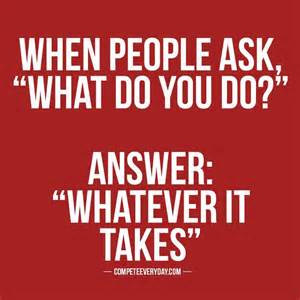
“Their questions are triggering you childhood demons.  You are hearing your father’s voice behind them.  Tell them you are doing exactly what you need to be doing to get well.  Leave it at that.”

I sigh.  For months now, I have felt like I have to justify my existence to everyone.  I have felt like such a failure.

“I have done the same thing to my children,”  I blurt out.

“Likely,”  she smiles.  “It’s all you’ve known.”

“Oh God,”  I moan.

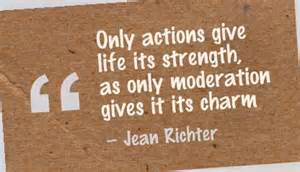
“There is nothing wrong with a good work ethic as long as it’s balanced with proper rest.  It’s all about moderation.”

I have missed the moderation piece of life’s puzzle.

Will I ever learn?